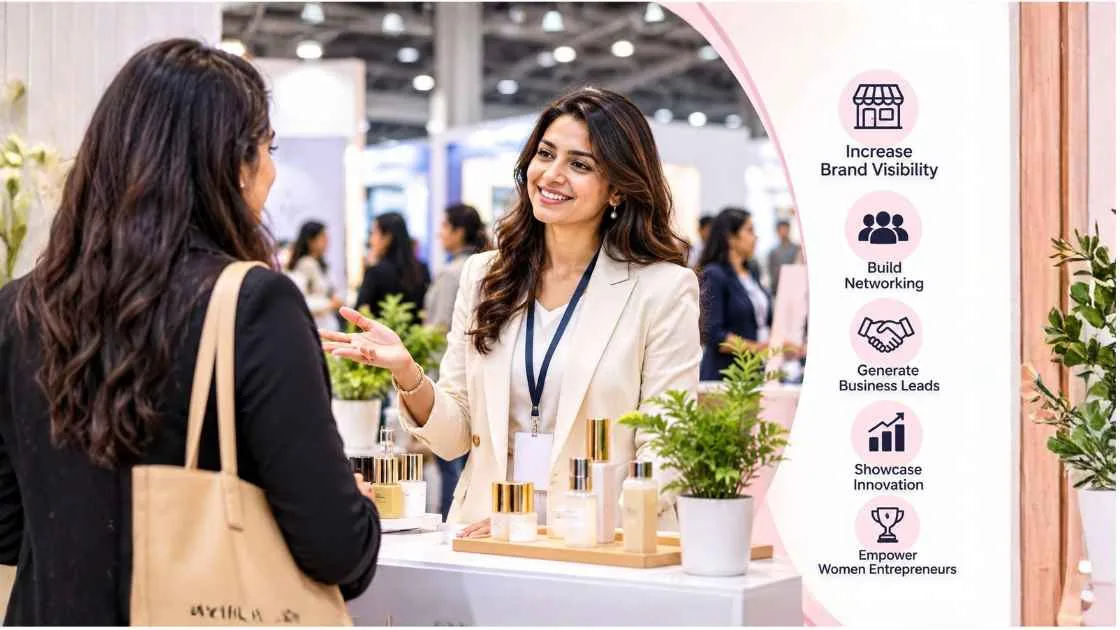
Summary - Exhibitions help women entrepreneurs build and grow their brands by providing opportunities to showcase products, connect with potential customers, increase brand visibility, and generate sales. From fashion and jewellery designers to home-based businesses and artisans, participating in exhibitions allows women-led businesses to reach new audiences, build valuable business connections, and explore new growth opportunities.
Starting a business is an exciting step, but making people recognise and trust a brand takes consistent effort. Many women entrepreneurs have creative ideas, quality products, and unique services but struggle to reach the right customers. This is where exhibitions can make a real difference.
Exhibitions bring business owners, customers, designers, artisans, and industry professionals together at one location. They provide an opportunity to introduce products, interact directly with buyers, and understand what customers actually want. For women running small businesses, participating in the right exhibition can become an important step towards building a recognised and sustainable brand.
Why Are Exhibitions Important for Women Entrepreneurs?
Exhibitions offer women entrepreneurs a practical way to promote their businesses beyond social media and personal networks. Instead of relying only on online advertisements, business owners can meet potential customers, demonstrate their products, and explain what makes their brands different.
For example, a woman running a handmade jewellery business can display her collections at a lifestyle exhibition, interact with visitors, and receive immediate feedback about designs and pricing. Similarly, a home-based clothing business can introduce its collections to shoppers who may not have discovered the brand online.
These face-to-face interactions help emerging businesses build credibility, improve customer relationships, and explore new sales opportunities.
8 Ways Exhibitions Help Women Entrepreneurs Grow Their Brands
1. Increase Brand Visibility and Recognition
Brand visibility is essential for any growing business. Exhibitions allow entrepreneurs to introduce their products to people who may be unfamiliar with their brands.
A well-organised exhibition stall, attractive product displays, clear branding, and informative signage can help a small business attract attention. Regular participation in relevant events can also make a brand more recognisable among its target audience.
2. Connect Directly With Potential Customers
One of the biggest advantages of exhibitions is the opportunity to interact with customers personally.
Visitors can examine products, ask questions, compare designs, and understand product quality before purchasing. Entrepreneurs can also explain the inspiration, materials, and craftsmanship behind their collections.
This is particularly valuable for handmade products, traditional clothing, jewellery, and customised gifts, where customers often appreciate knowing the story behind what they purchase.
3. Generate Sales and New Business Opportunities
Exhibitions provide opportunities to generate direct sales and receive enquiries for future orders. Entrepreneurs can showcase new collections, offer special event pricing, and introduce products to interested buyers.
For example, a woman selling handcrafted home décor may receive individual customer orders as well as enquiries from boutique owners interested in purchasing products in bulk.
This makes exhibitions useful not only for immediate revenue but also for discovering potential retail partnerships and wholesale opportunities.
4. Build Valuable Business Networks
Business growth often depends on building the right professional relationships. Exhibitions bring together entrepreneurs, suppliers, retailers, designers, distributors, and other industry professionals.
Women business owners can use these interactions to explore collaborations, identify reliable suppliers, exchange marketing ideas, and learn from experienced entrepreneurs.
Such networking opportunities can create valuable business connections that continue long after an event ends.
5. Showcase Products and Highlight Brand Uniqueness
Exhibitions give entrepreneurs the freedom to present their products in a way that reflects their brand identity.
Fashion designers can display seasonal collections, jewellery creators can highlight handcrafted details, and artisans can explain traditional production techniques.
For instance, a designer participating in a festive exhibition can present jewellery collections alongside traditional outfits. The right jewellery can make a traditional outfit more appealing, particularly during weddings and festive celebrations. A guide to festive jewellery styling also highlights how different jewellery styles complement traditional clothing and help create a complete festive look.
6. Understand Customer Preferences and Market Demand
Direct customer feedback helps entrepreneurs make better business decisions.
During an exhibition, business owners can observe which products attract attention, which price ranges receive positive responses, and what customers expect from a particular category.
This information can guide future product development, inventory planning, pricing strategies, and marketing campaigns.
7. Develop Business Confidence and Entrepreneurial Skills
Participating in exhibitions helps women entrepreneurs develop practical business skills. Speaking with visitors, explaining product benefits, negotiating prices, and handling customer enquiries can improve communication and sales abilities.
For first-time business owners, even a small exhibition can provide valuable experience in managing inventory, organising displays, and understanding customer behaviour.
8. Reach Customers Beyond Local Markets
Exhibitions can help small businesses connect with visitors from different cities and regions. This is especially useful for entrepreneurs who want to expand their customer base beyond their immediate neighbourhood.
When visitors discover a brand at an exhibition, they may continue purchasing through its website, social media pages, or online store. In this way, offline participation can also support long-term digital growth.
What Types of Exhibitions Are Best for Women Entrepreneurs?
The right exhibition depends on the products, target audience, and business objectives.
- Fashion and lifestyle exhibitions: Suitable for clothing brands, boutiques, jewellery designers, accessories, and lifestyle businesses.
- Handloom and handicraft exhibitions: Ideal for weavers, artisans, handmade product sellers, and traditional craft businesses.
- Art and creative exhibitions: Provide opportunities for independent artists, illustrators, designers, and creative entrepreneurs.
- Food and homemade product exhibitions: Help home bakers, speciality food sellers, and homemade product businesses reach new customers.
- Women entrepreneur exhibitions: Bring women-owned businesses together for networking, product promotion, and business development.
Choosing an event that matches the product category and customer profile is more important than simply participating in an exhibition with high visitor numbers.
How Can Women Entrepreneurs Prepare for a Successful Exhibition?
A successful exhibition requires planning before the event begins. Here are some practical steps:
- Choose the right event: Research the exhibition theme, audience, organiser, location, and participation charges.
- Create an attractive stall: Use consistent colours, branding, signage, lighting, and organised product displays.
- Prepare products and pricing: Carry sufficient inventory, highlight popular collections, and display clear prices.
- Promote participation: Share event details, product previews, and stall information through Instagram, Facebook, and WhatsApp.
- Engage with visitors: Explain product features, answer questions, and collect enquiries from interested customers.
Entrepreneurs should also prepare visiting cards, digital catalogues, and QR codes linking to their websites or social media profiles.
Why Choose an Exhibition Platform in Pune to Expand Your Brand?
Pune offers opportunities for emerging businesses through fashion exhibitions, shopping events, handloom fairs, handicraft exhibitions, and lifestyle showcases. Its diverse customer base creates opportunities for entrepreneurs to introduce products and connect with shoppers interested in unique collections.
An Exhibition Platform in Pune can help women entrepreneurs showcase their brands, meet potential customers, explore collaborations, and understand regional buying preferences.
However, these opportunities are not limited to businesses based in Maharashtra. Entrepreneurs from Mumbai, Nashik, Bengaluru, Hyderabad, Delhi, and other Indian cities can also consider participating in relevant exhibitions in Pune to explore new markets.
Shopping exhibitions bring together fashion, lifestyle, handicrafts, and independent brands under one roof. Visitors get an opportunity to explore different collections, while participating businesses can introduce their products to a wider audience. This is one reason shopping exhibitions are attracting attention from shoppers and independent brands alike.
Apart from traditional exhibitions, pop-up events are also becoming a practical option for small businesses. They allow entrepreneurs to introduce new collections, test customer interest, and promote their brands without maintaining a permanent retail space. For growing businesses, pop-up exhibitions for brands offer another way to connect with customers and create new market opportunities.
What Should Women Entrepreneurs Do After an Exhibition?
Exhibition participation should not end when the event closes. Following up with visitors and business contacts is essential for turning initial interactions into long-term opportunities.
Entrepreneurs should:
- Contact potential customers who made product enquiries.
- Connect with retailers, suppliers, and collaborators they met.
- Share event photographs and customer feedback on social media.
- Review sales, expenses, enquiries, and popular products.
- Maintain communication with interested visitors through appropriate marketing channels.
These activities help businesses evaluate their exhibition performance and improve their approach for future events.
Turn Exhibition Opportunities Into Real Business Growth
Building a successful brand requires more than offering good products. It involves creating awareness, earning customer trust, understanding market demand, and developing meaningful business relationships.
For women entrepreneurs, exhibitions provide a practical opportunity to bring all these elements together. Whether showcasing handmade jewellery, traditional clothing, handicrafts, artwork, or lifestyle products, the right event can help a small business reach its next stage of growth.
If you are a woman entrepreneur planning to expand your brand, start exploring relevant exhibitions, identify events that match your business, and prepare your products for a wider audience. Your next exhibition could be the opportunity to introduce your brand to customers and business partners who help take it further.
Frequently Asked Questions
How do exhibitions help women entrepreneurs grow their businesses?
Exhibitions help women entrepreneurs increase brand visibility, meet potential customers, generate sales, receive product feedback, and establish business partnerships. They also provide opportunities to introduce new products and reach customers beyond existing networks.
Are exhibitions beneficial for small and home-based businesses?
Yes. Exhibitions allow small and home-based businesses to showcase products directly to customers without investing in a permanent retail outlet. They can also help entrepreneurs test market demand and build brand recognition.
Which exhibitions are best for women-owned businesses?
Fashion, jewellery, handloom, handicraft, lifestyle, food, and women entrepreneur exhibitions are suitable options. The best choice depends on the business category, target customers, and marketing objectives.
How can first-time women entrepreneurs participate in exhibitions?
First-time entrepreneurs should research suitable events, understand stall charges, prepare their products, organise an attractive display, and promote their participation in advance. Starting with a small, relevant exhibition can help them gain practical experience.