Does your recent Google search include finding the leading heat pump manufacturers in India, or "Do heat pumps work well in high humidity?” You will be answered in one word, and that is "YES". Heat pumps can be quite impressive when it comes to working in humid climatic conditions.
But the real question is “How do heat pumps control humidity?” Let’s break it down further to find out about its working.
More Than Just Cooling
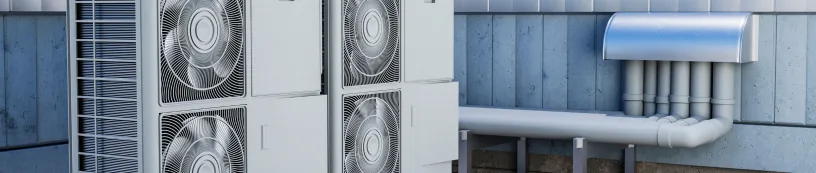
Unlike conventional systems that generate heat, heat pumps transfer heat. They move heat in and out of your space to keep it cool and dry. (Ideal to escape the sticky, humid weather). A common question asked is, “Can a heat pump also dehumidify?” So, to answer, heat pumps act as natural dehumidifiers. It happens because heat pumps allow fresh, dry air to enter indoors without any requirement of a separate system.
Now that you know that heat pumps are efficient at removing humidity, let’s also know how they function.
How Do Heat Pumps Control Humidity?
The heat pump working model is really interesting. Basically, when your heat pump runs in cooling mode, it pulls the warm and damp air from the room and passes it over the cold evaporator coils. As soon as the air cools down and reaches its dew point, it converts moisture into water droplets. Further, these droplets are:
- Collected inside the system
- Discharged safely
- Draw indoor air out
And the result is? Cooler and humidity-free air.
Smart Features of Heat Pumps For Moisture Control
Modern updated heat pumps are designed to work efficiently in humid weather. And it comes with certain features that boost the moisture removal process.
1. Dry Mode: While fidgeting with your remote, you must have noticed “Dry Mode". By turning on the dry mode feature, you allow the cool air in contact with the cooling coils to stay indoors for a longer period. It slows down the fan speed and sucks more moisture from the room without chilling it.
2. Continuous Operation: Traditional air-conditioners have switches that turn on and off, whereas heat pumps run for longer cycles. This ensures that humidity removal is consistent throughout.
3. Defrost Cycle: Heat pumps are equipped to melt the frost buildup on outdoor coils without manual intervention.
Why Humid Regions Benefit Most from Heat Pumps
Not many know that heat pumps are more suited to work efficiently in warm and humid environments. Other key features are:
- Higher Efficiency (COP): COP, or the Coefficient of Performance, increases in warm conditions, which reduces the energy input for more cooling or heating outputs.
- Lower Energy Bills: Reduced operational costs are a given when system functioning is smooth.
- Compact & Simple Systems: Heat pumps require less space as they have simpler infrastructure.
Therefore, residential and commercial owners are contacting top heat pump manufacturers in India for heat pump installation to survive harsh climates at reduced costs.
Say Goodbye to Dampness and Condensation
Don’t tackle humidity only to escape the discomfort of extreme sweating. Note that it can damage your home. Yes, you read that right. Relying on traditional heating or cooling systems creates uneven temperatures that cause condensation deposition on walls, windows, and ceilings. If unnoticed, you will begin to notice mould and mildew development. Over time, it can also cause structural issues.
Heat pumps solve this by:
- Maintaining a steady temperature indoors
- Keeping surfaces warm enough to prevent condensation at all times
- Removing humidity and improving air quality
Tips to Enhance Heat Pumps' Performance
At the end of the day, a heat pump is a machine. So, it needs the right kind of care to perform optimally. Follow what you should do.
- Clean filters regularly to improve system functioning
- Keep outdoor units clear of leaves, dirt, and debris
- Schedule professional inspections to detect issues in a timely.
- Consider a backup dehumidifier, which can be ideal to maintain indoor humidity levels.
Final Thoughts
Why spend on traditional air conditioning systems when you can go for smarter solutions to control dampness in humid climates? Heat pumps are an excellent solution that offers cooling and dehumidification in one system.
So, whether you want to upgrade your current cooling appliance or want a more energy-reducing solution, a heat pump is the choice.