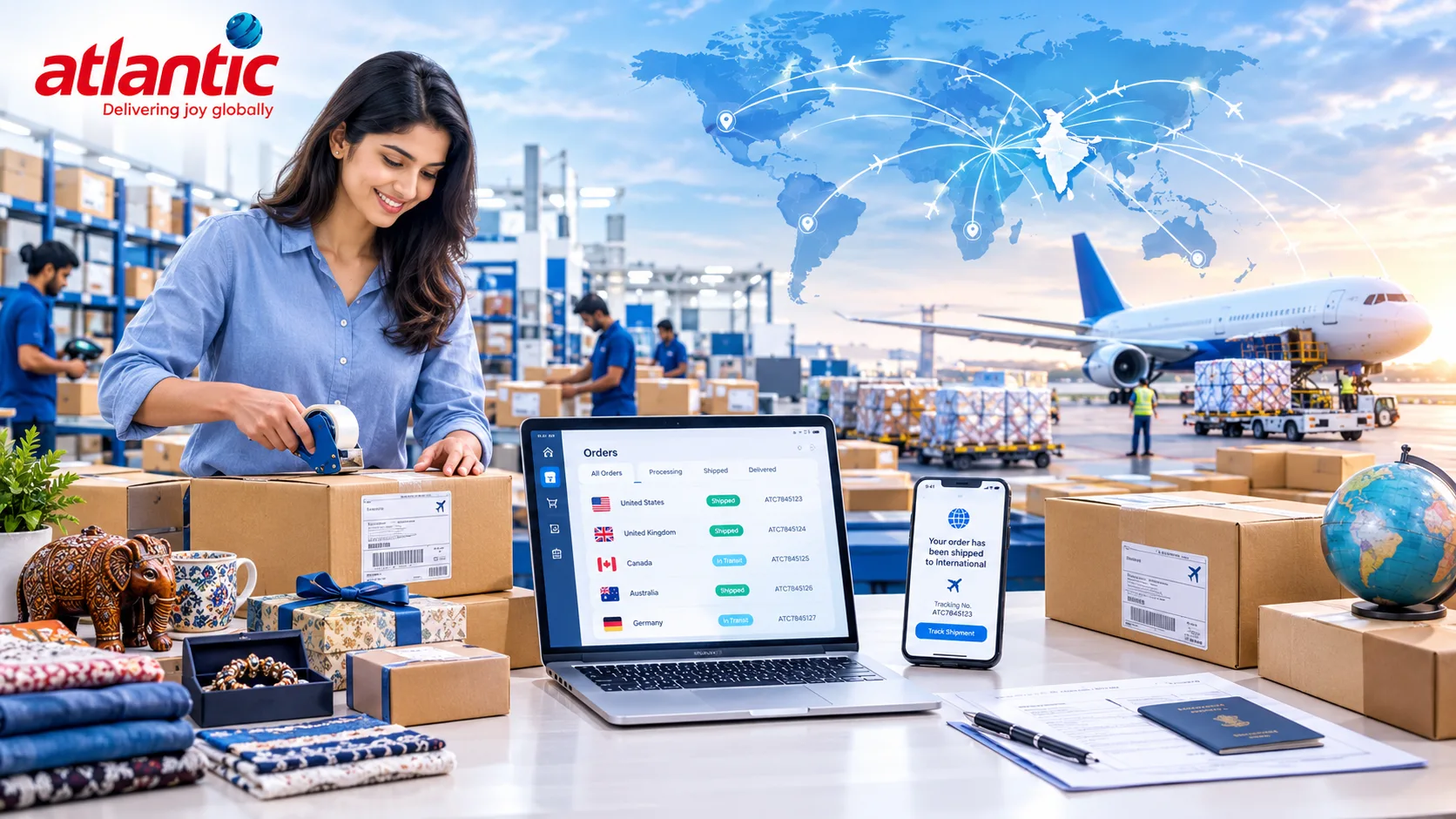
E-commerce has made it possible for a small business in India to reach customers in different parts of the world. A seller can list products online, receive an order from another country, and arrange delivery without having a physical store overseas. However, selling internationally is only one part of the process. Getting the product to the customer safely, on time, and with the right documentation is equally important.
This is where international courier services play an important role. A reliable courier company can support businesses with pickup, packaging, documentation, customs assistance, transportation, and shipment tracking.
For growing online sellers, choosing the right International Courier from India can make overseas order fulfilment easier and more predictable. It can also help businesses create a better delivery experience for international customers.
Why Is International Shipping Important for E-commerce?
An online business is no longer limited to customers living in the same city or country. Products such as clothing, handicrafts, accessories, documents, speciality foods, gifts, and other permitted goods can find buyers in international markets.
But international orders involve more steps than domestic deliveries.
A shipment may need to pass through export procedures, customs checks, international transportation, destination-country clearance, and final-mile delivery. A mistake in any of these stages can lead to delays or additional costs.
A dependable logistics arrangement helps businesses manage these challenges while allowing the seller to focus on product development, marketing, and customer service.
How International Courier Services Support Online Sellers
International courier companies can provide several services that are useful for e-commerce businesses. These services can be especially helpful for small and medium-sized sellers that may not have their own logistics team.
1. Door-to-Door Shipment Handling
Door-to-door delivery reduces the amount of logistics work that an online seller needs to manage independently.
Depending on the service and destination, the courier process can include pickup from the seller, shipment preparation, transportation, customs handling, and delivery to the customer's address.
This is particularly useful when a business receives international orders regularly but does not have warehouses or logistics staff in other countries.
2. Packaging Support
Packaging becomes even more important when a parcel has to travel across borders.
A package may pass through several handling points before reaching the customer. Poor packaging can result in damaged products, returns, or customer complaints.
Businesses should consider:
- Using strong outer packaging suitable for the product
- Adding cushioning around fragile goods
- Sealing the parcel properly
- Protecting products from moisture when necessary
- Using appropriate labels and documentation
- Keeping the package within the courier's size and weight limits
Atlantic International Express also lists professional packaging support among its international shipping services.
3. Shipment Tracking
Customers naturally want to know where their order is after making an international purchase. This makes Live tracking an important part of the modern e-commerce delivery experience.
A tracking number allows the seller and customer to follow shipment progress without repeatedly contacting the courier.
For example, tracking may show stages such as:
- Shipment picked up
- Export processing
- In transit
- Customs clearance
- Out for delivery
- Delivered
Atlantic provides an online shipment tracking facility using an AWB or tracking number.
Businesses can also share tracking information with customers after dispatch. This can reduce uncertainty and make the delivery process more transparent.
What Should Businesses Know About Customs?
Customs is one of the most important parts of international e-commerce shipping.
Every country can have its own rules for imported goods. Products that are permitted in one market may have restrictions in another. Duties, taxes, documentation requirements, and product-specific regulations can also vary.
Before sending an international order, the seller should check:
- Whether the product is allowed in the destination country.
- Whether any special permits or documents are required.
- Whether the commercial invoice contains accurate information.
- Whether the product description is clear.
- Whether the declared value is correct.
- Whether duties or taxes may apply to the receiver.
Accurate documentation does not guarantee that a parcel will avoid customs inspection, but it can reduce avoidable problems caused by incomplete or incorrect information.
Atlantic provides customs and documentation support as part of its international courier services.
How Can E-commerce Businesses Prepare Shipments Properly?
Good shipment preparation starts before the parcel is handed to the courier.
Create a Simple Pre-Shipment Checklist
An e-commerce business can use a basic checklist for every international order:
- Confirm the customer's complete delivery address.
- Verify the destination country.
- Check the product's export and import restrictions.
- Weigh and measure the packed shipment accurately.
- Prepare the required invoice and shipping documents.
- Describe the contents clearly.
- Declare the correct value.
- Select suitable packaging.
- Keep the AWB or tracking number safely.
- Share tracking details with the customer after dispatch.
This process may seem simple, but repeating it for every shipment can prevent many common errors.
Choosing a Courier Based on the Shipment Type
There is no single courier option that is perfect for every e-commerce shipment. The best choice depends on what is being shipped and where it is going.
Documents and Small Parcels
For documents and lightweight products, express international courier services may be suitable when delivery speed is important.
Fragile Products
Fragile products require suitable packaging and careful handling. Businesses should ask about packaging options before booking the shipment.
Bulky or Heavy Orders
Large commercial shipments may be better suited to air freight or another freight solution rather than a standard small-parcel service.
Regular E-commerce Orders
Businesses shipping online orders frequently should look for services that provide consistent pickup, tracking, documentation support, and clear communication.
Atlantic International Express offers international courier, freight, document, and e-commerce shipping services, giving businesses different options based on shipment requirements.
Understanding International Shipping Rates from India
Shipping cost is one of the biggest concerns for online businesses selling internationally.
However, International Shipping Rates from India are not usually based on weight alone. The final price can depend on several factors, including:
- Origin location
- Destination country
- Actual shipment weight
- Volumetric weight
- Package dimensions
- Type of goods
- Delivery speed
- Customs-related requirements
- Additional services
- Insurance, when selected
Businesses should compare the total shipping cost rather than choosing a courier based only on the lowest advertised rate.
A slightly higher shipping charge may be worthwhile if the service provides better tracking, packaging support, documentation assistance, or more suitable delivery options.
What Common Mistakes Should E-commerce Sellers Avoid?
International shipping mistakes can affect both profit and customer satisfaction.
Incorrect Product Description
A vague description such as "items" may not provide enough information for customs processing. The contents should be described clearly and accurately.
Wrong Weight or Dimensions
Incorrect shipment measurements can result in differences between the initial estimate and the final shipping charge.
Weak Packaging
A product that arrives damaged can lead to refunds, replacements, negative reviews, and loss of customer trust.
Ignoring Destination Rules
Sellers should not assume that a product accepted in India can automatically be imported into every country.
Not Sharing Tracking Information
Customers appreciate being able to follow their orders. Providing tracking information after dispatch can make the delivery experience more transparent.
Choosing Only on Price
The cheapest courier option is not always the most suitable. Delivery time, tracking, customer support, customs assistance, and shipment handling should also be considered.
How Can a Courier Become a Trusted Logistics Partner?
As an e-commerce business grows, shipping becomes a regular operational task rather than an occasional activity.
This is why it helps to work with a trusted logistics partner that understands international shipment requirements.
When evaluating a courier, businesses should look at:
- International destination coverage
- Pickup availability
- Tracking facilities
- Packaging support
- Customs and documentation assistance
- Delivery options
- Customer support
- Handling of different shipment types
- Clarity of shipping charges
It is also useful to understand the courier company before starting regular shipments. Businesses can review the company's background and international courier experience and check whether its services match their shipping needs.
For sellers operating in different parts of India, checking the available international courier service in their location can also help them understand local pickup and service options.
The Role of Shipping in Customer Satisfaction
Delivery is part of the customer's overall shopping experience.
A customer may love a product, but a damaged parcel, unexpected delay, unclear tracking, or poor communication can change their opinion of the business.
Good international shipping can support customer satisfaction by providing:
- Clear delivery information
- Shipment visibility
- Proper packaging
- Reliable communication
- Professional handling
- Reasonable delivery expectations
For an e-commerce seller, these small improvements can make international customers more comfortable ordering again.
Why Is Tracking Useful for Growing Businesses?
Tracking is useful not only for customers but also for sellers.
If a business handles several international orders, tracking information can help its team identify where shipments are in the delivery process. It can also help when a customer asks about an order.
Atlantic's shipment tracking facility allows customers to check shipment progress using their AWB number. The available status information can include transit and customs-related updates.
For businesses that depend on repeat international orders, this visibility can make day-to-day order management easier.
A Practical Approach to E-Commerce Shipping from India
Successful E-Commerce Shipping from India does not always require a complicated logistics system.
A simple process can work well:
Step 1: Confirm the international order and customer address.
Step 2: Check whether the product can legally be exported and imported into the destination country.
Step 3: Pack the product securely and measure the final parcel.
Step 4: Prepare accurate invoices and required shipping documents.
Step 5: Compare suitable courier or freight options.
Step 6: Book the shipment and keep the AWB number.
Step 7: Share tracking information with the customer.
Step 8: Monitor the shipment until final delivery.
For businesses that are starting to receive more overseas orders, creating this repeatable process can reduce shipping errors and save time.
Conclusion
International courier services have become an important part of e-commerce growth. They help online businesses move beyond domestic markets and serve customers in different countries without building their own international delivery network.
However, successful international shipping involves more than handing a parcel to a courier. Businesses need to prepare shipments carefully, understand customs requirements, choose services according to the type of goods, and keep customers informed through tracking.
The right courier can become more than a delivery provider. It can act as a trusted logistics partner that supports the business as international orders increase.
For e-commerce sellers exploring overseas markets, reviewing the available services and discussing shipment requirements with a courier before scaling can be a practical first step. Businesses can also use the contact and support options to understand which shipping approach fits their products, destinations, and order volumes.
FAQ’s
1. What is an international courier service?
An international courier service transports documents, parcels, and other permitted shipments between countries. Depending on the provider and service selected, it may include pickup, packaging, customs support, tracking, and door-to-door delivery.
2. How are international shipping rates from India calculated?
Rates can depend on factors such as destination, actual weight, volumetric weight, package dimensions, shipment type, delivery speed, and additional services. It is best to request a shipment-specific quote rather than relying only on a general rate.
3. Why is live tracking important for e-commerce businesses?
Live tracking, or shipment-status tracking, allows sellers and customers to monitor the progress of an international order. It provides better visibility and can reduce uncertainty during delivery.
4. What documents are commonly needed for international e-commerce shipments?
Requirements vary according to the product and destination. Commercial invoices, shipment details, declarations, and other customs documents may be required. Businesses should confirm the exact requirements before dispatch.
5. How can an e-commerce business choose the right international courier?
Consider destination coverage, shipment type, delivery requirements, tracking, packaging, customs support, customer service, and overall shipping cost. The cheapest option is not necessarily the best fit for every order.