The transformation is staggering: by 2015, lab-grown diamond technology had just reached the point where gem-quality stones could be produced consistently for the first time (Source: BriteCo Diamond Industry Report 2026). In 2019, a mere 5.2% of all diamond jewellery sold was primarily lab-grown. In 2026, the global lab-grown diamond market is valued at USD 33.54 billion and is projected to reach USD 91.85 billion by 2034, at a CAGR of 13.42% (Source: Fortune Business Insights 2026). GIA now averages more CVD-grown lab-grown diamond submissions per day than it once received in an entire year. That isn't a trend — it's a structural shift in how the world grows, grades, and wears diamonds. And it all began with a series of breakthroughs that most buyers know nothing about.
2015: The Quality Threshold Is Crossed
Before 2015, lab-grown diamonds existed — but they were largely limited to industrial applications: cutting tools, drill bits, heat sinks. The gem-quality stones that existed were inconsistent in colour, often carrying grey or brownish tints, and capped at sizes that made them impractical for most fine jewellery.
The mid-2010s changed that. Refinements in both CVD (Chemical Vapor Deposition) and HPHT (High Pressure High Temperature) processes reached a tipping point where manufacturers could reliably produce stones that were chemically, physically, and optically indistinguishable from naturally mined diamonds. For the first time, a lab-grown diamond could be placed next to a mined diamond of the same grade and be impossible to tell apart without specialist equipment. The fine jewellery industry took notice.
2017–2019: Colour Grades Improve Dramatically
For much of the early lab-grown diamond era, CVD-grown stones were predominantly near-colourless — producing colour grades in the G to N range, with many exhibiting unwanted grey undertones from residual nitrogen in the growth chamber. Getting a D, E, or F colour grade from a CVD reactor was rare and inconsistent.
Between 2017 and 2019, manufacturers cracked the nitrogen problem. By refining reactor atmospheres and introducing post-growth HPHT treatment to remove residual colour, producers began delivering colourless lab-grown diamonds at scale. GIA recorded a significant increase in D, E, and F colour submissions starting in 2020 — a direct result of improvements that began three years earlier. The lab-grown diamond was no longer a colourless compromise. It was, in many cases, genuinely colourless.
2020–2022: Size Barriers Fall
One of the persistent criticisms of lab-grown diamonds through the late 2010s was size. Producing a high-quality stone above 1 carat consistently was technically challenging, and stones above 2 carats were genuinely rare. That changed rapidly through the early 2020s.
Improvements in CVD reactor design — larger growth chambers, more precise microwave plasma control, better diamond seed preparation — allowed manufacturers to grow high-clarity stones exceeding 5, 8, and eventually 10 carats at gem quality. GIA documented CVD-grown lab-grown diamonds ranging from 9.52 to 12.06 carats with colour grades between E and G and clarity from VS2 to SI1 — stones that would have been technically impossible to produce a decade earlier. The implications for fine jewellery were immediate and profound.
2022–2024: Prices Stabilise at a New Floor
The rapid scale-up in lab-grown diamond production capacity — particularly across India and China — created an oversupply that drove prices down sharply through 2022 to 2024. What had initially been a 30 to 40% saving versus natural diamonds became 60 to 75%, and in some categories even greater. A natural 1-carat diamond in 2025 costs an average of USD 4,200, while a comparable lab-grown diamond now averages USD 1,000 or less — a saving of over 75% (Source: BriteCo 2026).
For buyers, this price correction was good news — it meant that certified, gem-quality lab-grown diamond jewellery became genuinely accessible to a far broader audience than before. For the industry, it meant the lab-grown diamond had completed its transition from a premium novelty to a mainstream choice.
2025–2026: AI and Precision Enter the Picture
The most recent chapter in lab-grown diamond technology evolution is perhaps the most exciting. Artificial intelligence is now being integrated into the growing process itself — optimising reactor conditions in real time, predicting inclusion formation before it happens, and adjusting gas mixtures to maintain colour consistency across entire production batches.
The result is a generation of lab-grown diamonds with fewer inclusions, more consistent colour, and more predictable light performance than any that came before. The technology that once made gem-quality lab-grown diamonds possible has now made exceptional-quality lab-grown diamonds routine. And with CVD technology projected to grow at the fastest rate of any production method through 2034, the improvements are far from finished.
How Keian Luxandor Brings the Best of This Technology to Every Buyer
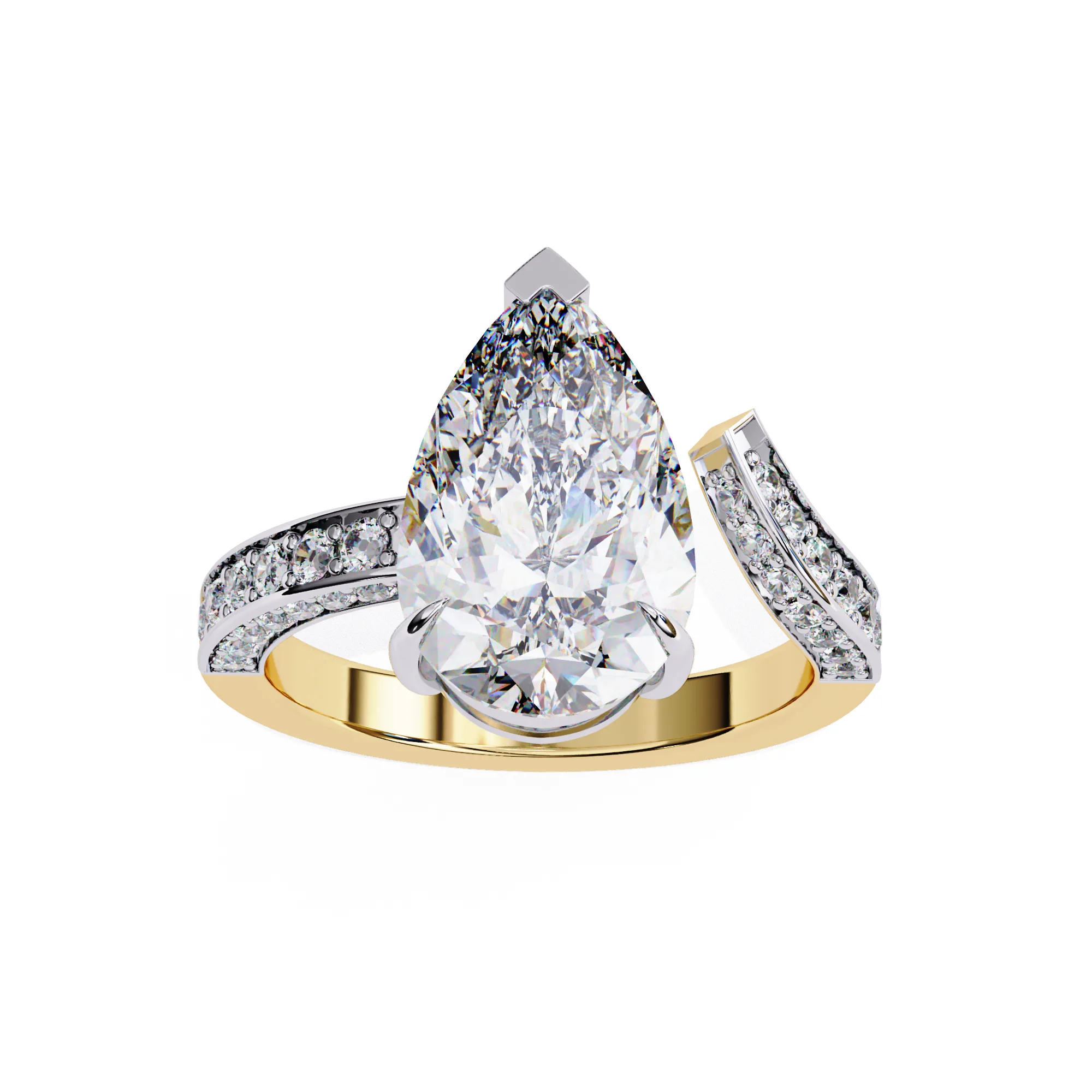
For buyers in India ready to benefit from everything lab-grown diamond technology has achieved since 2015, Keian Luxandor offers a collection that represents the best of where the technology stands today. Every lab-grown diamond in the Keian Luxandor range is IGI-certified — grown using CVD technology, graded to the same standards as any natural diamond, and documented with full transparency on colour, clarity, cut, and carat.
Crafted in 9KT gold and starting from just ₹8,000, Keian Luxandor's lab-grown diamond jewellery makes the results of a decade of extraordinary technological progress accessible to every buyer — with a 15-day full-value refund policy and a lifetime buyback programme ensuring that every purchase is as protected as it is beautiful.
Ready to Wear the Future of Diamonds?
Explore Keian Luxandor's IGI-certified lab-grown diamond jewellery collection at keianluxandor.com — or call +91 98985 52297 to find the certified lab-grown diamond piece that's right for you.
Ten years of technology. One beautiful result. Yours to wear, every day.