
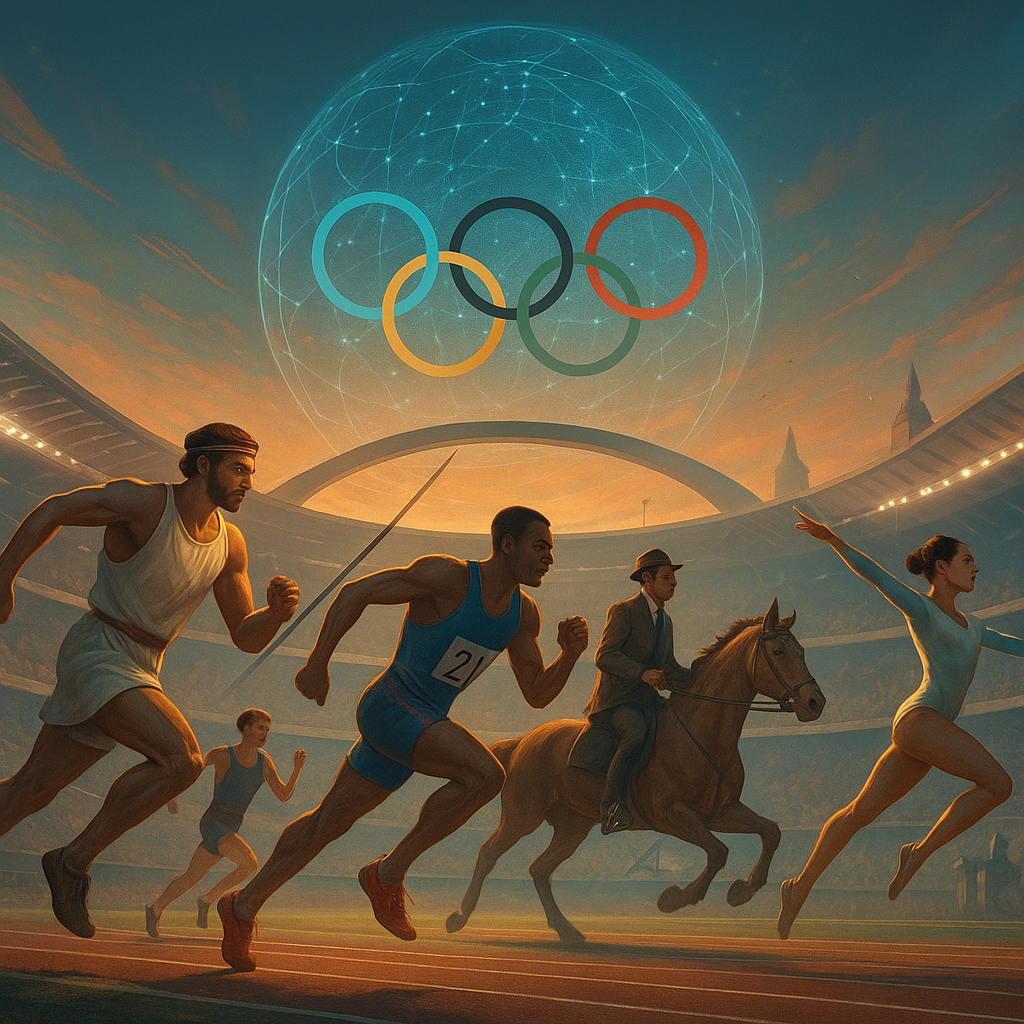
A Historic Moment: The Olympics as a Mirror of Global Change
Under the blazing sun of Paris in 2024, athletes from over 200 countries gathered not just to compete but to reaffirm the Olympics' enduring power. The Games, stretching back to ancient Greece, have long been more than sports; they are a global stage reflecting the world's political, social, and technological transformations. As we progress through 2026, the Olympics continue to adapt and evolve, responding to new challenges and opportunities that define this complex era.
From the integration of cutting-edge technology to the pressing demand for sustainability, the Olympics illustrate how a centuries-old institution can remain relevant. The 2026 Winter Olympics in Milan-Cortina showcased this evolution through innovative environmental strategies and a renewed focus on athlete welfare. These developments raise important questions: How will the Olympics navigate geopolitical tensions, climate change, and the digitization of sport in the coming decades? And what lessons can be drawn from recent Games to preserve the Olympic spirit?
"The Olympics are a living institution that must continuously reinvent itself to reflect the values and realities of the global community," says Dr. Helena Marquez, a leading sports historian.
From Ancient Roots to Modern Spectacle: The Olympics’ Journey
The Olympics originated in Olympia, Greece, in 776 BCE as a festival honoring Zeus, combining religious rites with athletic competitions. These early Games were held every four years, fostering a sense of shared Hellenic identity. The ancient Olympics ended in 393 CE, but the modern revival in 1896, spearheaded by Pierre de Coubertin, sought to revive the spirit of peaceful competition among nations.
Since then, the Olympics have grown into the world’s largest sporting event, with the Summer and Winter editions hosting thousands of athletes and billions of viewers. This growth has been marked by milestones such as the introduction of women’s events, the inclusion of athletes from diverse countries, and the expansion of sports disciplines. The Games have also reflected global conflicts and politics, including boycotts during the Cold War and the controversial hosting of the 1936 Berlin Olympics under Nazi Germany.
- 1896: First modern Olympics held in Athens with 14 nations and 241 athletes.
- 1924: First Winter Olympics held in Chamonix, France.
- 1992: Barcelona Games marked the end of Cold War boycotts.
- 2012: London Olympics celebrated diversity and urban regeneration.
The Olympics have adapted to shifting societal values, such as embracing gender equality and combating doping, but the core mission remains: to unite humanity through sport.
Analysing the 2026 Winter Olympics: Technology, Sustainability, and Inclusion
The 2026 Winter Olympics, held jointly in Milan and Cortina d’Ampezzo, exemplified the latest phase of Olympic evolution. Organizers prioritized sustainability, leveraging advancements in green technology to reduce carbon footprints. According to official reports, the Games aimed for a 60% reduction in emissions compared to 2018, achieved through renewable energy installations and eco-friendly infrastructure.
Technological innovation was also at the forefront. AI-powered athlete monitoring systems enhanced training regimens and injury prevention, while augmented reality (AR) enriched the viewer experience, both on-site and globally. Broadcasts incorporated interactive features allowing audiences to access real-time data and personalized content.
Inclusion remained a key theme, with new para-sports introduced and increased representation of athletes from underrepresented nations. The International Olympic Committee (IOC) reported a record number of female athletes, reaching 48% of participants, underscoring ongoing progress toward gender parity.
- Implementation of carbon-neutral venues with solar panels and smart energy grids.
- Use of AI in performance analytics, reducing injury rates by 15% among top competitors.
- Expansion of para-sports categories, increasing athlete participation by 25%.
- Innovative AR broadcasts boosted global viewership by 12%, especially among younger audiences.
"The 2026 Games set a new standard for responsible hosting and fan engagement, proving that tradition and innovation can coexist," commented IOC sustainability director Marco Bianco.
Global Dynamics Shaping the Olympic Movement in 2026
Beyond the sporting arena, the Olympics are deeply intertwined with geopolitics, economics, and culture. The past decade has seen increased tensions between major powers, with the Games occasionally caught in diplomatic crossfires. Yet, the IOC has maintained a policy of political neutrality, emphasizing the Olympics as a platform for peaceful competition.
Economic factors also influence the Games’ future. The rising cost of hosting, estimated at over $10 billion for recent Summer Olympics, has prompted a shift towards more sustainable and cost-effective models. This includes multi-city hosting and reuse of existing infrastructure, as seen in Milan-Cortina 2026.
Culturally, the Olympics continue to be a vital showcase for global unity and diversity. The fusion of traditional ceremonies with contemporary artistic expressions reflects the host country's identity while resonating worldwide.
- Geopolitical pressures challenge participation but also highlight the Olympics’ diplomatic potential.
- Economic sustainability drives innovation in venue design and event management.
- Globalization enhances cultural exchange, with over 5 billion viewers tuning into recent Games.
Understanding these dynamics is crucial for stakeholders planning future Olympics and for fans hoping to see the Games thrive.
Voices from the Field: Perspectives from Experts and Athletes
Experts across disciplines emphasize that the Olympics must continue adapting to remain relevant. Dr. Marquez highlights the importance of balancing tradition with change: "The Games’ power lies in their symbols and rituals, but they must also reflect contemporary values such as environmental stewardship and inclusivity."
From the athlete side, snowboarder and 2026 gold medalist Lina Sorensen shared her insights on evolving athlete support: "The integration of AI and medical tech has transformed how we prepare and recover. But the real progress is in how the Games now prioritize mental health and athlete voices."
Sports economists note the rising role of digital media and esports, which could shape the Olympic program. Meanwhile, sociologists point to the Olympics as a barometer of social progress, particularly in areas like gender equality and global cooperation.
"The Olympics inspire millions by showcasing excellence and unity, but they also challenge us to address broader societal issues," said economist Dr. Raj Patel.
Looking Ahead: What the Future Holds for the Olympics
The future of the Olympics will likely be defined by continued innovation and responsiveness to global trends. Key areas to watch include:
- Technological Integration: Further use of AI, VR/AR, and biometric data to enhance athlete performance and fan engagement.
- Environmental Responsibility: Pursuing carbon-negative Games and circular economy principles in event planning.
- Geopolitical Navigation: Managing global tensions while preserving the Olympic ideal of peace and unity.
- Program Evolution: Inclusion of new sports and formats, such as esports and mixed-gender events.
- Community Impact: Ensuring that host cities benefit long-term through infrastructure and social development.
The IOC's recent initiatives, detailed in How Technology and Sustainability Are Shaping the Future of the Olympics, underscore this trajectory. Additionally, aspiring athletes can explore pathways to competition via resources like Breaking In: Your Definitive Guide to Starting a Journey in the Olympics, highlighting the importance of grassroots development in maintaining the Olympics’ vitality.
Ultimately, the Games remain a global symbol of human potential. As challenges rise, so too do opportunities for the Olympics to inspire, unite, and innovate in unprecedented ways.