How the Right Developer Platform Can Accelerate Learning and Career Growth
Software development is one of the few professions where learning never truly ends. New programming languages, frameworks, cloud services, AI tools, and development practices emerge every year, requiring developers to continuously expand their knowledge. While this constant innovation creates exciting opportunities, it also introduces a common challenge—finding the right resources without becoming overwhelmed.
Many developers use different websites for tutorials, coding practice, UI resources, project templates, interview preparation, and job hunting. Although each platform serves a specific purpose, constantly moving between them can interrupt focus and slow progress. A more connected approach helps developers spend less time searching for resources and more time building valuable skills.
Building a Strong Foundation
Every successful developer starts with the basics. Understanding programming logic, data structures, algorithms, and software design principles creates a strong technical foundation that supports future learning.
Developers who invest time in mastering these concepts find it easier to learn new frameworks, adapt to changing technologies, and solve real-world problems efficiently.
Learning Through Real Projects
Reading documentation and watching tutorials are useful, but practical experience is what transforms knowledge into skill.
Building websites, dashboards, APIs, portfolio projects, and business applications helps developers understand version control, debugging, deployment, database integration, and application architecture. Every completed project adds confidence and demonstrates practical ability to potential employers or clients.
Continuous Coding Practice
Programming is similar to learning a musical instrument—the more consistently you practice, the better you become.
Regular coding exercises improve logical thinking, problem-solving, and code quality. Practicing Data Structures and Algorithms (DSA) also prepares developers for technical interviews while strengthening the analytical skills needed for everyday software engineering.
Small, consistent improvements often produce better long-term results than occasional intensive study sessions.
Saving Time with Reusable Development Resources
Modern development teams value productivity. Instead of recreating common layouts and interface elements for every project, developers increasingly rely on reusable UI components, templates, and design systems.
These resources reduce repetitive work, improve consistency, and allow teams to focus on delivering features that create real value for users. Faster development also means quicker product launches and more efficient collaboration.
Preparing for Technical Careers
The technology industry values developers who can demonstrate both technical knowledge and practical experience. Beyond programming, employers often look for communication skills, teamwork, project experience, and a willingness to learn continuously.
Creating a strong portfolio, participating in coding challenges, and understanding software architecture all contribute to long-term career success. Developers who combine these skills are often better prepared for opportunities in startups, established companies, and freelance projects.
Why Integrated Platforms Matter
As software development becomes more complex, many developers prefer platforms that combine multiple resources into one environment.
Rather than managing separate accounts for tutorials, coding practice, UI assets, interview preparation, and job searches, integrated ecosystems simplify the entire learning journey.
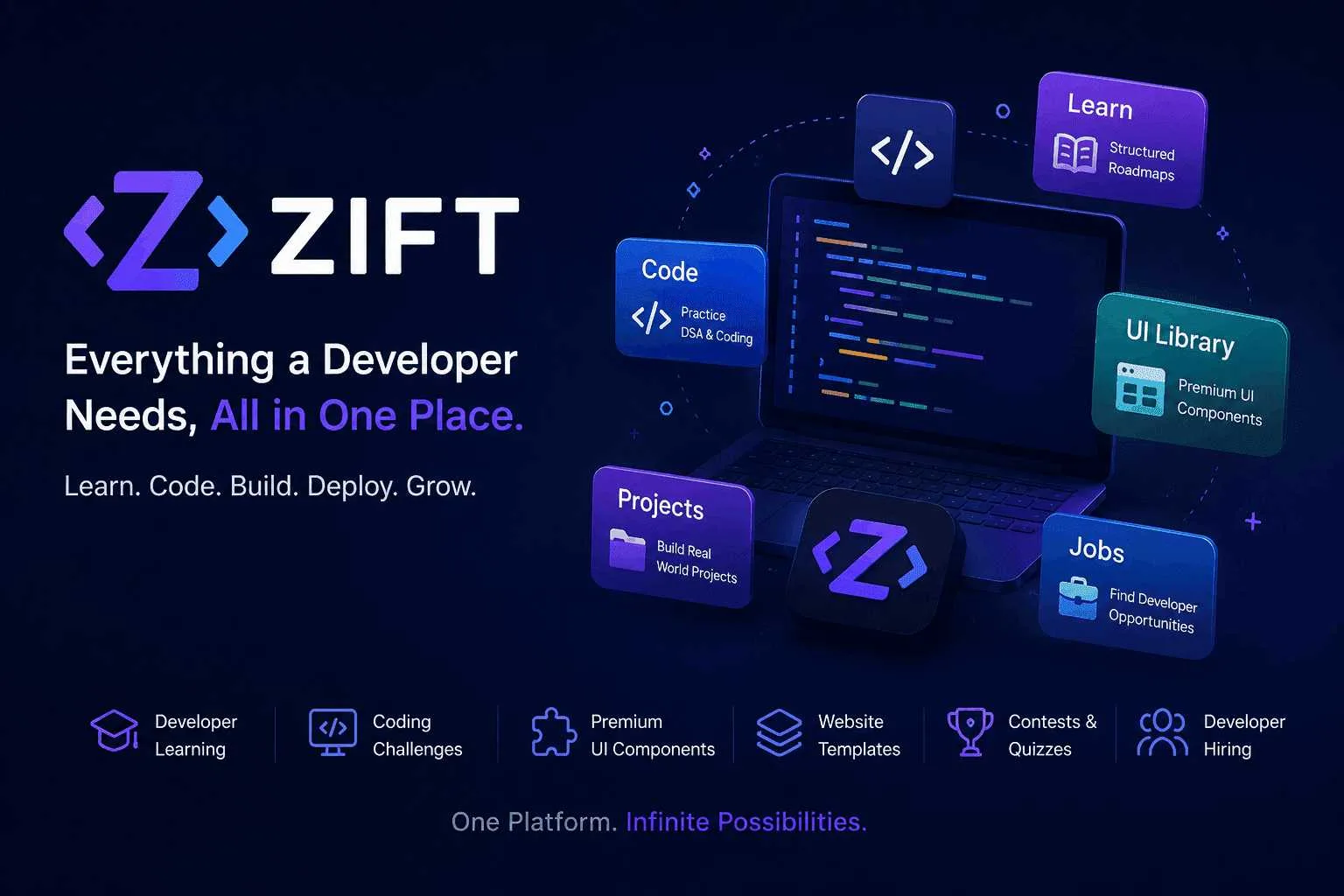
Platforms such as Zift bring together structured frontend and backend learning, coding challenges, DSA practice, premium UI components, website templates, roadmap-based education, system architecture learning, developer competitions, and hiring opportunities. This integrated approach enables developers to learn, build, practice, and grow without constantly switching between different services.
Looking Ahead
The future of software development will continue to be shaped by artificial intelligence, cloud computing, cybersecurity, and automation. Developers who remain adaptable, embrace lifelong learning, and build practical experience will continue to thrive regardless of changing technologies.
Success is no longer measured only by what developers know today but by how effectively they continue learning tomorrow.
Conclusion
Software development is a journey of continuous improvement. Strong programming fundamentals, practical projects, regular coding practice, reusable development resources, and structured learning all contribute to long-term success.
By choosing platforms that support every stage of this journey, developers can reduce complexity, improve productivity, and focus on creating meaningful software. Integrated ecosystems like Zift demonstrate how learning, development, collaboration, and career growth can come together to support modern developers in an increasingly connected technology landscape.