Industrial facilities require more than attractive walls and freshly painted surfaces. Manufacturing plants, warehouses, fabrication units, and commercial buildings face continuous exposure to moisture, dust, chemicals, and operational wear. Without suitable protective coatings, metal structures may develop corrosion, while concrete surfaces can gradually deteriorate.
Choosing a reliable industrial painting provider helps businesses select appropriate coating systems based on their facility requirements.
This guide explains industrial painting methods, surface preparation, coating selection, and important factors to consider before hiring a professional contractor.
Why Are Industrial Painting Services Important for Factories?
Factories contain steel structures, machinery frames, walls, ceilings, and other surfaces exposed to demanding conditions.
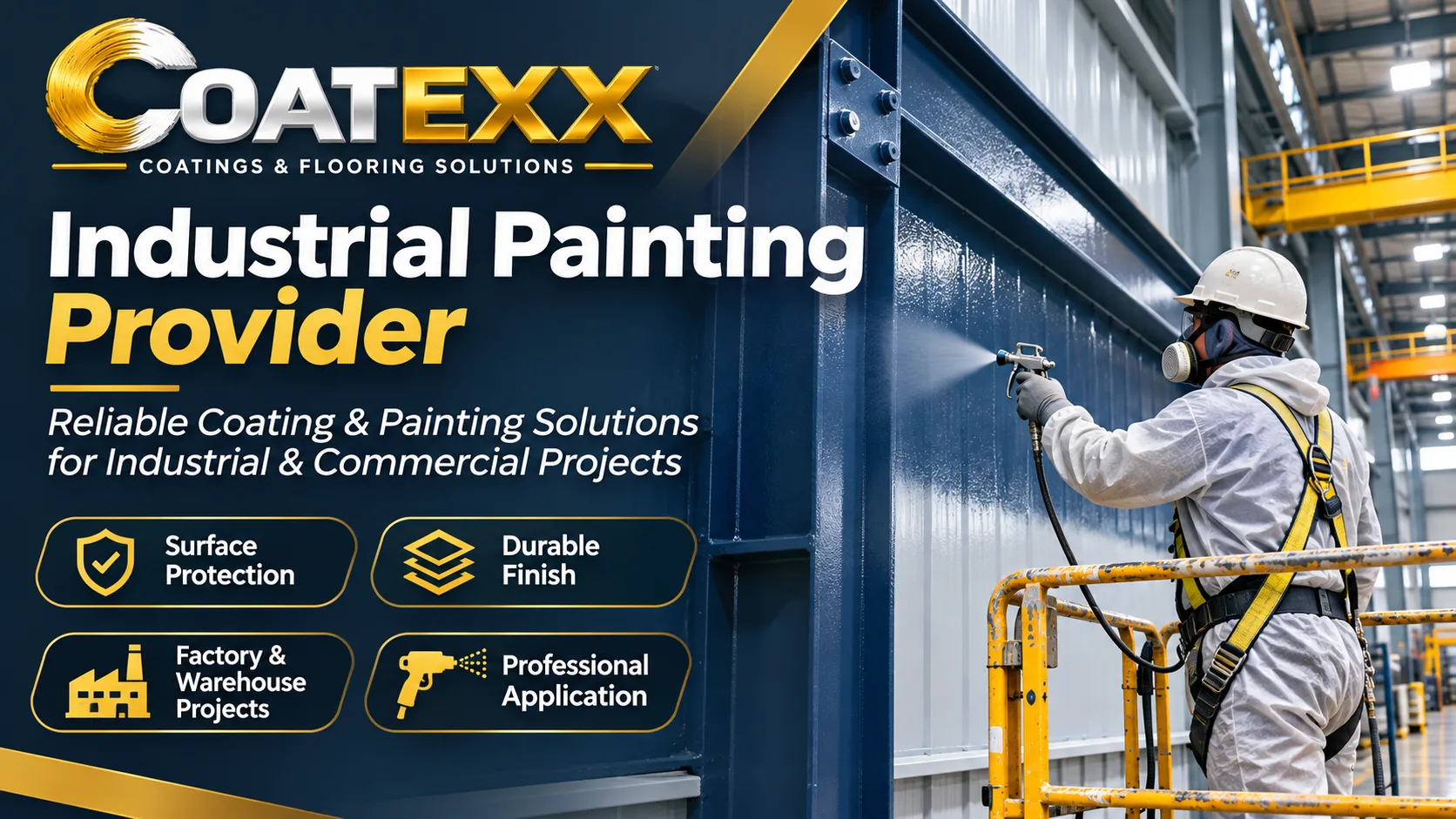
Professional Industrial Painting Services focus on protecting these surfaces while improving their appearance and maintainability.
1. Corrosion Protection
Appropriate primers and protective topcoats help reduce moisture exposure and corrosion on properly prepared metal surfaces.
2. Improved Surface Durability
Suitable coating systems can provide resistance to abrasion, environmental exposure, and selected chemicals.
3. Easier Facility Maintenance
Uniform protective finishes can make compatible surfaces easier to clean and inspect.
4. Better Workplace Appearance
Well-maintained industrial surfaces contribute to a cleaner, more organised working environment.
The actual performance depends on coating selection, surface preparation, application conditions, and maintenance.
What Types of Industrial Painting Are Used in Manufacturing Facilities?
Different industrial surfaces require different coating systems.
Epoxy Protective Painting
Epoxy coatings are commonly considered for suitable steel, concrete, and industrial surfaces requiring strong adhesion and chemical resistance.
Polyurethane Painting
Polyurethane topcoats may provide weathering resistance and durable finishes for compatible industrial applications.
Anti-Corrosion Metal Painting
These systems typically involve rust removal, suitable primers, and protective topcoats designed for the expected exposure conditions.
Concrete Surface Painting
Concrete walls, ceilings, and utility areas may require compatible sealers, primers, and protective finishes.
The correct system depends on substrate condition, environmental exposure, and the desired coating performance.
What Is the Process of Professional Industrial Painting?
A systematic application process is essential for achieving a consistent protective finish.
Step 1: Site Assessment
The contractor examines the surfaces, operating conditions, accessibility, and project requirements.
Step 2: Surface Preparation
Dust, rust, grease, loose paint, and other contaminants are removed using suitable preparation methods.
Step 3: Surface Repairs
Damaged areas, cracks, and surface defects are addressed where necessary.
Step 4: Primer Application
A compatible primer is applied to support adhesion and provide specified protective properties.
Step 5: Protective Coating Application
Intermediate coats and topcoats are applied according to the selected coating system and manufacturer's instructions.
Step 6: Inspection and Handover
The finished surface is checked for coverage, visible defects, and relevant coating requirements before handover.
How to Choose the Right Industrial Painting Provider
Selecting a contractor based only on the lowest quotation can create problems with material selection, preparation, and project execution.
Consider these factors before making a decision.
Technical Experience
Choose a contractor familiar with industrial structures, steel surfaces, factory environments, and commercial projects.
Surface Inspection
The contractor should identify corrosion, existing coating defects, contamination, and other conditions affecting application.
Coating Compatibility
Selected materials must suit the substrate and expected environmental exposure.
Application Planning
Industrial painting projects may require ventilation arrangements, safe access, equipment protection, and coordination with production schedules.
Quality Control
Ask how coating thickness, curing conditions, surface coverage, and finishing quality will be checked.
A reliable contractor should explain the proposed coating system and provide a clearly defined scope of work.
What Factors Affect Industrial Painting Costs?
Project costs depend on several technical and operational requirements.
Important factors include:
- Total surface area requiring treatment.
- Existing surface condition and preparation work.
- Primer, coating type, and number of layers.
- Access requirements for elevated or restricted areas.
- Labour, equipment, and application complexity.
- Project scheduling and curing requirements.
Businesses seeking Professional services of painting should request quotations that clearly specify preparation, materials, application methods, and inspection requirements.
Comparing complete project scopes is more useful than comparing only the price per square foot.
How Do Painting and Waterproofing Services Work Together?
Industrial painting protects selected surfaces against environmental exposure, wear, and corrosion. Waterproofing primarily controls water penetration through building structures.
Both services may be required within the same facility, but they should not be treated as interchangeable solutions.
For example, factory roofs experiencing leakage may require dedicated Waterproofing Services before decorative or protective finishing is considered.
Similarly, production floors may need specialised Epoxy Flooring Services rather than ordinary wall or metal painting systems.
Coordinated planning helps facility managers select treatments appropriate for each surface.
Why Consider Coatexx Industrial Solutions?
Coatexx Industrial Solutions provides industrial protective painting, flooring, and waterproofing solutions for manufacturing and commercial facilities.
The company evaluates surface conditions, coating requirements, environmental exposure, and application needs before recommending suitable systems.
Its published service range includes epoxy painting, polyurethane protective coatings, anti-corrosion metal painting, and concrete surface finishes.
Businesses can discuss project requirements, surface preparation, coating specifications, and application schedules with the Coatexx team.
Frequently Asked Questions
1. What are Industrial Painting Services?
Industrial painting involves preparing and coating suitable factory walls, steel structures, machinery exteriors, warehouses, and other industrial surfaces.
2. How do I select a reliable industrial painting provider?
Evaluate technical experience, surface inspection procedures, coating compatibility, application planning, and quality-control practices.
3. What is included in Professional services of painting?
The scope may include site inspection, surface cleaning, repairs, primer application, protective coatings, and final inspection.
4. Which coating is suitable for industrial steel structures?
The correct coating depends on corrosion exposure, surface condition, operating environment, and project specifications. Epoxy and polyurethane systems may be considered where appropriate.
5. How often should industrial surfaces be repainted?
Repainting intervals depend on the coating system, environmental exposure, wear, surface condition, and maintenance practices. Regular inspections help identify when recoating is needed.
Conclusion
Choosing the right industrial painting contractor requires careful evaluation of technical capabilities, coating materials, surface preparation, and project requirements.
Professional application and appropriate maintenance help businesses protect industrial surfaces and manage long-term facility upkeep.
For factory, warehouse, and structural painting requirements, explore Coatexx Industrial Painting Services and request a site-specific quotation.