Launching an online store is easier than ever, but choosing the right technology behind it can be challenging. Your e-commerce platform affects everything from website performance and customer experience to inventory management and long-term business growth.
Whether you're starting a new online business or replacing an existing solution, selecting the best e-commerce platform requires more than comparing pricing plans or feature lists. The platform should align with your business goals, support future growth, and provide a smooth shopping experience for your customers.
This guide outlines the key factors every business should consider before making a decision.
What Is an E-commerce Platform?
An e-commerce platform is software that enables businesses to sell products or services online. It provides the tools needed to manage products, process orders, accept payments, and deliver a seamless shopping experience.
Most modern platforms include features such as:
- Product catalog management
- Shopping cart and checkout
- Payment gateway integration
- Inventory management
- Customer account management
- Order tracking
- Marketing and reporting tools
The right platform acts as the foundation of your online business.
Why Choosing the Right Platform Matters
Your e-commerce platform influences both customer satisfaction and operational efficiency.
Choosing the wrong solution can result in:
- Slow website performance
- Poor mobile experiences
- Limited scalability
- Difficult integrations
- Higher maintenance costs
- Lost sales opportunities
A well-chosen platform helps businesses grow while adapting to changing customer expectations.
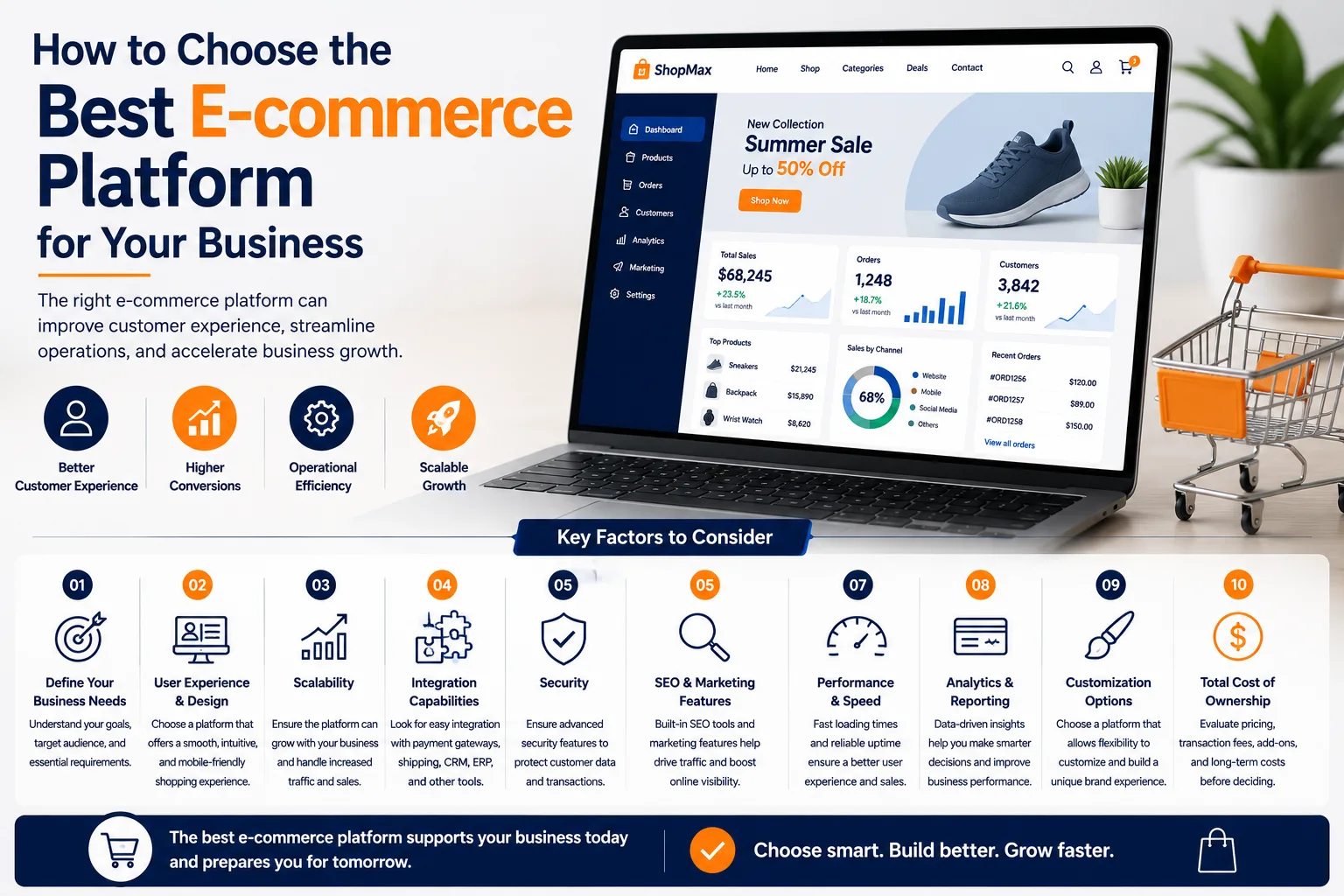
1. Define Your Business Requirements
Before comparing platforms, identify your business needs.
Ask yourself:
- What products will you sell?
- How many products will you manage?
- Will you sell internationally?
- Do you need multi-language support?
- How many team members will use the platform?
Clear business requirements make platform selection much easier.
2. Prioritize User Experience
Customers expect a fast, simple, and secure shopping experience.
Look for a platform that supports:
- Easy navigation
- Fast page loading
- Mobile-friendly design
- Simple checkout process
- Secure payment options
A positive user experience often leads to higher conversion rates and better customer retention.
3. Evaluate Scalability
Your business may grow faster than expected.
Choose an e-commerce platform that can support:
- Increased website traffic
- Larger product catalogs
- Multiple storefronts
- International expansion
- Higher transaction volumes
A scalable solution reduces the need for expensive platform migrations in the future.
4. Check Integration Capabilities
Most businesses rely on multiple software solutions.
Your platform should integrate easily with:
- CRM systems
- ERP software
- Payment gateways
- Shipping providers
- Marketing automation tools
- Analytics platforms
Strong integrations improve efficiency and reduce manual work.
5. Compare Security Features
Customer trust depends on protecting sensitive information.
Look for features such as:
- SSL support
- Secure payment processing
- User access controls
- Data encryption
- Fraud protection
- Regular security updates
Security should always be a priority when selecting an e-commerce platform.
6. Review SEO Capabilities
Organic search remains one of the most valuable traffic sources for online stores.
Choose a platform that supports:
- Custom URLs
- Meta titles and descriptions
- Canonical tags
- XML sitemaps
- Schema markup
- Fast page performance
Strong SEO features help improve visibility in search engine results.
7. Assess Performance and Speed
Website speed has a direct impact on customer experience and conversions.
Evaluate whether the platform provides:
- Fast loading times
- Reliable hosting options
- Content delivery network (CDN) support
- Performance optimization tools
Even small improvements in page speed can significantly reduce cart abandonment.
8. Consider Customization Options
Every business has unique requirements.
Choose a platform that allows you to customize:
- Website design
- Checkout experience
- Product pages
- Customer journeys
- Marketing campaigns
Flexibility makes it easier to adapt as your business evolves.
9. Analyze Reporting and Analytics
Business decisions should be based on data rather than assumptions.
A quality e-commerce platform should provide insights into:
- Sales performance
- Customer behavior
- Conversion rates
- Traffic sources
- Product performance
- Revenue trends
These insights help businesses continuously improve their online stores.
10. Understand Total Cost of Ownership
The lowest subscription price does not always represent the best value.
Consider:
- Platform licensing
- Development costs
- Third-party integrations
- Transaction fees
- Maintenance
- Ongoing support
Evaluating total ownership costs helps avoid unexpected expenses later.
Common Mistakes When Choosing an E-commerce Platform
Selecting Based Only on Price
A low-cost platform may lack important features needed for long-term growth.
Ignoring Future Growth
Many businesses choose a platform that meets today's needs but struggles as the business expands.
Overlooking Customer Experience
A platform should simplify the buying process rather than create unnecessary obstacles.
Forgetting Mobile Users
With a significant share of online purchases happening on mobile devices, mobile optimization should be a priority.
Frequently Asked Questions
What is the best e-commerce platform for a growing business?
The best platform depends on your business model, product catalog, budget, scalability needs, and integration requirements.
Should I choose a hosted or self-hosted platform?
Hosted platforms are generally easier to manage, while self-hosted solutions offer greater flexibility and customization.
How important is SEO when choosing an e-commerce platform?
SEO is extremely important. A platform with strong SEO capabilities helps improve search visibility, attract organic traffic, and increase sales over time.
Final Thoughts
Choosing the best e-commerce platform is one of the most important decisions for any online business. Rather than focusing only on features or pricing, businesses should evaluate scalability, performance, security, integrations, SEO capabilities, and customer experience.
A well-planned platform investment creates a stronger foundation for long-term growth, better customer satisfaction, and increased online sales.
Organizations working with experienced digital commerce specialists such as Neortus are increasingly taking a strategic approach to platform selection, ensuring their e-commerce investments support both current business needs and future expansion.