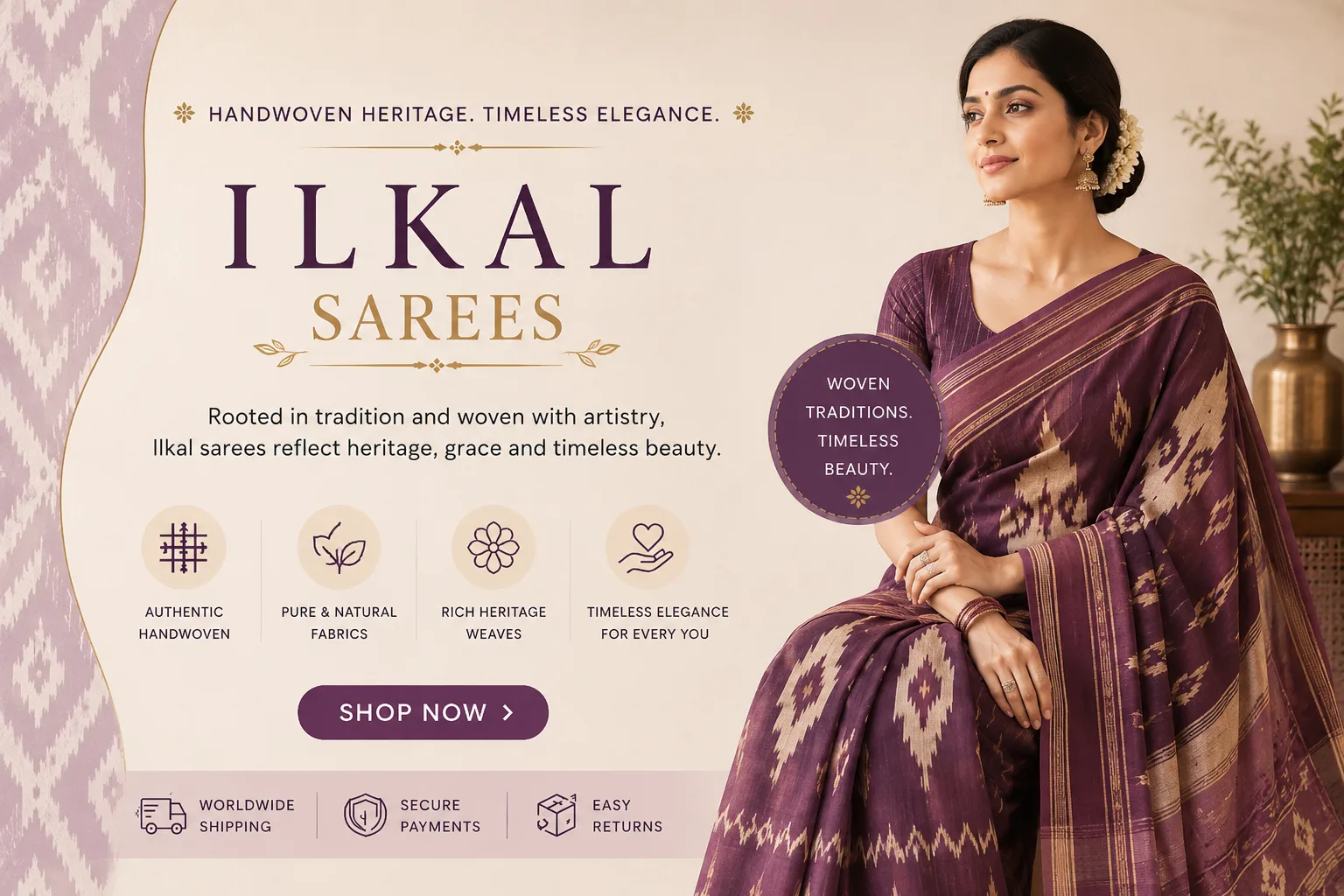
Handloom sarees have always been admired for their craftsmanship, cultural significance, and timeless beauty. Among India's most treasured weaving traditions, Ilkal Sarees hold a special place. Originating from the town of Ilkal in Karnataka, these sarees are known for their distinctive borders, vibrant colors, and unique weaving techniques that have been preserved for generations.
However, with the growing popularity of handloom fashion, the market is increasingly filled with machine-made replicas that resemble authentic Ilkal Sarees. For buyers who value genuine craftsmanship, knowing how to identify a pure Ilkal saree before making a purchase is essential. Understanding the key features of authentic Ilkal weaving can help you invest in a saree that truly reflects the heritage and artistry of this traditional textile.
Understanding the Heritage of Ilkal Sarees
The history of Ilkal Sarees dates back several centuries and is closely tied to the weaving communities of Karnataka. These sarees were traditionally woven for local women and gradually gained recognition across India because of their distinctive appearance and exceptional durability.
Over time, Ilkal weaving evolved into one of the most respected handloom traditions in the country. Even today, skilled artisans continue to use traditional techniques that have been passed down through generations, ensuring that the authenticity of the craft remains intact.
Why Authenticity Matters When Buying Ilkal Sarees
Purchasing an authentic handwoven saree is not just about fashion; it is also about preserving a rich cultural heritage. Genuine Ilkal Sarees showcase the expertise and dedication of artisans who spend days creating each piece using traditional handloom methods.
Choosing authentic sarees also supports weaving communities and promotes sustainable fashion. Unlike mass-produced garments, handwoven Ilkal sarees are crafted with attention to detail and superior workmanship, making them a valuable addition to any wardrobe.
Check the Traditional Tope Teni Technique
One of the easiest ways to identify authentic Ilkal Sarees is by examining the famous Tope Teni technique. This traditional method involves weaving the body of the saree and the pallu separately before joining them together using a unique interlocking process.
This joining technique is exclusive to Ilkal weaving and serves as one of the strongest indicators of authenticity. Machine-made imitations often fail to replicate this traditional construction accurately, making it an important detail to look for when shopping.
Examine the Distinctive Pallu Design
The pallu is one of the most recognizable features of authentic Ilkal Sarees. Traditional Ilkal pallus typically feature bold patterns created using white designs on a red background, although modern variations may include different color combinations.
These geometric patterns are woven directly into the fabric rather than printed on the surface. A genuine handwoven pallu will display clarity, texture, and craftsmanship that reflect the skill of the artisan.
Look Closely at the Borders
Authentic Ilkal Sarees are famous for their wide and vibrant borders. Traditional designs often include temple motifs, geometric patterns, and distinctive color contrasts that create a striking visual effect.
The border should appear seamlessly integrated into the weave rather than attached separately. High-quality weaving ensures consistency in design, making the border one of the key elements that indicate authenticity.
Identify the Fabric Quality
The quality of fabric can reveal a lot about whether an Ilkal saree is genuine. Traditional Ilkal Sarees are commonly woven using cotton, silk, or cotton-silk blends. Authentic handloom fabrics generally have a natural texture that feels comfortable and breathable.
Unlike synthetic imitations, genuine handwoven fabrics possess subtle variations that result from the manual weaving process. These irregularities are signs of craftsmanship and should not be mistaken for defects.
Observe the Weaving Imperfections
One common misconception among buyers is that every authentic saree should look perfectly uniform. In reality, handcrafted Ilkal Sarees often contain slight irregularities in weave, texture, or motif placement.
These minor variations are natural outcomes of handloom production and serve as evidence that the saree was woven by skilled artisans rather than manufactured by machines. Perfect uniformity can sometimes indicate mass production rather than authenticity.
Check for Handloom Certification
When purchasing Ilkal Sarees online or from retail stores, always check whether the product carries handloom certification or artisan information. Many reputable sellers provide details about the weaving process, artisan communities, and sourcing practices.
Government-recognized handloom labels and certifications can offer additional assurance regarding authenticity. Buying from trusted handloom brands further reduces the risk of purchasing imitation products.
Evaluate the Weight and Drape
Authentic Ilkal Sarees are known for their comfortable drape and balanced weight. Cotton varieties feel lightweight and breathable, while silk and cotton-silk versions offer a slightly richer texture without feeling excessively heavy.
When worn, genuine Ilkal sarees fall gracefully and maintain their structure. Synthetic replicas often lack the natural flow and softness that characterize handwoven textiles.
Purchase from Trusted Sources
One of the safest ways to ensure authenticity is to buy from established handloom retailers and artisan-focused brands. Reputable sellers usually provide transparent information about the origin, weaving technique, and fabric composition of their sarees.
Reading customer reviews and examining detailed product images can also help buyers make informed decisions. Investing time in researching the seller often leads to a better purchasing experience and greater confidence in the product's authenticity.
Common Mistakes Buyers Should Avoid
Many buyers focus solely on appearance and overlook important indicators of authenticity. Choosing a saree based only on price or attractive photographs can sometimes result in purchasing machine-made replicas instead of genuine handwoven pieces.
Another common mistake is ignoring fabric details and weaving information. Understanding the unique characteristics of authentic Ilkal Sarees can help buyers avoid disappointment and ensure that they receive a product that reflects true handloom craftsmanship.
Why Authentic Ilkal Sarees Are Worth the Investment
Authentic Ilkal Sarees offer more than visual beauty. They represent centuries of weaving heritage, skilled craftsmanship, and cultural significance. Their durability and timeless appeal make them garments that can be cherished and worn for many years.
In addition to their aesthetic value, purchasing genuine handwoven sarees supports artisan communities and helps preserve traditional weaving practices. This combination of quality, heritage, and sustainability makes authentic Ilkal sarees a worthwhile investment.
Frequently Asked Questions (FAQs)
How can I identify pure Ilkal Sarees?
Pure Ilkal Sarees can be identified by their traditional Tope Teni joining technique, distinctive pallu design, wide borders, and handwoven texture.
What is the Tope Teni technique?
Tope Teni is a traditional Ilkal weaving method where the body and pallu are woven separately and joined together using an interlocking process.
Which fabric is used in authentic Ilkal Sarees?
Authentic Ilkal Sarees are commonly woven using cotton, silk, or cotton-silk blends.
Are slight weaving irregularities normal in handloom sarees?
Yes. Minor variations in texture and weave are natural signs of handwoven craftsmanship and indicate authenticity.
Why are authentic Ilkal Sarees more expensive?
The handloom weaving process requires significant skill, time, and effort, which contributes to the value of authentic sarees.
Can I buy authentic Ilkal Sarees online?
Yes. Purchasing from reputable handloom brands and verified sellers can help ensure authenticity.
What colors are common in traditional Ilkal Sarees?
Traditional Ilkal Sarees often feature vibrant shades such as red, green, blue, mustard, maroon, and black with contrasting borders.
Are Ilkal Sarees suitable for festivals and weddings?
Absolutely. Silk and cotton-silk Ilkal Sarees are popular choices for festive occasions, weddings, and cultural celebrations.
How should I care for my Ilkal Saree?
Cotton sarees can generally be hand washed, while silk and blended varieties are best maintained through dry cleaning.
Why should I choose authentic handwoven Ilkal Sarees?
Authentic Ilkal Sarees offer superior craftsmanship, durability, cultural value, and support traditional artisan communities.
Conclusion
Buying authentic Ilkal Sarees requires attention to details such as weaving techniques, fabric quality, pallu design, and border craftsmanship. Understanding these characteristics allows buyers to distinguish genuine handwoven sarees from machine-made imitations and make more informed purchasing decisions.
A pure Ilkal saree is not just an item of clothing—it is a reflection of India's rich textile heritage and the dedication of skilled artisans. By choosing authentic handloom creations, you invest in timeless elegance while helping preserve one of Karnataka's most cherished weaving traditions.