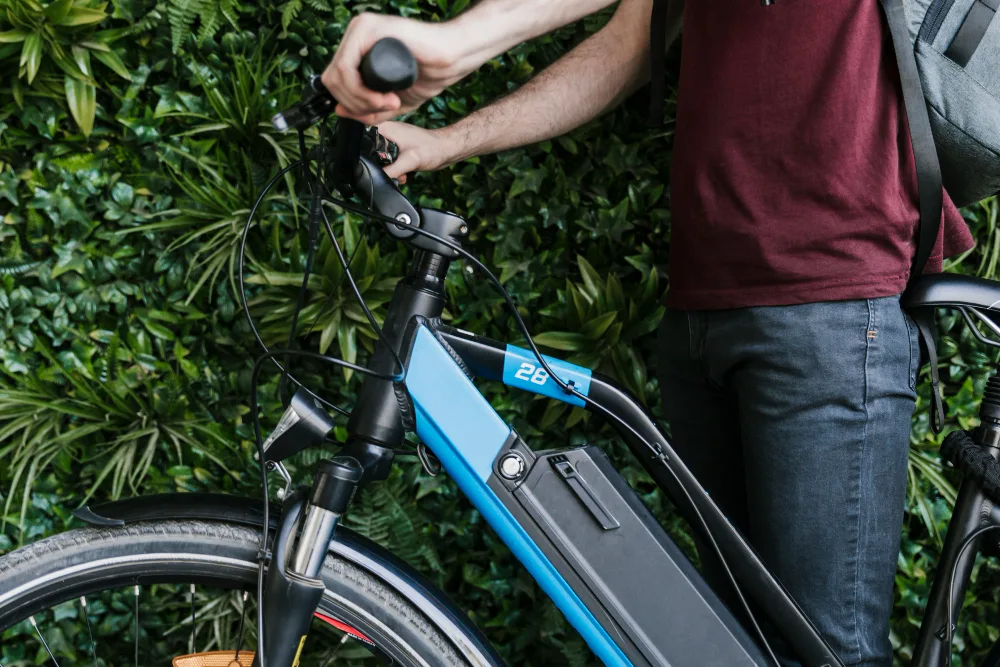
We often hear from riders who've picked up one of our E-Bikes and then start eyeing routes that lead well away from towns, cafes, and easy power sockets. It's an exciting idea, since a good e-bike makes those quieter, more remote rides feel within reach. The only catch is that once you leave the places where you can plug in, the battery you start with is pretty much the battery you've got.
That doesn't mean you need to stay close to home. It just means the preparation shifts from finding somewhere to charge to making the most of the charge you carry. So let's walk through how we'd get ready for a ride where a top up simply isn't going to happen.
Start the Day With a Full and Healthy Battery
The simplest step is also the one that matters most. Charge the battery fully before you leave, ideally shortly before you set off, so it hasn't been sitting at full charge for days. Use the charger that came with the bike, and keep the battery at a moderate temperature while it charges and while it waits.
It's also worth thinking about how healthy the battery is. An older pack that's been through many charge cycles won't hold as much as it once did, so the range you remember from the first year may be optimistic. If you've noticed the battery draining faster than it used to, plan around that lower figure.
Work Out a Realistic Range, Then Add a Buffer
Quoted range figures are usually measured in gentle conditions, so treat them as a best case rather than a guarantee. Hills, headwinds, cold weather, heavy loads, and strong assist levels all shorten the distance you'll get, sometimes quite noticeably. A better guide comes from your own rides, so try to note how much charge a familiar route uses before attempting something longer.
Once you've got a sensible number, keep a generous reserve. Aim to finish with a fair amount still in the battery, rather than planning to use every last bit. Conditions can change during the day, and that cushion is what turns a surprise detour from a problem into a minor inconvenience.
Choose a Route That Respects Your Battery
Without the option to charge, the route itself becomes your most useful tool. Look at the elevation profile and think about where the long climbs fall, since those are the sections that use the most energy. A loop that finishes with an easy, downhill or flat stretch is far more forgiving than one that saves the toughest climb for the end.
It also helps to pick a route with natural shortcuts. If you can cut the ride short by taking a more direct road home, you've got a way to protect yourself if the battery drains faster than expected. Knowing your bail out options before you leave makes the whole ride feel more relaxed.
Carry a Backup Plan, Not Just a Charger
If the battery is removable, a spare can double your range and take most of the worry away, though it adds weight and cost. Some riders also carry a lightweight portable option where it's compatible with their bike, and it's important to follow the manufacturer's guidance, since not every battery or charger is designed to be used that way.
Beyond power, think about what you'd do if the battery ran flat. Pedalling an e-bike without assistance is possible, but the bike is heavier than a regular bicycle, so it helps to know the route home is realistic without the motor. Carrying a basic repair kit, water, snacks, and a charged phone with an offline map adds a useful layer of safety.
Ride Efficiently to Make the Charge Last
How you ride has a big effect on how far a battery goes. Use lower assist levels on flat sections and save the stronger modes for climbs, and try to keep a steady cadence rather than sprinting away from every stop. Changing gear early, before a hill bites, keeps the motor working efficiently rather than straining.
Small things also add up. Keeping tyres properly inflated reduces rolling resistance, travelling light helps, and checking the battery level on the display every so often lets you adjust before you're in a tight spot. Many Electric Bikes show remaining charge and assist level clearly, so use those readouts as a running guide rather than an afterthought.
Pay Attention to the Weather
Cold weather in particular can reduce a battery's performance, which means the same route may feel harder on a chilly morning than on a mild afternoon. If it's cold, keep the battery warm before you set off, and avoid leaving it somewhere freezing for long periods. Extreme heat can also be hard on a battery, so keep it out of direct sun and hot vehicles where you can.
Wind and rain matter too. A strong headwind or wet roads increase the effort needed and shorten your range, so allow a little extra margin when the forecast looks challenging.
Prepare Well and Enjoy the Quiet
When you prepare for an e-bike ride when charging facilities are limited, the trip tends to feel calmer rather than more stressful. You start with a full battery, ride a route that suits it, carry a sensible backup, and keep an eye on how you're spending your energy.
Take a little time before you go to think through the range, the route, and the what-ifs, and the remote sections become the best part of the ride. Most riders find that a bit of preparation leaves them free to enjoy the scenery rather than watching the battery indicator.