
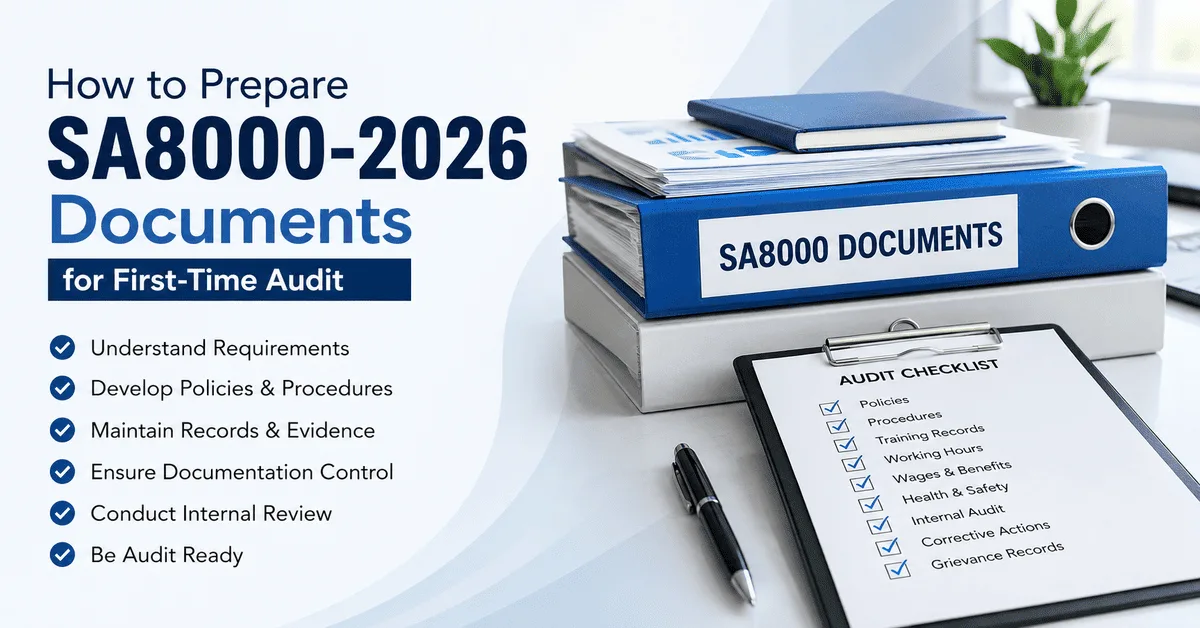
Preparing for an SA8000 certification audit for the first time can feel complex, especially when organizations are unsure about what SA8000:2026 documents are required and how they should be structured. A well-organized documentation system is the foundation of successful certification, as auditors rely heavily on documented evidence to verify compliance with the SA8000 standard.
This guide explains how to prepare your documentation step by step to ensure audit readiness and smooth certification approval.
1. Understand SA8000 Documentation Requirements
The first step is to understand what kind of documentation is expected in the SA8000 system. Organizations must maintain structured records related to labor rights, health & safety, working hours, wages, and management systems.
Typical SA8000:2026 documents include policies, procedures, SOPs, training records, internal audit reports, and grievance handling formats. These documents act as proof that your organization is implementing ethical workplace practices.
Without proper documentation, even well-managed systems may fail during the audit because auditors require written evidence for every requirement.
2. Create SA8000 Policy Framework
Before developing detailed procedures, organizations should establish core policies aligned with SA8000 requirements. These include:
- Child labor policy
- Forced labor policy
- Health & safety policy
- Working hours policy
- Discrimination policy
- Disciplinary practices policy
Each policy should clearly define objectives, responsibilities, and implementation methods. This ensures consistency across departments and supports compliance during the audit.
3. Develop Procedures and SOPs
After policies, the next step is to create Standard Operating Procedures (SOPs). These explain how each policy is implemented in daily operations.
For example:
- Internal audit procedure
- Corrective action and Preventive action (CAPA) procedure
- Supplier control procedure
- Training procedure
- Grievance handling procedure
Well-defined procedures help organizations demonstrate systematic compliance during the SA8000 audit.
4. Maintain Mandatory Records and Evidence
Auditors focus heavily on records because they provide proof of implementation. Key records include:
- Employee training records
- Wage and salary records
- Working hour logs
- Health & safety inspection reports
- Internal audit reports
- Supplier evaluation records
- Complaint and grievance logs
According to SA8000 requirements, these records must be accurate, traceable, and regularly updated to ensure compliance.
5. Prepare Audit Checklist and Documentation Control System
A strong documentation control system is essential for ensuring that all SA8000 requirements are properly managed and easily accessible during the audit. Organizations must ensure that all records, policies, and procedures are consistently maintained and updated as part of their compliance system.
At this stage, having a complete and well-structured set of SA8000:2026 documents becomes critical for audit readiness, as it provides the full framework of policies, procedures, SOPs, and records required for certification.
In addition, an internal audit checklist should be used to verify whether the documentation system is complete and aligned with SA8000 requirements. This helps identify gaps early and ensures that corrective actions can be implemented before the certification audit.
6. Conduct Internal Review Before Audit
Before the final certification audit, organizations should conduct a full internal review of their documentation system. This includes checking:
- Completeness of SA8000 documents
- Accuracy of records
- Alignment between policies and implementation
- Availability of audit evidence
Internal review helps ensure that all gaps are corrected in advance, improving the chances of first-time certification success.
7. Get Professional Documentation Support
Many organizations take expert support to ensure SA8000 compliance. Consultants provide ready-to-use templates, documentation kits, and audit guidance that reduce time and errors.
A structured SA8000 manual helps understand how policies, procedures, and records are organized in a compliant system.
A complete set of documents is essential for audit readiness, as it includes all required policies, SOPs, and records in a structured format.
This helps organizations quickly build a compliant system and avoid missing key requirements.
Conclusion
Preparing SA8000 documentation for a first-time audit requires a structured approach involving policies, procedures, records, and internal checks. A strong documentation system not only ensures compliance but also improves operational discipline and audit readiness.
By organizing your SA8000:2026 documents properly and following a systematic preparation approach, your organization can significantly increase the chances of achieving successful certification in the first attempt.