Starting a boutique is one of the most popular business ideas in India, and for good reason. Demand for designer wear, occasion outfits and personalised clothing keeps growing, and a boutique can start small, from home or a single shop, and grow steadily. But many boutiques struggle in their first year, not because the designs are weak, but because the business side wasn't planned.
This guide walks through the practical steps: choosing a niche, planning your budget, sourcing materials, pricing correctly and finding your first customers.
1. Choose a Clear Niche
"Women's clothing" is not a niche. A boutique grows faster when customers know exactly what it is known for. Some examples:
- Bridal and occasion wear
- Indo-western and fusion outfits
- Designer blouses
- Kidswear and festive wear for children
- Everyday cotton and handloom wear
- Men's ethnic wear, such as kurtas, bandhgalas and sherwanis
Pick one core niche and a clear customer, for example working women aged 25 to 40 who want festive outfits that aren't heavy. Every decision after this, from fabrics to pricing to Instagram content, becomes easier.
2. Decide Your Business Model
There are three common models:
- Made-to-measure: you stitch outfits to each customer's measurements. This needs lower inventory but more time per order.
- Ready-to-wear: you produce small batches in standard sizes. This scales better, but needs more upfront stock.
- Hybrid: a small ready-to-wear collection plus custom orders. Many boutiques start here.
Also decide where you'll sell: from home, from a shop, online-first through Instagram and WhatsApp, or a mix.
3. Plan Your Budget
Costs vary widely by city and scale, so build your own budget around these heads:
- Space (home setup or shop rent and interiors)
- Machines and tools
- Tailors and karigars, whether salaried or per piece
- First stock of fabric and trims
- Samples and a small first collection
- Photoshoot and basic branding (logo, labels, packaging)
- Marketing
- Working capital for at least a few months
Keep a buffer. Delayed payments and slow first months are normal.
4. Take Care of Registration and Compliance
Register your business, open a separate bank account, and understand your GST and tax requirements. These depend on your turnover, business structure and whether you sell online or across states, so speak with a chartered accountant early rather than fixing things later.
5. Build Reliable Sourcing for Fabric and Trims
Fabric decides the base quality, but trims often decide how premium an outfit looks. Buttons, laces, necklines, yoke sets, brooches and patches are the details customers notice up close, and they are where a boutique can stand apart from mass-market clothing.
A few practical habits:
- Build a trims library. Keep samples of every button, lace and embellishment you use, labelled with the supplier and product code. Reordering becomes simple.
- Test before bulk buying. Stitch and press a sample on your actual fabric first.
- Buy one batch per collection. Laces and plated buttons can vary slightly between batches, so buy enough for the full collection.
- Find one reliable wholesale supplier for core trims. Fewer suppliers means fewer delays and better consistency.
6. Create a Signature Style
The boutiques people remember usually have a recognisable detail: a signature neckline, a particular kind of button, lace borders on every sleeve, or statement brooches on jackets. Choose one or two design signatures and repeat them across collections so customers can recognise your work.
7. Price Your Designs Properly
Underpricing is one of the most common reasons boutiques struggle. Build a simple cost sheet for every design:
- Fabric
- Trims (buttons, laces, embellishments, lining)
- Stitching and finishing labour
- Packaging and labels
- A share of rent, salaries and other overheads
- Your profit margin
Premium trims often add a small amount to cost but a large amount to perceived value, so price for the finished look, not just the fabric.
8. Launch a Small, Focused First Collection
Start with a tight collection of designs rather than a huge range. Shoot it well in natural light with clean backgrounds and clear close-ups of details like buttons, lace and necklines. Good photos matter as much as good stitching, especially online.
9. Get Your First Customers
- Instagram: post reels showing the making process, fabric and trim close-ups, and try-ons.
- WhatsApp Business: set up a catalogue and share new designs with your customer list.
- Google Business Profile: essential if you have a physical boutique, so local customers can find you.
- Exhibitions and pop-ups: a quick way to meet buyers face to face.
- Word of mouth: deliver on time and your first ten customers will bring the next fifty.
10. Set Up Simple Systems Early
Record every customer's measurements, track orders and delivery dates, and have a clear alteration policy. Missed deadlines hurt a boutique's reputation more than almost anything else, especially during wedding season.
Common Mistakes to Avoid
- Trying to serve every type of customer
- Pricing only on fabric cost
- Changing suppliers for every order, which leads to inconsistent quality
- Buying too much stock before testing demand
- Ignoring online presence
Sourcing Trims for Your Boutique
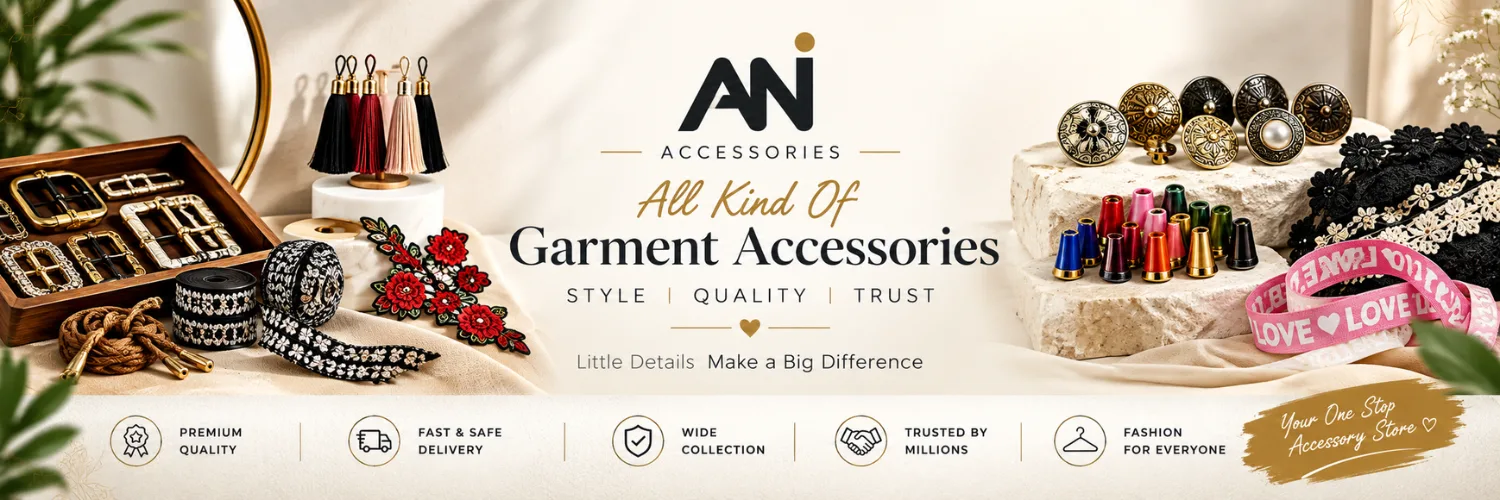
ANI Accessories is a Delhi-based garment trims supplier with over 30 years of wholesale and retail experience, supplying buttons, laces, buckles, brooches, patches, yoke sets and embellishments to boutiques and designers in India and internationally. You can browse the full wholesale collection online.