African beaded bracelets are among the most widely recognized forms of handcrafted jewelry in the world. They appear in street markets and high-end boutiques, in everyday wardrobes and ceremonial dress, and across fashion categories that range from casual to formal. Despite this broad presence, many people who own or purchase these pieces are unsure how to wear them well beyond a basic wrist stack.
This article provides practical styling guidance for african beaded bracelets across different occasions, outfit types, and personal preferences. It also covers the craft background that shapes these pieces, the materials most commonly used, and how to care for them so they last.
The Craft Background of African Beaded Bracelets
To style African bracelet pieces with any real understanding, it helps to know where they come from and what they mean in the communities that created them.
Beaded jewelry production across the African continent spans thousands of years. Different regions developed distinct traditions based on available materials, cultural values, and social structures. In East Africa, Maasai beadwork is among the most recognized internationally. Maasai beaders use tiny glass seed beads in red, white, blue, orange, and green to produce geometric patterns that carry information about the wearer's age, marital status, and community standing. The colors are not decorative choices alone; each combination carries a specific meaning within the community.
In southern Africa, Zulu and Ndebele beadwork traditions use similar seed beads but in different patterns. Ndebele beadwork features strong geometric shapes in bright contrasting colors that have since been referenced widely in fashion and textile design. Zulu beadwork historically allowed communication between individuals through coded color combinations, with specific arrangements conveying messages between young people in courtship settings.
West African bracelet traditions draw more on cast metal and carved wood combined with beads, while Central African traditions often use natural materials, including seeds, shells, and bone, alongside glass beads introduced through trade.
Understanding this range helps buyers and wearers recognize that african beaded bracelets are not a single category. They represent many distinct traditions with different visual languages, material choices, and social functions.
Materials Used in African Beaded Bracelets
The materials in a bracelet shape its weight, durability, and how it reads in a fashion context.
Glass Seed Beads
Glass seed beads are the most common material in african beaded bracelets from East and southern Africa. They are small, uniform, and available in a wide color range, which makes them suitable for detailed pattern work. Pieces made from seed beads tend to be lightweight despite their visual density. The flat or slightly raised surface of a finished seed bead piece reflects light evenly, giving it a matte or low-sheen finish depending on the bead type.
Natural Stone Beads
Stone beads, including turquoise, jasper, agate, and onyx, appear in bracelet styles from across the continent. Stone beads are heavier than glass and carry natural variation in color and surface texture. No two stone beads are identical, which means pieces made from natural stone have built in variation that buyers sometimes prefer over uniform manufactured materials.
Wood and Seed Materials
Wooden beads and beads made from natural seeds such as acai, coconut shell, and baobab seed are common in casual bracelet styles. They are light, comfortable for extended wear, and often used in pieces that emphasize a connection to natural materials. These pieces suit relaxed or outdoor settings particularly well.
Bone and Shell
Bone and shell beads appear in older or more traditional African bracelet pieces. They tend to be used as accent beads alongside glass or stone rather than as the sole material. Shell beads, particularly those made from cowrie shells, have a long history in African trade and decoration.
Metal Elements
Brass, copper, and silver-tone metal beads and spacers appear in many african beaded bracelets, either as the primary material or combined with other bead types. Brass beads in particular have a long association with West African jewelry traditions and add weight and warmth to a bracelet.
How to Wear African Beaded Bracelets Casually
Casual settings offer the most flexibility. The general approach for everyday wear is to keep the overall look grounded rather than elaborate.
A single african beaded bracelet in a natural material such as wood or stone sits comfortably with jeans, linen trousers, cotton shirts, or casual dresses. It adds color and texture without requiring much thought about coordination. For wrist stacks in casual settings, two or three bracelets of varying widths in related colors work well. Keeping the bead materials similar across stacked pieces, such as combining two stone bracelets with one seed bead piece, creates a coherent look.
Color choice for casual wear tends toward earth tones, neutral palettes, or a single accent color against a natural base. Bright multicolor combinations work in casual settings too, particularly in outdoor or social environments where bold color is appropriate.
Shops such as Maroots Store carry casual african beaded bracelets in stone, seed bead, and natural material options suited to everyday wear, with construction quality that holds up to regular use.
Styling African Beaded Bracelets for Work
Professional settings require more restraint. The goal is to incorporate beaded bracelets without making them the primary focus of the outfit.
A single narrow seed bead bracelet in a muted or neutral color range works in most office environments. Pieces in black, white, grey, navy, or earth tones read as professional without drawing attention away from the work context. Avoid wide cuff style pieces or heavily multicolored arrangements in settings where conservative dress is expected.
In creative or informal professional environments, more latitude exists. A stacked bracelet combination in two or three complementary colors can work in media, design, education, and similar fields where personal expression in dress is more accepted.
The width of the bracelet also matters. Narrow single-strand pieces read as understated. Wide cuff-style african beaded bracelets, while appropriate in many social settings, read as more casual and are better suited to after work hours.
Wearing African Beaded Bracelets for Evening and Party Occasions
Evening and party settings offer the most room for elaborate bracelet africa styling. Pieces with more visual weight, brighter color combinations, and wider construction all become appropriate when the occasion calls for dressing up.
Statement Cuffs
Wide cuff-style african beaded bracelets that cover a significant portion of the wrist read as statement pieces. They work best as the primary jewelry element on the wrist, worn alone rather than layered. A statement cuff in bright geometric Ndebele patterns or wide Maasai-style seed bead construction suits formal evening wear, particularly with bare arms or short sleeves that leave the wrist visible.
Layered Stacks for Evening
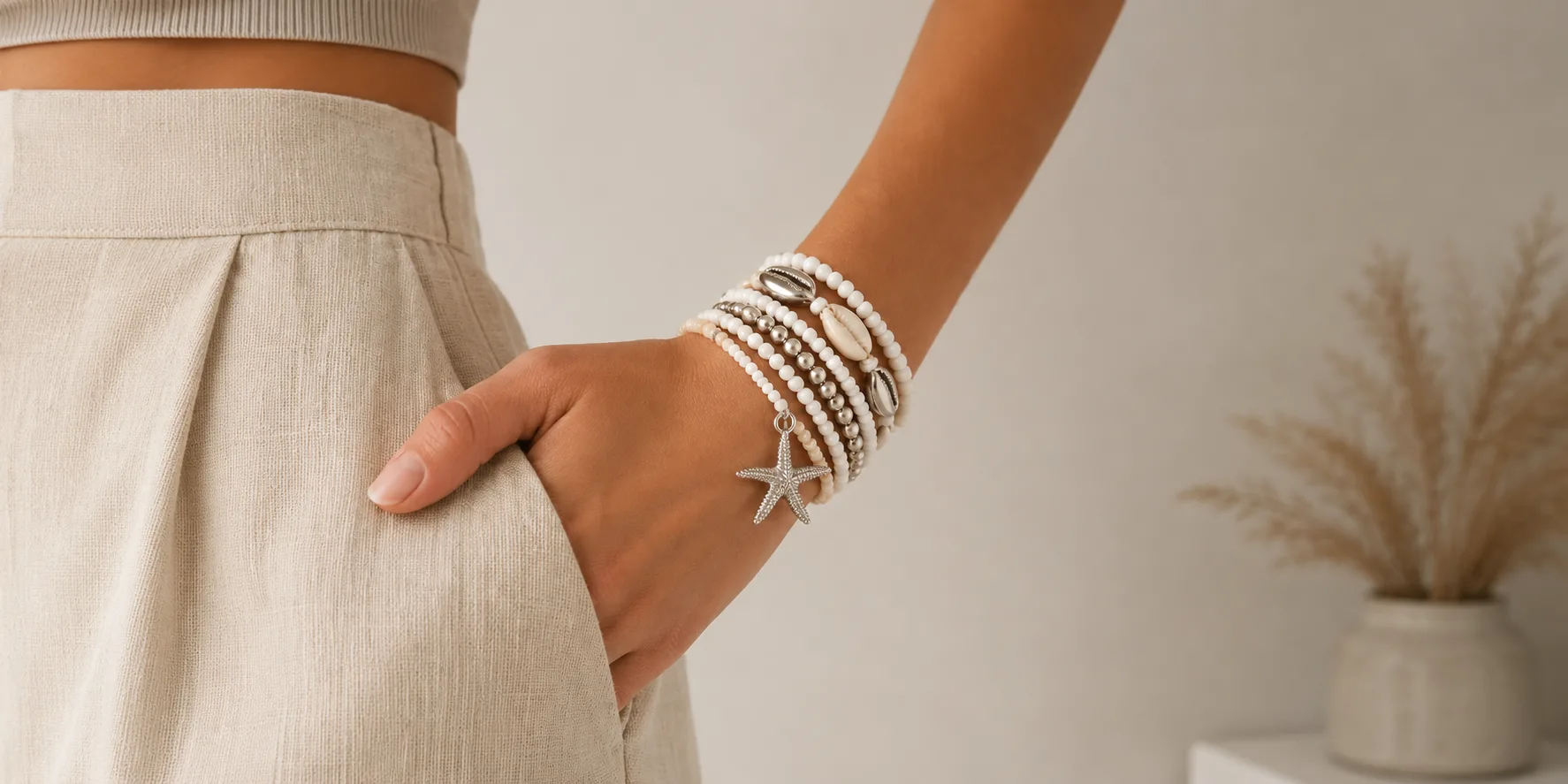
For evening layering, mixing bead materials adds visual complexity. A combination of metallic beads, glass seed beads, and natural stone in the same color family creates a layered wrist arrangement that reads as intentional and dressed up. Three to five bracelets at slightly different widths layered together works for party settings.
Matching to Outfit Color
Evening outfits in solid colors provide an opportunity to use the bracelet as a color accent. A deep blue dress paired with a bracelet africa piece in warm orange and gold tones creates contrast. A white or cream outfit paired with a bright, multicolor african beaded bracelet lets the bracelet carry the visual energy of the look.
African Beaded Bracelets for Cultural and Ceremonial Occasions
In African cultural contexts, beaded bracelets carry meaning beyond decoration. Maasai bracelets in specific color combinations denote stages of life and community membership. Zulu beadwork conveys social information. Ndebele beadwork appears at coming of age ceremonies and other community events.
For buyers outside these traditions who wear african beaded bracelets in cultural or heritage settings, an awareness of this context is useful. Wearing pieces at cultural celebrations, heritage events, or occasions that reference African traditions connects the piece to its original social function rather than treating it as purely decorative.
Retailers such as Maroots Store source and carry bracelet africa pieces that reflect specific regional traditions, giving buyers access to authentic craft work rather than generic approximations of African styles.
Layering African Bracelets Effectively
Layering is one of the most common ways people wear african beaded bracelets, and it is an approach that benefits from a few practical principles.
Work with Length Differences
Bracelets at slightly different diameters or widths will sit at different points on the wrist, creating separation between pieces. This makes each bracelet legible rather than having them merge into an undifferentiated mass.
Keep Color Relationships Clear
Layering works best when the color relationships between pieces are deliberate. This can mean keeping all pieces in the same color family, using a consistent base color across pieces with different accent colors, or consciously pairing complementary colors across the stack. Random color combinations without a unifying principle tend to look unconsidered.
Mix Widths and Textures
A narrow single-strand piece next to a medium-width woven piece next to a slightly wider stone bead piece creates textural variety that makes the stack interesting. All pieces at the same width read as repetitive rather than layered.
Set a Practical Limit
For most wrist sizes, four to five bracelets is a practical upper limit before the stack begins to restrict movement or feel uncomfortable. The visual effect of a large stack can be achieved with fewer pieces if the widths and bead sizes are varied.
Caring for African Beaded Bracelets
African bracelets made from natural materials require straightforward care to maintain their appearance.
Store beaded bracelets in a dry location away from direct sunlight. UV exposure fades dyed beads and weakens natural materials over time. Keep bracelets separate from other jewelry to prevent scratching of softer bead materials such as bone or shell.
Remove beaded bracelets before swimming, bathing, or heavy exercise. Water weakens thread and elastic, and chlorinated or salt water can affect certain bead finishes and natural materials. Wipe beads gently with a soft cloth after wear to remove skin oils and perspiration.
For elastic bracelet africa pieces, inspect the elastic periodically for signs of stretching or wear. An elastic that has lost its tension will eventually break, and replacing it before this point prevents losing beads. Thread-strung pieces should also be checked at the knot points for fraying.
African beaded bracelets are practical, versatile, and grounded in craft traditions that span the continent. Whether worn singly for casual use, stacked for evening occasions, or selected for cultural significance; they suit a wide range of styling contexts. Buyers who take the time to understand bead material, construction quality, and occasion appropriateness will find these pieces work across more situations than a first glance might suggest. Stores such as Maroots Store provide access to a range of african beaded bracelets and bracelet styles, from everyday pieces to those that connect directly to specific regional craft traditions.