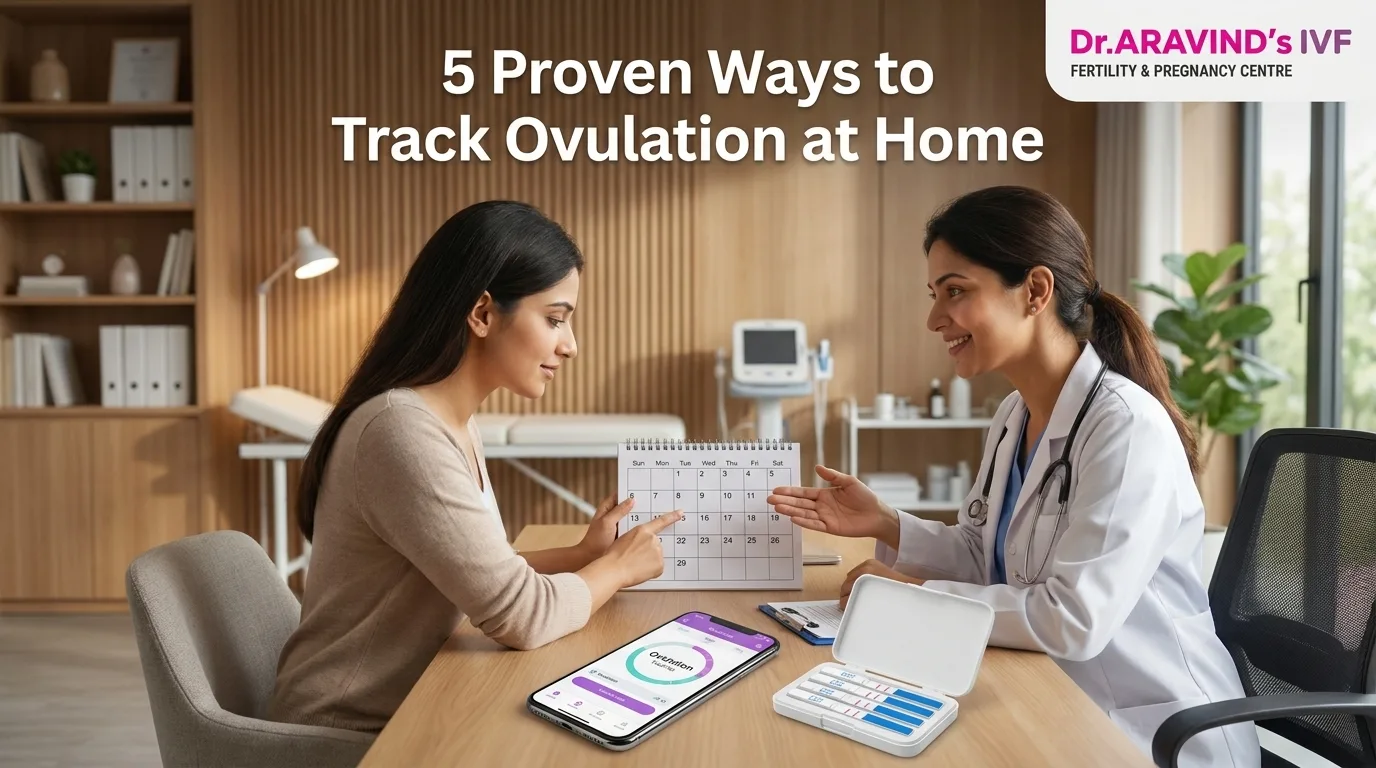
If you are trying to conceive, knowing when you ovulate can significantly improve your chances of pregnancy. Ovulation is the time when an ovary releases an egg, making it the most fertile period of your menstrual cycle.
Many women are surprised to learn that ovulation can often be tracked at home using simple methods. At Dr. Aravind's IVF Fertility & Pregnancy Centre, we encourage patients to understand their fertility patterns before and during conception planning.
Whether you are trying naturally or consulting the best IVF Specialist in Chennai, understanding your fertile window can be an important step toward pregnancy.
Why Ovulation Tracking Matters
Pregnancy is most likely to occur during the fertile window, which includes the days leading up to ovulation and the day ovulation occurs.
Tracking ovulation can help you:
- Identify your most fertile days
- Understand your menstrual cycle better
- Improve timing for conception
- Recognize potential fertility concerns
The more you understand your cycle, the better prepared you can be.
Method 1: Track Your Menstrual Cycle
One of the simplest ways to estimate ovulation is by tracking your menstrual cycle.
For women with regular cycles, ovulation often occurs about 14 days before the next period begins.
You can track:
- First day of each period
- Cycle length
- Patterns over several months
While this method is useful, it may be less accurate for women with irregular cycles.
Method 2: Monitor Cervical Mucus
Changes in cervical mucus can provide valuable clues about ovulation.
As ovulation approaches, cervical mucus often becomes:
- Clear
- Slippery
- Stretchy
- Similar to raw egg whites
These changes help sperm move more easily through the reproductive tract.
Many women find this method easy and cost-effective.
Method 3: Check Basal Body Temperature
Basal body temperature is your body's resting temperature.
After ovulation, hormone changes cause a slight increase in temperature.
To track this:
- Take your temperature every morning before getting out of bed
- Use the same thermometer daily
- Record results consistently
Over time, patterns may help identify when ovulation occurs.
Method 4: Use Ovulation Predictor Kits
Ovulation predictor kits detect the surge of luteinizing hormone (LH) that occurs before ovulation.
These kits are widely available and easy to use at home.
Benefits include:
- Quick results
- Higher accuracy
- Better identification of fertile days
Many women combine this method with cycle tracking for improved accuracy.
Method 5: Watch for Physical Signs
Some women notice natural signs that ovulation is approaching.
These may include:
- Mild pelvic discomfort
- Increased libido
- Breast tenderness
- Light spotting
- Increased cervical mucus
Not every woman experiences these symptoms, but they can provide additional clues.
When Should You Seek Fertility Help?
Ovulation tracking is useful, but it may not identify every fertility issue.
Consider consulting a specialist if:
- You have irregular cycles
- You are not ovulating regularly
- Pregnancy has not occurred despite trying
- You have known reproductive health concerns
An experienced fertility specialist in India can provide detailed fertility assessments and personalized recommendations.
At the best IVF centre in India, advanced testing can help identify factors that may affect conception.
Conclusion
Tracking ovulation at home can help you better understand your fertility and identify your most fertile days. Whether you use cycle tracking, cervical mucus monitoring, temperature charting, ovulation kits, or physical symptoms, consistency is key.
If you are looking for the best IVF Specialist in Chennai, Dr. Aravind's IVF Fertility & Pregnancy Centre offers expert fertility evaluations, advanced reproductive care, and personalized treatment plans for couples trying to build their families.
Understanding your cycle is one of the first steps toward making informed fertility decisions.