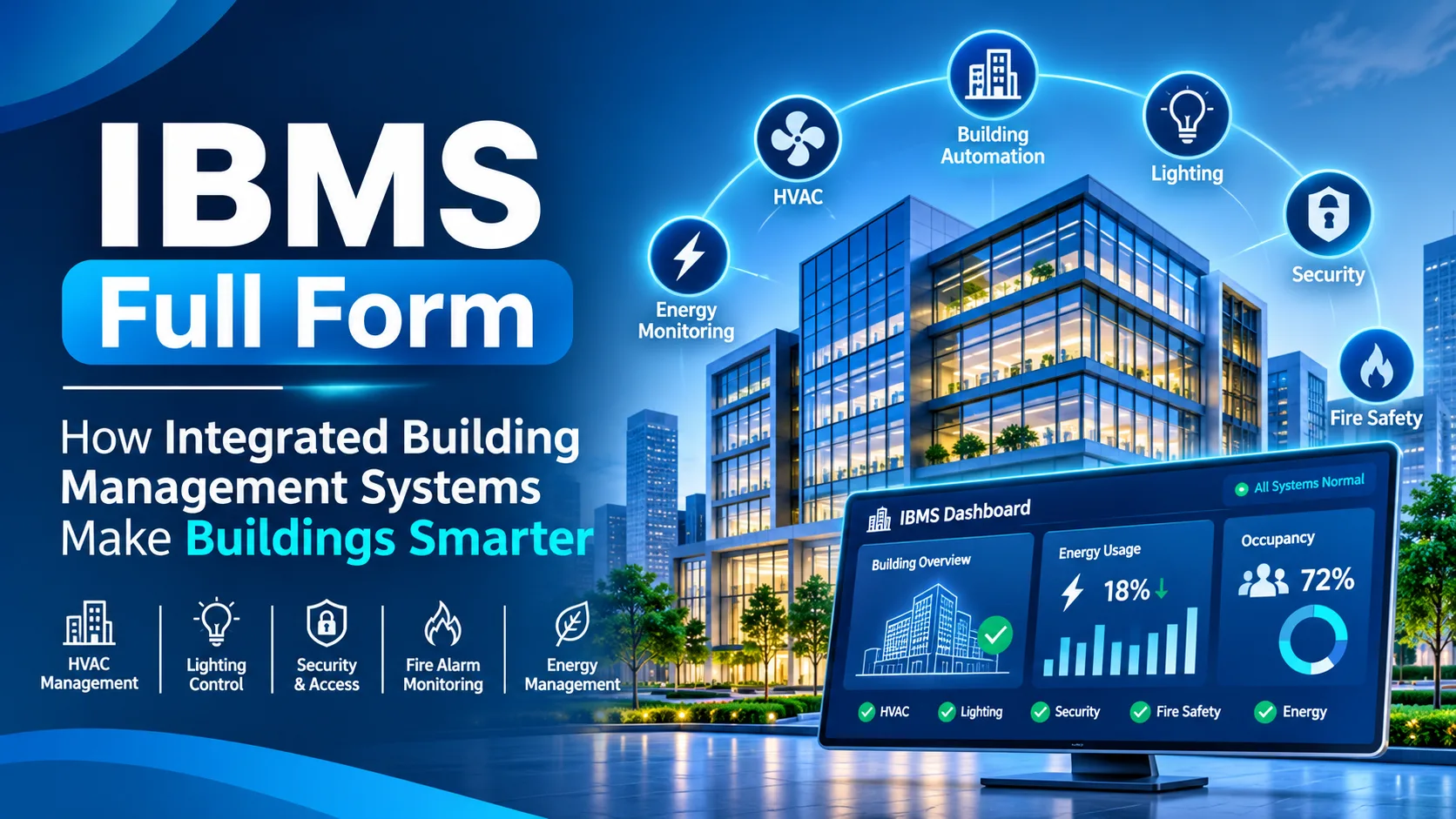
IBMS Explained: How Integrated Building Management Systems Make Buildings Smarter
A large commercial building operates through several interconnected services. Air conditioning maintains indoor temperatures, lighting supports daily activities, security systems control access, and electrical equipment keeps essential operations running. Although these systems perform different functions, their operation is closely connected. Managing them separately can make it difficult for facility teams to understand the overall condition of a building.
An Integrated Building Management System (IBMS) provides a common platform for monitoring and coordinating these services. It brings information from different building systems into one management environment, helping operators make better decisions about everyday building operations.
What Does IBMS Mean?
IBMS commonly stands for Integrated Building Management System. The term Intelligent Building Management System is also used in the industry to describe platforms that combine building services with centralized monitoring and intelligent control capabilities.
Unlike an individual control system that manages only one service, an IBMS connects multiple subsystems through a shared communication infrastructure.
For example, an operator can use a centralized interface to view HVAC operating conditions, check energy consumption, monitor security events, and receive equipment alarms. The exact functions depend on the building's design and the systems connected to the platform.
Why Do Modern Buildings Need IBMS?
As buildings become larger and more technically advanced, the number of devices and control systems also increases. A hospital may contain HVAC equipment, access control, fire alarm systems, electrical distribution, and specialized environmental monitoring equipment.
If every system uses a separate monitoring interface, operators may need to check several platforms to understand a particular event.
An IBMS reduces this complexity by bringing relevant information together. It gives facility teams a broader view of building activities and makes it easier to identify relationships between different systems.
Major Systems Integrated Through IBMS
The integration requirements vary depending on the type of building. Some commonly connected systems include:
1. HVAC Management
Heating, ventilation, and air conditioning equipment can be monitored through the integrated platform. Operators can view temperatures, equipment status, operating schedules, and relevant alarms.
2. Lighting Control
Lighting systems can be monitored and managed using schedules, occupancy information, and configured control strategies. This helps avoid unnecessary operation in areas that are not being used.
3. Fire Alarm Monitoring
Fire alarm information can be made available through approved integration interfaces. This allows operators to view alarm events and coordinate responses according to the building's fire safety design.
4. Access Control and Security
Access control integration provides information about entry points, door conditions, and security events. This helps facility teams monitor access-related activities through a centralized interface.
5. Electrical and Energy Monitoring
Information from energy meters and electrical monitoring equipment can be collected to examine consumption patterns and identify unusual operating conditions.
How Does an IBMS Work?
An IBMS operates through communication between field devices, controllers, subsystem interfaces, and central management software.
The process generally involves three stages.
First, sensors and connected equipment collect information from different parts of the building. These readings may include temperature, humidity, energy consumption, equipment status, and alarm conditions.
Next, controllers and subsystem gateways process or transfer the information using suitable communication protocols. The central software receives the data and presents it through dashboards, graphical displays, and alarm screens.
Finally, facility operators use the available information to monitor equipment, adjust permitted settings, investigate faults, and coordinate building operations.
This arrangement creates a common monitoring environment without necessarily replacing the individual control systems.
The Role of BACnet, Modbus, and MQTT
Communication is one of the most important parts of an IBMS implementation. Different manufacturers may use different communication technologies, so selecting suitable integration methods is essential.
BACnet: Commonly used for communication between building automation controllers and management platforms.
Modbus: Frequently used with electrical meters, industrial controllers, and monitoring equipment.
MQTT: A lightweight messaging protocol used in connected applications and IoT-based architectures.
These protocols help exchange information between compatible devices and software platforms. Proper configuration and gateway selection are important to ensure reliable communication.
BMS and IBMS: What Is the Difference?
A Building Management System (BMS) generally focuses on controlling and monitoring essential building services, particularly HVAC and lighting.
An IBMS extends the integration scope by connecting additional services such as security, access control, fire alarm monitoring, and energy management.
For smaller facilities, a conventional BMS may meet the operational requirements. Larger buildings with multiple independent systems may benefit from an integrated architecture.
The appropriate solution depends on the building's size, operational needs, equipment compatibility, and future expansion plans.
Where Is IBMS Used?
Integrated building management systems are useful in facilities where multiple services need centralized supervision.
- Commercial offices: Coordinate HVAC, lighting, security, and energy monitoring.
- Hospitals: Support monitoring of building services and environmental conditions.
- IT parks: Provide centralized visibility across multiple buildings and common infrastructure.
- Data centres: Help monitor cooling, electrical infrastructure, and connected equipment.
- Industrial facilities: Integrate selected building services and supporting infrastructure.
- Shopping malls: Coordinate lighting, ventilation, energy monitoring, and facility operations.
Each facility requires a different integration strategy based on its operating environment.
Important Factors Before Implementing IBMS
A successful IBMS project requires proper planning before equipment installation begins.
The project team should identify which systems need integration, understand the available communication interfaces, and define the required monitoring and control functions.
Cybersecurity should also be considered, particularly when building systems communicate through IP networks. Network segmentation, access permissions, secure remote access, and regular maintenance help protect connected infrastructure.
Another important consideration is future scalability. The architecture should allow additional systems and monitoring points to be incorporated without requiring major changes to the existing infrastructure.
Conclusion
An Integrated Building Management System provides a coordinated approach to managing different building services. By connecting HVAC, lighting, security, fire alarm monitoring, and energy systems, it gives facility operators a centralized view of building operations.
As commercial buildings, hospitals, data centres, and industrial facilities continue to adopt connected technologies, IBMS solutions can help simplify supervision and improve coordination between essential services.
Understanding the architecture, communication protocols, and integration requirements is an important first step when planning an effective building management solution.
For a more detailed explanation of IBMS architecture, features, and applications, explore the complete guide from EnSmart:
http://ensmart.ai/blog/what-is-an-intelligent-building-management-system-ibms-complete-guide