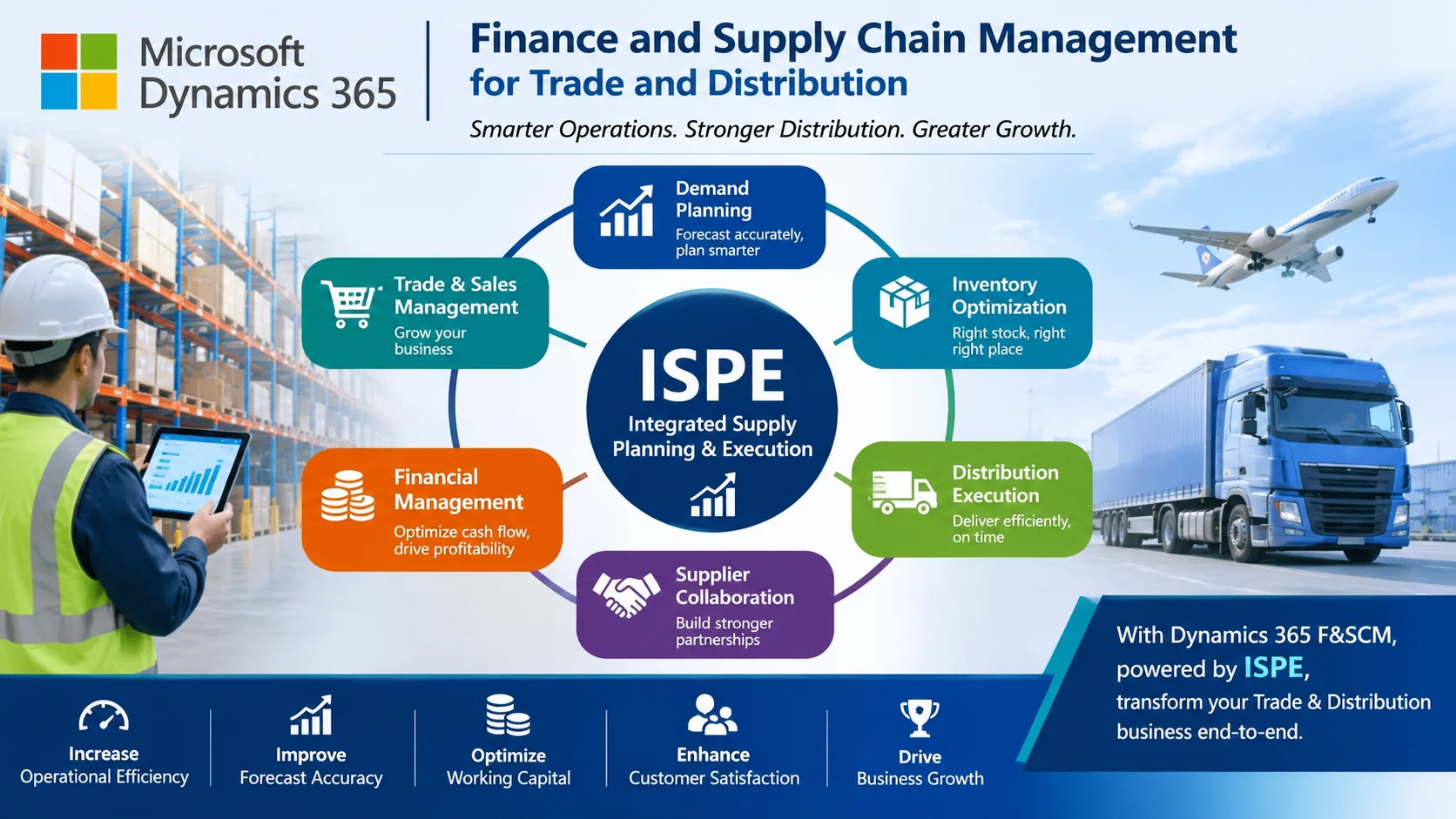
Supply chains connect manufacturers, suppliers, distributors, warehouses, transportation providers, and customers. Managing these relationships efficiently is essential for businesses that depend on consistent product availability and timely order fulfillment. However, as organizations expand their operations, supply chain activities become increasingly difficult to coordinate. Multiple warehouses, changing customer demands, supplier delays, and rising logistics costs can affect overall business performance. Implementing Dynamics 365 Finance & SCM can help organizations connect financial and supply chain processes, improve operational visibility, and manage distribution activities more effectively.
Understanding Modern Supply Chain Challenges
Distribution businesses face several challenges while managing their daily operations. Inventory information may be spread across different warehouses, purchasing decisions may depend on outdated reports, and transportation activities may require coordination between multiple teams.
For example, a distributor supplying electronic products across several regions must maintain accurate stock information, monitor product demand, manage supplier lead times, and ensure that customer orders are fulfilled on schedule.
If departments work with disconnected applications, important information may not be available when decisions are required. This can result in excess inventory, delayed deliveries, and higher operating expenses.
A connected ERP environment helps businesses reduce these information gaps by bringing important activities together.
Creating Better Inventory Visibility
Inventory visibility is essential for maintaining a balanced supply chain. Businesses need to understand how much stock is available, where products are located, and whether inventory is already allocated to customer orders.
Supply chain management capabilities help organizations monitor inventory across multiple warehouses and distribution centers.
Managers can review available quantities, track incoming shipments, and monitor stock movements. Replenishment processes can generate purchase or transfer suggestions when inventory reaches configured minimum levels.
Businesses can also use lot and serial number tracking to maintain product traceability. Expiry date management and FIFO or FEFO inventory valuation can be particularly useful for food, beverage, and pharmaceutical distributors.
Strengthening Warehouse Operations
Warehouse efficiency directly influences order fulfillment and customer satisfaction.
Manual warehouse processes can increase picking errors, delay shipments, and make inventory movements difficult to track. An advanced warehouse management system provides structured workflows for receiving, storage, picking, packing, and dispatch.
Dynamics 365 Supply Chain Management supports capabilities such as directed put-away and picking, wave processing, cluster picking, cross-docking, and mobile barcode scanning.
Warehouse managers can organize work according to operational priorities and monitor pending activities. Mobile devices help employees record inventory movements and update transaction information directly from the warehouse floor.
These capabilities improve coordination and reduce unnecessary manual work.
Connecting Procurement with Business Demand
Procurement teams need to purchase the right products at the right time and at suitable prices.
Without accurate demand and inventory information, businesses may purchase excessive quantities or experience shortages.
An integrated ERP platform helps connect purchasing decisions with stock levels, supplier lead times, and operational requirements.
Purchase orders, vendor agreements, requisitions, and approval workflows can be managed through structured processes. Supplier communication capabilities also help businesses coordinate delivery schedules and purchase order updates.
This improves procurement visibility and supports more reliable supplier relationships.
Improving Transportation and Distribution Planning
Transportation costs can represent a significant part of distribution expenses. Businesses need to coordinate carriers, delivery schedules, freight rates, and shipment tracking to manage these costs effectively.
Transportation management capabilities help organizations plan loads, select suitable carriers, and monitor inbound and outbound shipments.
Freight costs can also be connected with financial information, giving managers a clearer understanding of logistics expenses.
For companies handling international shipments, landed cost management helps allocate freight, customs duties, insurance, and handling charges to inventory value.
This provides more accurate product costing and supports better margin analysis.
Managing Financial Processes Alongside Supply Chain Activities
Supply chain decisions have a direct impact on financial performance. Procurement costs, inventory valuation, transportation expenses, and customer payments all contribute to organizational profitability.
Dynamics 365 Finance helps businesses manage general ledger activities, accounts payable, accounts receivable, financial reporting, and multi-currency transactions.
Organizations operating through multiple legal entities can use financial consolidation capabilities to improve reporting across their business structure.
Connecting finance and supply chain operations gives management a broader understanding of purchasing costs, inventory investments, and distribution performance.
Applying AI and Business Intelligence
Artificial intelligence is creating new opportunities for supply chain planning and operational improvement.
Microsoft Copilot can help users analyze demand plans, understand warehouse workloads, and retrieve information from finance and operations data.
AI-powered inventory rebalancing can also support recommendations for moving stock between warehouse locations according to business requirements.
Power BI provides reporting and visualization capabilities that help organizations evaluate inventory turnover, order fulfillment, supplier performance, and operational costs.
These tools help managers identify trends and make decisions using business information rather than relying entirely on manual reports.
Selecting the Right ERP Implementation Approach
Successful ERP implementation requires more than installing software. Organizations must understand their existing processes, warehouse structures, financial requirements, supplier relationships, and integration needs.
A structured implementation approach should include business process assessment, data migration planning, system configuration, user training, testing, and post-implementation support.
Businesses should also evaluate future expansion requirements to ensure that their ERP environment can support additional warehouses, legal entities, and trading partners.
Conclusion
Supply chain performance depends on how effectively organizations coordinate inventory, procurement, warehouse operations, transportation, and financial activities.
Dynamics 365 Finance & SCM helps businesses connect these functions through an integrated ERP environment. With better inventory visibility, structured warehouse processes, improved supplier coordination, and AI-supported insights, organizations can strengthen supply chain efficiency and respond more effectively to changing market requirements.