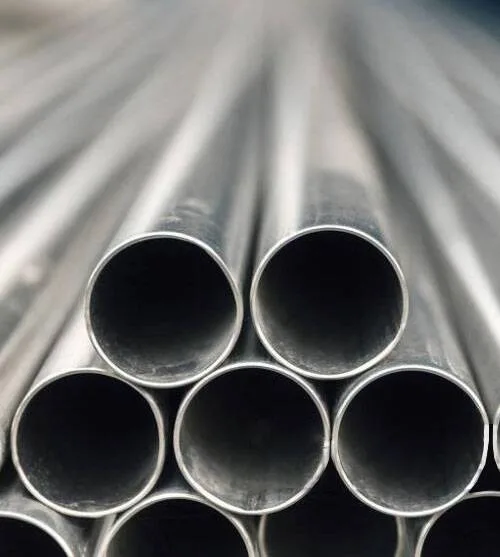
Inconel 718 is a precipitation-hardenable nickel-chromium-iron superalloy identified as UNS N07718 and Werkstoff 2.4668. In pipe form, its principal engineering value comes from the combination of high strength, corrosion resistance, weldability and useful mechanical performance at elevated temperature. Unlike corrosion-resistant nickel alloys that depend primarily on solid-solution strengthening, Alloy 718 derives much of its high strength from controlled precipitation involving niobium, titanium and aluminium. This makes the pipe specification inseparable from its metallurgical condition and heat-treatment history.
For piping systems, that distinction is important. Diameter, wall thickness, manufacturing route, heat treatment, test requirements and end preparation must be considered together rather than treating the alloy designation alone as a complete specification. Seamless pipe and tubing for this alloy are commonly associated with ASTM B983, while aerospace material specifications such as AMS 5589 and AMS 5590 address specific forms of Alloy 718 tubing. The applicable document should therefore be established from the intended service and procurement specification before manufacture or purchase.
Alloy Identity and Metallurgical Basis
The nominal chemical balance of Inconel 718 is dominated by nickel and chromium, with iron forming the remainder and controlled additions of niobium, molybdenum, titanium and aluminium. Typical specification limits include approximately 50–55% nickel, 17–21% chromium, 2.80–3.30% molybdenum and 4.75–5.50% niobium plus tantalum, while titanium and aluminium contribute to precipitation strengthening. Carbon, manganese, silicon, sulphur, phosphorus, boron and copper are controlled at comparatively low levels. Exact limits should always be taken from the governing material specification and revision applicable to the order.
The metallurgical architecture explains why Inconel 718 can combine strength with comparatively good fabrication characteristics. Niobium promotes the formation of the principal strengthening phase, while aluminium and titanium contribute to additional precipitation reactions. Controlled heat treatment develops the required microstructure and therefore the final balance between tensile strength, yield strength, ductility, fatigue resistance and creep-rupture performance.
This is also why Inconel 718 Pipes Manufacturers must control more than chemical composition. Melting practice, hot working, solution treatment, ageing, grain structure and inspection history can all influence the finished pipe. Two pipes carrying the same UNS designation are not necessarily interchangeable if their governing specifications, dimensions or metallurgical conditions differ.
How Pipe Form Changes the Engineering Requirement
Pipe selection begins with the fluid-service function. Nominal pipe size and schedule are normally used where the component forms part of a conventional pressure-piping system, whereas tubing is generally identified by outside diameter and wall thickness. Confusing pipe and tube terminology during procurement can result in dimensional incompatibility even when the alloy grade is correct.
For Inconel 718, common product configurations include seamless pipe and tube, with dimensions established by the applicable product specification or project requirement. ASTM B983 is specifically associated with seamless Inconel 718 pipe and tube.
The dimensional specification normally needs to establish:
- Nominal size or outside diameter
- Wall thickness or schedule
- Required length and length tolerance
- Seamless or other permitted manufacturing route
- End condition
- Heat-treatment condition
- Surface condition
- Inspection and testing requirements
- Certification and traceability requirements
Schedule selection should not be treated as a generic indication of pressure capability. Actual allowable pressure depends on design temperature, wall thickness, outside diameter, material allowable stresses, joining details, corrosion or erosion considerations and the governing design code.
Manufacturing Route and Metallurgical Control
The production of seamless Inconel 718 pipe involves a sequence of melting, billet preparation, hot working, piercing or extrusion-related operations, sizing and finishing. Depending on product dimensions and the manufacturer's qualified process, cold working may subsequently be used to achieve tighter dimensional control or particular surface characteristics.
The alloy's high strength and work-hardening behaviour make manufacturing more demanding than the processing of conventional stainless steels. Heat input and deformation history must be controlled because excessive or poorly controlled processing can affect grain structure and subsequent precipitation response. Machining and finishing operations also require appropriate tooling and process parameters because Alloy 718 tends to work harden during fabrication.
Heat treatment is particularly significant. A solution-treatment stage establishes a controlled metallurgical condition before precipitation ageing. Subsequent ageing develops the high-strength condition associated with Alloy 718. Aerospace material specifications, for example, distinguish solution-treated material from solution-treated-and-aged material, illustrating how the same alloy designation can exist in substantially different mechanical conditions.
For pipe applications, the exact heat treatment must follow the governing pipe specification rather than being transferred automatically from a bar, forging or aerospace component specification. This distinction prevents inappropriate substitution of heat-treatment schedules between product forms.
Mechanical Performance: Strength Without Losing Fabrication Utility
The principal engineering attraction of aged Inconel 718 is its high yield and tensile strength. Representative data for precipitation-hardened material commonly show tensile strength around or above 1,240 MPa and yield strength around or above 1,030 MPa, although values vary with product form, specification, section size and heat-treatment condition. These figures should not be transferred directly to pipe unless the applicable pipe specification establishes the same requirements.
Solution-treated material has greater ductility and lower strength than fully aged material. This difference is important during forming, machining, welding and fabrication. The required condition therefore has to be selected according to whether the pipe's dominant requirement is fabrication, dimensional processing, tensile strength, fatigue performance, creep resistance or a combination of these factors.
At elevated temperature, Alloy 718 retains useful strength and creep-rupture characteristics, which is one reason for its use in demanding aerospace and energy components. Published technical data commonly associate the alloy with high-strength service at temperatures approaching approximately 700°C, although the permissible service temperature for an actual pipe system must be established from the governing design code, material condition and service environment.
Corrosion and Environmental Behaviour
Chromium provides a protective oxide-forming capability, while the nickel-rich matrix contributes to resistance in demanding environments. The alloy is therefore useful where mechanical loading and corrosive or high-temperature exposure occur simultaneously.
However, Inconel 718 should not be selected solely from a general statement that it is “corrosion resistant.” Actual compatibility depends on the fluid chemistry, temperature, pressure, contaminants, flow conditions and exposure duration. Chloride-containing environments, acidic media, hydrogen-bearing service and sour-gas conditions may introduce additional requirements that need separate evaluation.
Welding behaviour is another relevant consideration. Alloy 718 has comparatively favourable weldability for a precipitation-hardenable nickel alloy because of its relatively slow precipitation kinetics. Nevertheless, welding can alter the local microstructure and residual-stress state, and procedures must be qualified for the specific application.
Standards Should Be Matched to Product Form
The standards landscape surrounding Inconel 718 requires careful specification control. ASTM B983 is associated with seamless pipe and tube made from Alloy 718/UNS N07718.
ASME designations may be required when the material is being procured for equipment or piping governed by an ASME construction code. The ASME material specification should be confirmed from the applicable edition and project requirements rather than assuming that every ASTM specification automatically applies to every ASME application.
AMS 5589 and AMS 5590 are associated with Alloy 718 tubing, while AMS 5662 and AMS 5663 address other product forms and conditions of the alloy. Consequently, an AMS designation should not be inserted into a pipe purchase order merely because it is an Inconel 718 specification. The product form and intended aerospace or industrial application determine the relevant document.
European and national designation systems may additionally identify Alloy 718 by 2.4668 or related material nomenclature. Such cross-references are useful for identification, but the purchase order should still specify the governing material standard, product form, dimensions and condition rather than relying solely on an equivalent-grade table.
Inspection Is Part of the Material Specification
For high-value nickel-alloy piping, inspection should establish both material identity and conformity with the applicable product standard. A typical quality-control programme may include chemical analysis, dimensional examination, tensile testing, hardness testing where specified, metallurgical or heat-treatment verification, surface inspection and non-destructive examination when required by the purchase specification.
Positive material identification can provide an additional verification of alloy identity, while heat numbers maintain traceability between the finished pipe and the originating melt. The material test certificate should correlate the heat number, chemical results, mechanical results, heat-treatment condition and specification.
For critical applications, third-party inspection may be incorporated into the procurement plan. The important principle is that testing should be derived from the governing specification and service requirement rather than from a generic checklist.
Selecting Seamless Pipe for High-Integrity Systems
Inconel 718 Pipes Suppliers handling engineering projects need to distinguish between availability and specification compliance. A readily available pipe is not technically interchangeable with a project-approved pipe unless the material condition, dimensions, manufacturing route, testing and documentation satisfy the purchase specification.
Seamless construction can be particularly relevant where the absence of a longitudinal weld is part of the engineering requirement. It can also simplify qualification considerations in certain high-integrity services. However, seamless construction does not by itself establish suitability for a pressure, temperature or corrosive service. Design calculations and the governing piping or pressure-equipment code remain decisive.
Inconel 718 Pipes Stockists therefore need strong traceability controls when maintaining inventory. Heat identification, certificates, dimensional records and physical segregation between grades are important because nickel alloys can have similar appearance while possessing materially different chemistry and mechanical behaviour.
Applications Where the Alloy's Strength-to-Environment Balance Matters
The material's combination of precipitation-hardened strength, corrosion resistance and elevated-temperature capability has led to applications across demanding sectors. These include aerospace engine and airframe hardware, gas-turbine components, energy equipment, oil-and-gas hardware and other systems exposed to significant mechanical and thermal loads.
In oil and gas, the material may be considered for specialised high-strength components and demanding downhole or pressure-related environments, subject to the specific service qualification. In aerospace, Alloy 718 is established in components such as high-temperature fasteners and engine-related hardware because of its strength and fatigue and rupture performance.
For process piping, however, the selection must be application-specific. A less expensive alloy may be adequate when the temperature, pressure and corrosion environment do not justify the capabilities of 718. Conversely, where high mechanical loading combines with elevated temperature and demanding environmental exposure, the alloy's precipitation-strengthened condition can provide an important performance advantage.
Procurement Criteria for International Projects
For Inconel 718 Pipes Exporters, international orders generally require more than grade and size identification. A technically complete enquiry should define the applicable standard, UNS designation, seamless or specified manufacturing route, dimensions, length, heat-treatment condition, end preparation, inspection requirements and documentation.
For Inconel 718 Pipes Manufacturers in India, production control should be demonstrated through heat traceability, qualified processing, dimensional inspection and conformity documentation. The word “manufacturer” should not be treated as a substitute for evidence of specification compliance.
Similarly, Inconel 718 Pipes Suppliers in India should distinguish genuine material certification from a generic certificate or an equivalent-grade statement. Documentation should identify the actual supplied heat and product form.
For Inconel 718 Pipes Stockists in India, storage and identification become especially important when several nickel alloys are held simultaneously. Each bundle or piece should remain traceable to its material certificate, heat number and applicable specification.
Finally, Inconel 718 Pipes Exporters in India need to maintain consistency between the technical documents, physical marking, packing list and shipped material. International procurement becomes significantly more reliable when the commercial description and engineering specification use the same grade, dimensions, standard and traceability references.
Engineering Significance of Inconel 718 Pipe
Inconel 718 pipe is best understood not simply as a nickel-alloy pressure product but as a metallurgically controlled engineering component. Its performance depends on the relationship between UNS N07718 chemistry, manufacturing history, heat treatment, dimensions, inspection and service conditions. The alloy's precipitation-hardening system enables exceptionally high strength, while its nickel-chromium matrix provides useful resistance to demanding thermal and corrosive environments.
The technically correct procurement approach is therefore specification-led: identify the required product form, establish the governing standard, define dimensions and condition, verify heat and mechanical properties, and ensure documentation remains traceable to the delivered pipe. This approach allows engineers, quality personnel and industrial buyers to evaluate Inconel 718 Pipes on measurable engineering criteria rather than on grade name alone.