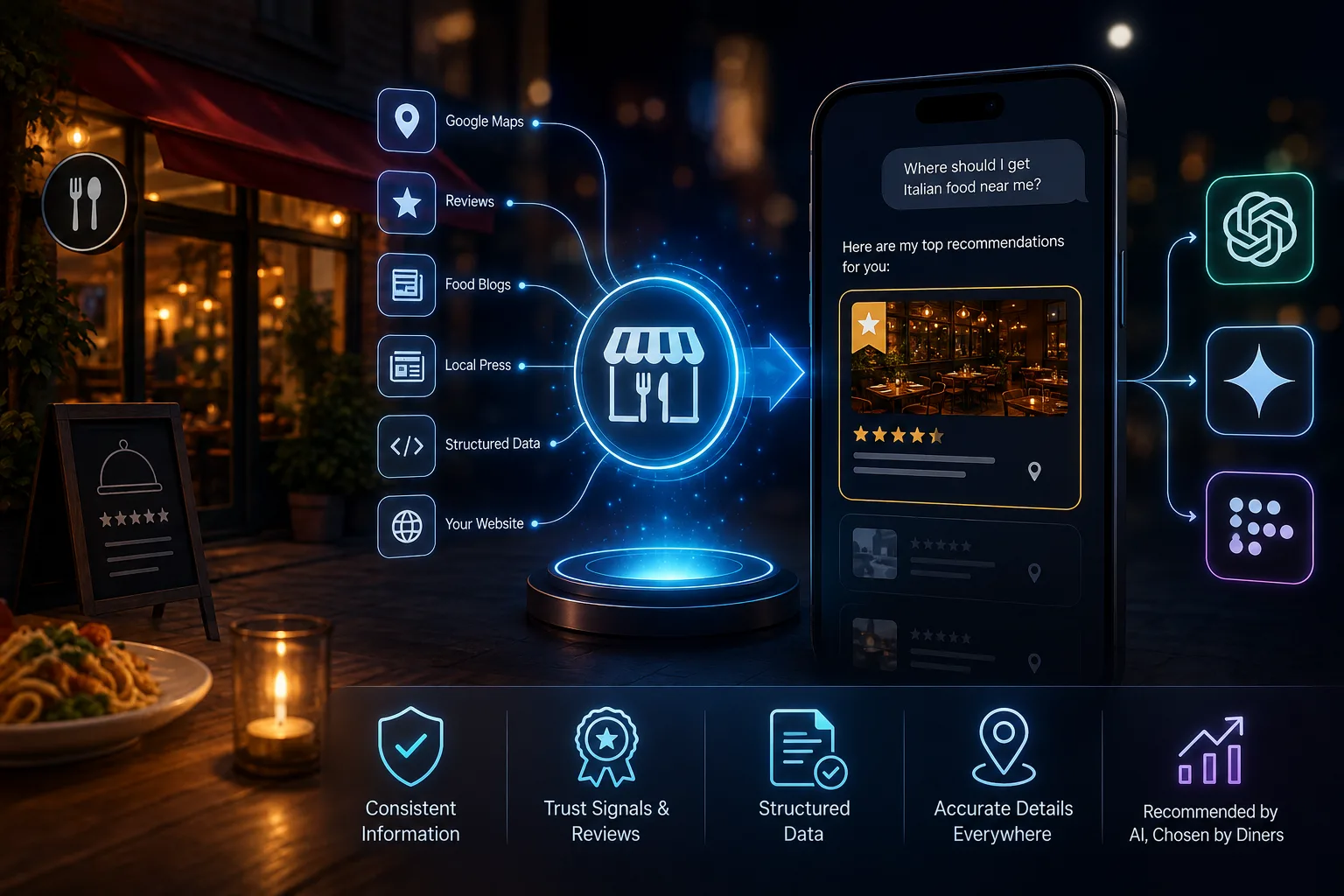
Diners don't just search Google anymore. A growing number ask AI tools directly, "what's a good restaurant near me," and act on whatever answer comes back, often without ever opening a traditional search engine. Restaurants that want to increase restaurant sales in 2026 can no longer treat this shift as optional, since being invisible to AI-driven discovery means losing customers before they ever see your menu.

Why Perplexity Specifically Matters for Restaurant Visibility
Perplexity works differently from a typical search engine. Instead of returning a list of links, it reads across multiple sources and compiles a direct, cited answer, closer to a research assistant than a search bar. When a diner asks Perplexity for a recommendation, restaurants with clear, well-structured, and consistently cited information online are the ones that actually get named in the response, while less structured competitors quietly get skipped.
What Makes Perplexity Choose One Restaurant Over Another
Perplexity's ranking behavior rewards a few specific signals worth understanding before you try to optimize for it.
- Content freshness: Perplexity favors updated information, so outdated hours or old menu photos can quietly hurt visibility
- Domain authority: Establishing your restaurant as a trusted, well-referenced source across the web matters more than a single well-designed page
- Logical structure: Clear formatting with defined sections makes it easier for Perplexity to extract and quote your information accurately
- Trust signals: Citations, mentions, and external validation from review sites and directories improve the odds of being featured as a source
How to Get Your Restaurant Ready for Perplexity
Learning how to rank in Perplexity starts with structuring your online presence the way the platform actually reads it, rather than the way a typical webpage is laid out.
- Lead with a clear, direct description of your restaurant's cuisine and ambience in the first sentence or two of your website's key pages
- Use question-based headings that mirror how diners actually phrase things, like "What's the best Italian restaurant in downtown?" instead of vague page titles
- Keep your menu, hours, and photos current, since stale information is one of the fastest ways to lose visibility
- Earn mentions and citations from local review sites, food blogs, and directories, not just your own website
Turning AI Visibility Into Actual Restaurant Sales
Getting mentioned by Perplexity only helps if it translates into diners walking through your door.
- Make sure your Perplexity-visible information matches what's on your Google Business Profile, so diners get a consistent picture everywhere they look
- Pair AI visibility efforts with a simple loyalty program, so first-time visitors discovered through AI have a reason to return
- Track whether reservations or calls increase after improving your structured content, so you can see whether the effort is actually paying off
- Keep refreshing seasonal menu items and specials, since fresh content also happens to be what AI platforms reward most
Myth vs Reality: Restaurant Sales and AI Search Visibility
Myth: "Perplexity is too niche to matter for a local restaurant." Reality: A growing number of diners already use AI tools for recommendations, and restaurants absent from those answers are increasingly skipped over regardless of food quality or reputation.
Myth: "Good reviews are all that matters for AI visibility." Reality: Reviews help, but structure, freshness, and consistent citations across the web matter just as much for how AI platforms choose what to recommend to a diner asking for suggestions.
Myth: "This only works for large restaurant chains with big budgets." Reality: Independent restaurants with clear, accurate, and consistently updated information often perform just as well, sometimes better, since larger chains can be slower to update details across every single location.
Myth: "Once I'm mentioned once, I'll stay visible." Reality: Perplexity favors fresh, current content, so visibility gained today can fade if menus, hours, or descriptions go stale without regular updates.
Bringing It All Together
Increasing restaurant sales through AI visibility isn't a separate project from your existing marketing; it's an extension of it. Start by cleaning up and structuring your core information, then build outward with fresh content and consistent mentions across trusted sources. Revisit your setup every few months, since diner behavior and AI platforms both keep evolving. Restaurants that treat this as an ongoing part of their routine, rather than a one-time fix, are the ones that keep showing up as more diners turn to AI tools before deciding where to eat.