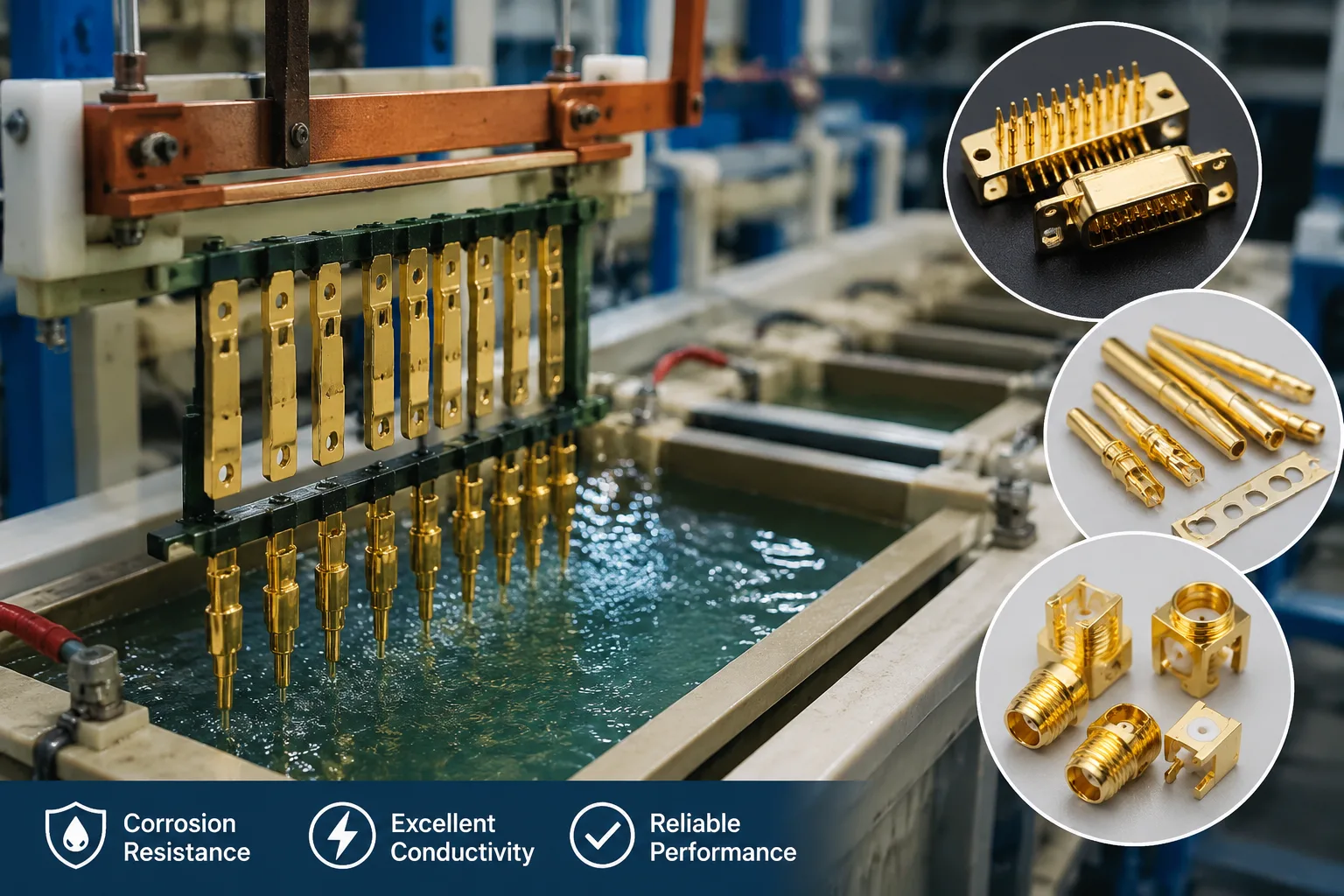
Modern manufacturing relies on advanced surface treatment methods to improve the performance, reliability, and lifespan of critical components. In industries where electrical stability, corrosion resistance, and consistent performance are essential, specialized metal finishing plays an important role in protecting and enhancing component surfaces.
Gold-based finishes are widely used in applications where traditional materials may not provide sufficient protection against oxidation, environmental exposure, or repeated use. From electronic connectors to aerospace components, carefully controlled surface treatments help manufacturers achieve reliable performance in demanding operating conditions.
A gold electroplating service involves a combination of technical expertise, controlled processes, and quality inspections to apply precise gold layers based on specific component requirements.
The Need for Specialized Metal Finishing
Manufacturers often require surface improvements without changing the physical structure of the original component. Surface finishing allows engineers to enhance specific properties, such as conductivity, durability, and resistance to environmental factors.
Gold is particularly valuable in industrial applications because it remains stable over time and does not easily react with oxygen or moisture. This makes it suitable for components where maintaining a clean and reliable surface connection is important.
However, achieving consistent results requires more than applying a thin metallic layer. Factors such as material selection, preparation techniques, coating thickness, and testing procedures all influence the final performance.
What Happens During a Professional Plating Process
A controlled plating process involves several stages to ensure the final surface meets functional requirements.
Component Evaluation and Material Selection
Before the finishing process begins, the component material must be evaluated. Different substrates respond differently to surface treatments, and the selected approach depends on factors such as:
- Base material composition
- Intended application
- Environmental conditions
- Required durability
- Electrical performance requirements
Common materials used with gold finishes include copper, brass, nickel-based components, and electronic substrates.
Surface Preparation
Surface preparation is one of the most important steps in achieving a reliable finish. Components must be cleaned and treated to remove contaminants, oxidation, oils, and other surface imperfections.
Proper preparation helps improve:
- Adhesion between layers
- Coating consistency
- Long-term reliability
- Overall surface quality
An improperly prepared surface can result in uneven coverage or reduced performance.
Selecting the Appropriate Coating Method
Different applications require different finishing approaches. The selection depends on factors such as required thickness, component usage, mechanical stress, and electrical requirements.
Engineers consider whether the application requires:
- Higher wear resistance
- Maximum conductivity
- Improved corrosion protection
- Long-term surface stability
Controlled Deposition and Process Monitoring
During deposition, multiple parameters must be carefully controlled to achieve consistent results. These include chemical composition, operating conditions, and coating thickness.
Continuous monitoring helps maintain uniformity and ensures that the finished component performs according to its intended purpose.
Why Industries Use Professional Gold Finishes
Gold finishes are selected for industrial applications because they provide several important performance advantages.
Electrical Performance
Gold has excellent conductivity and maintains reliable electrical connections over time. This makes it suitable for components such as connectors, terminals, switches, and contact surfaces.
Its resistance to oxidation helps reduce signal issues caused by surface deterioration.
Corrosion Resistance
Unlike many metals, gold remains stable when exposed to moisture and environmental conditions. This protective quality helps extend component reliability in challenging applications.
Wear Protection
The durability of a finished surface depends on coating type and thickness. Properly selected finishes can withstand repeated contact while maintaining functional performance.
Materials Commonly Used for Gold Surface Treatments
Different base materials may be used depending on the application and performance requirements.
Copper Components
Copper is widely used in electrical applications because of its excellent conductivity. A protective gold layer can help prevent oxidation while maintaining electrical performance.
Nickel-Based Materials
Nickel is commonly used as an intermediate layer in many applications. It can improve adhesion, provide additional support, and help prevent interaction between the base material and the outer gold layer.
Brass Components
Brass components may benefit from protective finishes where improved surface stability and appearance are required.
Electronic Substrates
Electronic components often require precise surface treatment because small variations can affect performance. Controlled finishing methods help maintain reliable connections in sensitive applications.
Industries That Depend on Advanced Gold Finishing
Electronics Manufacturing
The electronics industry is one of the largest users of gold-based surface treatments. Connectors, circuit contacts, and terminals depend on reliable surface performance for accurate signal transmission.
Aerospace Applications
Aerospace components must operate under demanding conditions, including vibration, temperature changes, and environmental exposure. Reliable surface finishes help maintain performance in critical systems.
Medical Technology
Medical devices and precision equipment often require materials that provide consistent operation and long-term reliability.
Telecommunications
Communication systems depend on stable connections to maintain signal quality. Protective surface treatments help reduce performance issues caused by oxidation and wear.
Factors That Determine Coating Quality
Several factors influence the effectiveness and lifespan of a finished surface.
Thickness Control
The thickness of the deposited layer affects durability, wear resistance, and performance. The correct thickness depends on how the component will be used.
Surface Preparation
Proper cleaning and preparation create a strong foundation for the finishing process and improve coating adhesion.
Chemical Balance
The composition of the processing solution affects the structure, consistency, and quality of the deposited layer.
Inspection and Testing
Quality checks help verify that finished components meet required specifications. Testing may include:
- Thickness measurement
- Adhesion evaluation
- Surface inspection
- Material analysis
Hard Gold and Soft Gold Applications
Different types of gold finishes are selected based on application requirements.
Hard Gold Applications
Hard finishes are designed for components exposed to repeated physical contact and mechanical stress. They are commonly used for:
- Electrical connectors
- Switch contacts
- Contact points
Soft Gold Applications
Soft finishes provide high purity and excellent conductivity. They are often used in applications where bonding performance and electrical reliability are more important than wear resistance.
Quality Standards and Testing Requirements
Maintaining consistent quality requires proper inspection and process control. Manufacturers evaluate finished components through different testing methods to confirm performance and reliability.
Important quality checks include:
- Coating thickness verification
- Adhesion testing
- Surface quality assessment
- Performance evaluation
These procedures help ensure that finished components meet the requirements of their intended applications.
Future Trends in Industrial Surface Finishing
As technology continues to advance, industries are demanding smaller, more efficient, and more reliable components. Surface finishing technologies are evolving to improve precision, reduce material waste, and achieve better performance.
Future developments are expected to focus on:
- More efficient processing methods
- Improved environmental practices
- Better quality monitoring
- Greater control over surface characteristics
These advancements will continue supporting industries that depend on reliable and high-performance components.
Conclusion
Industrial gold finishing remains an important technology for improving component reliability, electrical performance, and resistance to environmental challenges. Through careful material selection, controlled processing, and detailed quality testing, manufacturers can achieve consistent surface performance for demanding applications.
From electronics and aerospace systems to medical devices and communication equipment, advanced surface treatment methods continue to support the development of reliable and durable products across modern industries.