
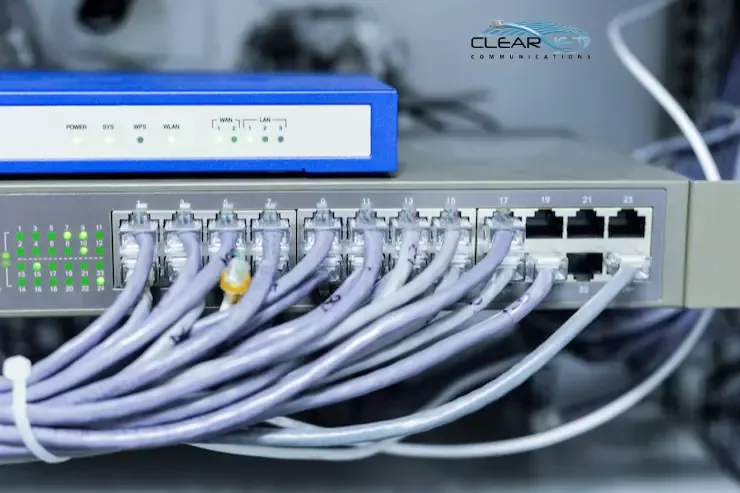
With smartphones in every pocket and video calls replacing traditional phone conversations, it's a reasonable question to ask: does voice cabling still matter? Many business owners assume that if employees can simply use their mobile devices, dedicated phone infrastructure has become unnecessary. Yet walk into almost any office, hospital, hotel, or call center, and you'll still find carefully planned voice cabling running behind the scenes.
So why hasn't voice cabling disappeared, and what does it actually involve today? Along the way, we'll also touch on how it connects to network cabling installation, what IDF meaning has to do with it, and why fiber optic component suppliers play a bigger role in modern voice systems than most people realize.
What Is Voice Cabling, and Why Does It Still Exist?
Voice cabling refers to the physical cabling infrastructure specifically designed to support telephone communication systems within a building. This includes traditional analog phone lines as well as modern VoIP (Voice over Internet Protocol) systems, which have largely replaced older telephony but still rely on structured cabling to function.
Even in a mobile-first world, many organizations continue to depend on voice cabling for:
- Reliable internal and external calling – especially in industries where consistent, high-quality communication is essential
- Emergency phone lines – which must remain operational independent of general internet outages
- Intercom and paging systems – common in schools, hospitals, and large facilities
- Legacy equipment – such as fax machines, still used in healthcare, legal, and government sectors
In VoIP environments specifically, voice traffic often travels over the same structured cabling network used for general data, meaning voice quality is directly tied to the integrity of the underlying cabling system.
How Does Voice Cabling Fit Into Network Cabling Installation?
Voice cabling isn't installed in isolation — it's typically planned and executed as part of a broader network cabling installation project. Network cabling installation refers to the overall process of running, terminating, and organizing the cabling systems that support both data and voice communication throughout a building.
When voice cabling is properly integrated into a network cabling installation plan, it benefits from:
- Consistent standards – following industry guidelines for cable types, distances, and termination practices
- Shared infrastructure efficiency – reducing redundant cabling runs by supporting voice and data over the same organized system
- Simplified troubleshooting – technicians can more easily isolate issues when voice and data cabling follow the same structured design
- Easier scalability – adding new phone lines or extensions becomes simpler when the underlying network cabling installation was planned with future growth in mind
Without this integration, voice cabling installed as an afterthought often results in tangled wiring closets, inconsistent call quality, and unnecessary duplication of infrastructure.
What Does IDF Meaning Have to Do With Voice Cabling?
If you've spent any time researching network or voice cabling installation, you've likely encountered the term IDF. IDF meaning refers to Intermediate Distribution Frame — a local distribution point within a building's network that connects nearby devices, including phones, back to the building's central hub.
Most buildings rely on a Main Distribution Frame (MDF) as the core connection point to outside service providers. From there, backbone cabling extends to various IDFs, typically one per floor or section of a larger building. Each IDF then distributes both data and voice connections locally to nearby workstations, phones, and devices.
Understanding IDF meaning matters for voice cabling because:
- Voice and data often share the same IDF infrastructure in modern VoIP systems
- Properly planned IDFs reduce cable run distances, improving voice call quality and reliability
- Localized distribution makes it easier to troubleshoot voice issues affecting a specific floor or department, rather than the entire building
In short, a well-organized IDF setup is just as important for maintaining reliable phone systems as it is for general network performance.
Why Fiber Optic Component Suppliers Matter More Than You Might Think
As voice systems increasingly rely on VoIP technology and higher bandwidth demands, the quality of underlying components has become more important than ever. This is where major photonics and fiber optic component suppliers come into play. These suppliers manufacture the specialized components — connectors, transceivers, cables, and related hardware — that support high-speed data transmission across modern network and voice systems.
Why does this matter for something as seemingly simple as voice cabling? Because backbone cabling connecting MDFs to IDFs increasingly relies on fiber optic technology to support the bandwidth demands of combined voice, data, and video traffic. The quality of components sourced from reputable fiber optic suppliers directly impacts:
- Signal integrity – reducing latency and interference that can degrade call quality
- Long-term reliability – higher-quality components generally experience fewer failures over time
- Future scalability – as bandwidth needs grow, quality infrastructure components make upgrades easier
Working with cabling professionals who source components from reputable photonics and fiber optic suppliers helps ensure that your voice cabling — and the broader network cabling installation supporting it — performs reliably well into the future.
So, Is Voice Cabling Still Worth Investing In?
Given everything voice cabling supports — from everyday business communication to emergency systems that must work when other systems fail — the answer for most organizations remains a clear yes. Technology hasn't left voice cabling behind; it's simply evolved to work alongside modern data networks, IDF-based distribution systems, and increasingly capable fiber optic components.
The Bottom Line
Voice cabling continues to play an essential role in how businesses communicate, even as mobile technology reshapes daily habits. Understanding how it connects to network cabling installation, what IDF meaning refers to, and why component quality from trusted fiber optic suppliers matters can help you make more informed decisions about your building's infrastructure.
Whether you're planning a new office buildout or troubleshooting inconsistent call quality, working with experienced cabling professionals ensures your voice systems remain as reliable and future-ready as the rest of your network.