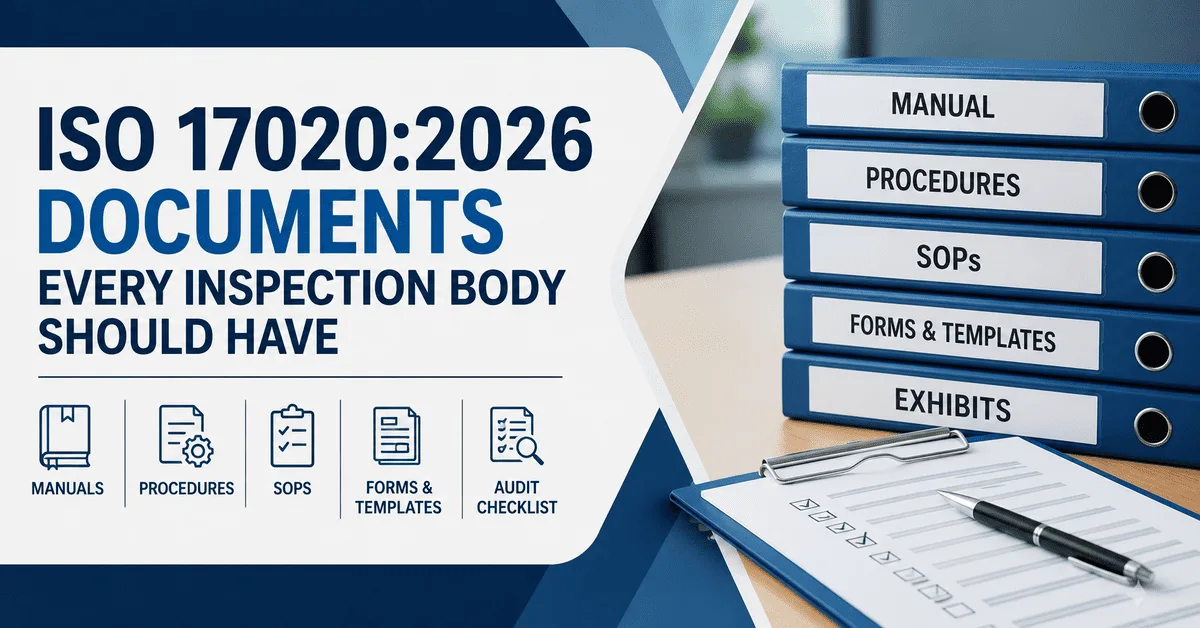
For every inspection body, documentation is more than an accreditation requirement—it is the foundation of a well-managed inspection system. ISO/IEC 17020:2026 emphasizes the need for documented information that supports consistent inspection activities, impartial decision-making, and effective management system implementation. Without a structured documentation framework, inspection agencies may struggle to maintain consistency, demonstrate compliance, and prepare for accreditation assessments.
This article highlights the essential ISO 17020:2026 documents every inspection body should maintain, including manuals, procedures, SOPs, forms, templates, exhibits, and audit checklists required to support an effective management system and successful accreditation.
Essential ISO 17020:2026 Documents
A complete documentation system consists of manuals, procedures, standard operating procedures (SOPs), forms, templates, exhibits, and audit checklists. Each document has a specific purpose in ensuring that inspection activities are carried out consistently and in accordance with ISO/IEC 17020:2026.
1. ISO 17020 Manual
The ISO 17020 Manual is the primary document of the management system. It defines the scope of inspection services, organizational structure, quality policy, objectives, responsibilities, and interaction between various processes. The manual provides an overview of how the inspection body meets the requirements of ISO/IEC 17020:2026.
2. Documented Procedures
Documented procedures establish standardized methods for managing key activities within the inspection body. These procedures generally include document control, record control, internal audits, management reviews, corrective actions, personnel competence, confidentiality, impartiality, contract review, and inspection processes. Clearly documented procedures help employees perform their responsibilities consistently while reducing operational errors.
Organizations planning to prepare ISO 17020:2026 documents should first identify the manuals, documented procedures, SOPs, forms, templates, exhibits, and audit checklists required for their inspection management system. A structured documentation approach improves consistency, supports compliance, and simplifies the accreditation process.
3. Standard Operating Procedures (SOPs)
SOPs provide detailed work instructions for specific inspection activities. They explain how individual tasks should be performed, who is responsible, and what records should be maintained. Standardized SOPs improve process consistency and help inspectors follow approved methods during routine operations.
4. Exhibits
Exhibits support the management system by providing additional reference information, process flow details, and operational guidance. They help employees understand system requirements and ensure uniform implementation throughout the organization.
5. Forms and Templates
Forms and templates standardize data collection and record keeping. Inspection reports, employee authorization forms, training records, corrective action forms, management review records, and document approval forms are commonly maintained to support the management system. Standardized templates improve documentation accuracy and simplify record management.
Inspection bodies looking to reduce documentation time often use professionally prepared ISO 17020:2026 documents, which include editable manuals, procedures, SOPs, forms, templates, exhibits, and audit checklists that can be customized to suit their organizational requirements.
6. Internal Audit Checklist
An internal audit checklist helps organizations evaluate whether their management system complies with ISO/IEC 17020:2026 requirements. Clause-based audit questions allow internal auditors to identify nonconformities, verify implementation, and recommend improvements before external accreditation assessments.
Regular internal audits also help inspection bodies verify the effectiveness of implemented procedures and identify opportunities for continual improvement before external accreditation assessments.
Benefits of Maintaining Complete Documentation
Maintaining complete and controlled documentation offers several advantages. It ensures consistent inspection practices, improves employee understanding of organizational processes, supports effective internal audits, simplifies staff training, and demonstrates compliance during accreditation assessments. Well-organized documents also reduce implementation time, improve document traceability, and strengthen confidence among customers and accreditation bodies.
These benefits help inspection bodies operate more efficiently while maintaining confidence among customers, regulators, and accreditation bodies.
Best Practices for Document Control
Inspection bodies should regularly review and update their documents to ensure they reflect current operational practices. Only approved versions should be available for use, obsolete documents should be removed from circulation, and records should be maintained in an organized manner for easy retrieval. Establishing an effective document control process helps maintain compliance while supporting continual improvement of the management system.
Conclusion
Maintaining complete ISO 17020:2026 documents is essential for inspection bodies seeking consistent operations and successful accreditation. A well-structured documentation system improves process control, demonstrates compliance, and supports continual improvement while helping organizations meet the requirements of ISO/IEC 17020:2026.