Let’s be honest. When we start looking for a flamenco guitar, we can get a little lost in the details.
Spruce top. Cypress back and sides. Scale length. Bracing. Action.
And somewhere between all those specifications, I usually find myself asking: “Fine, but what will this guitar actually feel like when I play it?”
That is where the Kremona Rosa Blanca flamenco guitar gets interesting.
I would not look at it as just another nylon-string guitar with a flamenco label. Its construction choices are closely tied to the way flamenco is played. So, let’s look at what these details actually mean to us as players.
1. The Spruce Top Has To Answer Quickly
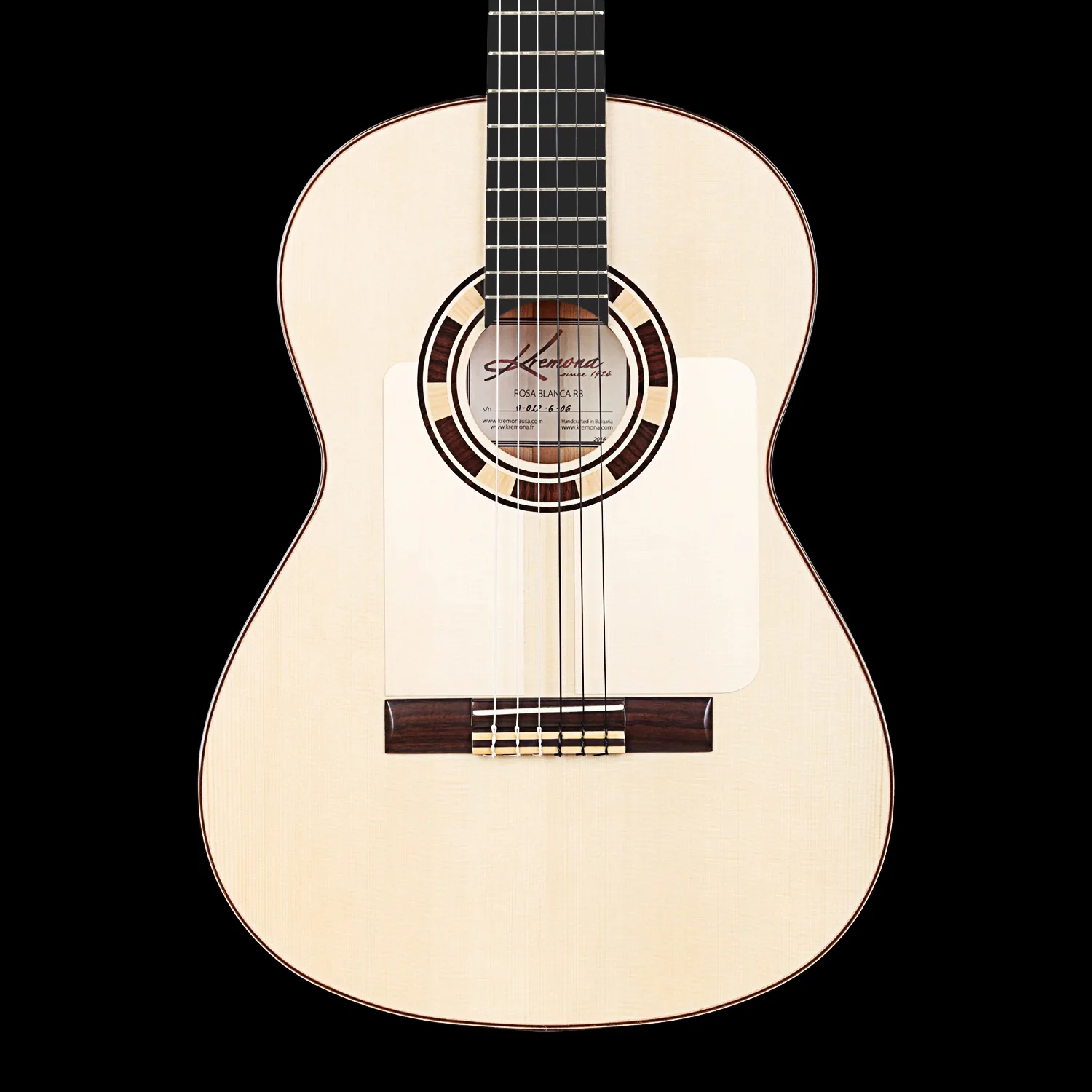
The Rosa Blanca uses a solid European spruce top.
Why should we care?
Because flamenco does not always give us time to wait for a note to unfold. We strike, accent and move. The guitar needs to respond quickly.
That is one reason spruce works so well here. Its character can provide a clear, immediate attack that suits picado, tremolo and rapid rhythmic passages.
You play a rasgueado and want the notes to speak.
Exactly.
2. Cypress Gives The Rosa Blanca Its Flamenco Attitude
This is one detail I would pay close attention to when choosing between flamenco guitars.
The Rosa Blanca uses solid cypress for its back and sides, a traditional choice for the flamenco blanca sound.
Cypress tends to give us a brighter, lighter and more percussive response than the darker, fuller character commonly associated with rosewood.
And you can hear that difference in the guitar's personality.
It does not say, “Look how much sustain I have.”
It says, “Come on. Play.”
That dry, immediate quality is exactly what many players want when the rhythm starts getting serious.
3. That 650 Mm Scale Is Not Just A Number
The Rosa Blanca has a 650 mm scale length and a 52 mm nut width.
Those numbers may look a little lifeless on a specification page, but think about your left hand.
A 650 mm scale is familiar territory for many classical and flamenco players, while the 52 mm nut provides the traditional finger spacing associated with Spanish-style nylon-string guitars.
Still, I would not judge the neck from numbers alone.
The actual setup, neck profile and string height can change how comfortable the guitar feels. Two guitars with similar measurements can feel surprisingly different.
4. The Low Action Matters
Kremona gives the Rosa Blanca a traditional low-action setup intended to support flamenco playability.
If you are coming from a classical guitar, you might initially think, “Wait... is that little buzz normal?”
It can be.
Flamenco guitars are often set up differently because controlled string buzz can become part of their percussive character. Lower action can also make fast passages and aggressive right-hand work feel more immediate.
Of course, setup still matters. Excessive or poorly controlled buzzing is not “authentic flamenco character.” It is simply a setup problem.
5. Look Underneath At The M4 Bracing
The Rosa Blanca uses Kremona's M4 bracing pattern, which Kremona describes as being based on traditional flamenco bracing.
This matters because the top is not working alone.
Bracing influences how the spruce soundboard moves, contributing to the guitar's response, projection and tonal balance.
So when we say the Rosa Blanca feels quick and lively, we should not credit one magical ingredient.
It is the whole recipe.
Spruce. Cypress. Bracing. Body construction. Setup.
6. The Golpeador Protects The Guitar During Real Flamenco Playing
The Rosa Blanca includes a clear golpeador, or tap plate.
Small detail? Absolutely.
Unimportant? Not at all.
Flamenco can be wonderfully physical. We use golpes and rhythmic techniques that bring the guitar body into the performance.
The golpeador protects the top from that contact.
We are going to play it hard.
And the guitar is prepared for it.
7. Rosa Blanca Or Rosa Morena? This Is Where I Would Pause
If you are also considering the Kremona Rosa Morena flamenco guitar, do not assume the two are interchangeable.
The key difference is the back and sides.
The Rosa Blanca uses solid cypress, while the Rosa Morena uses rosewood with its solid spruce top. Kremona positions the Rosa Morena as a guitar that combines flamenco characteristics with some of the richer tonal qualities associated with classical guitar.
So, what are we actually after?
That bright, dry, immediate cypress voice?
Or a little more depth and warmth from rosewood?
Neither answer is wrong. But your answer matters.
Before Buying, Let’s Talk About The Practical Part
If you are browsing Kremona flamenco guitars for sale, or searching for flamenco guitars in North Carolina, please do not stop at the photographs.
I would ask about:
- The current setup and action
- String type and condition
- Any cracks, repairs or top movement
- The condition of the golpeador
- Whether you can play the guitar before buying
- The seller's return and adjustment policy
You see that spruce top. You imagine the first falseta. You think, “Maybe this is the one.”
And maybe it is.
But a flamenco guitar is not really yours until your hands have had a conversation with it.
That is what I find compelling about the Rosa Blanca. Its specifications point toward a clear musical idea: quick response, rhythmic clarity, bright projection and an earthy flamenco character.
And when that first rasgueado comes alive beneath your fingers?
That is when we stop reading about the guitar and finally start listening to it.