London gardens are getting a makeover — and increasingly, astroturf is at the centre of it. Whether you have a small patio in Hackney, a terraced garden in Balham, or a larger plot out in Richmond, the case for artificial grass has never been stronger. Low maintenance, hard-wearing, and looking lush twelve months a year: it is easy to see why demand for astroturf across London has surged.
If you have been considering it, here is everything you need to know before you start.
What Exactly Is Astroturf?
The word "astroturf" has become shorthand for all types of artificial grass, though strictly it refers to one of the original branded products. Today's synthetic lawns have very little in common with the flat, plasticky surfaces of the 1980s. Modern products use multi-tonal fibres in different heights, creating a depth that closely mimics real grass. When quality installation is combined with a proper base layer and infill, the finished result can be genuinely difficult to distinguish from the real thing at a glance.
For London homeowners, that realism matters. Front gardens especially are on full public display, and nobody wants their home looking like a snooker table.
Why London Gardens Are Ideal for Artificial Grass
London poses specific challenges for natural lawns:
- Heavy clay soil in many areas of South and East London drains poorly, leaving lawns waterlogged in winter and cracked in summer.
- Shade from neighbouring buildings, fences, and mature trees kills off grass in patches.
- Tiny urban gardens see constant foot traffic — children playing, barbecues, furniture dragged about — which natural grass simply cannot survive.
- Hosepipe restrictions in dry summers make it difficult to keep natural lawns alive without using excessive amounts of water.
Artificial grass sidesteps every one of these issues. It drains freely through a perforated backing layer, tolerates shade without thinning, handles heavy use without wearing through, and requires no watering whatsoever.
How the Installation Process Works
A professional astroturf installation in London typically involves the following stages:
Site clearance: Any existing grass, weeds, and debris are removed down to a level base. Tree roots and drainage issues are addressed at this stage.
Sub-base installation: A compacted layer of MOT Type 1 aggregate (typically 50–100mm deep) is laid to provide a firm, free-draining foundation. This is the most important part of the job — a poor sub-base leads to an uneven, boggy lawn.
Weed membrane: A geotextile membrane is laid over the compacted base to suppress weeds without blocking drainage.
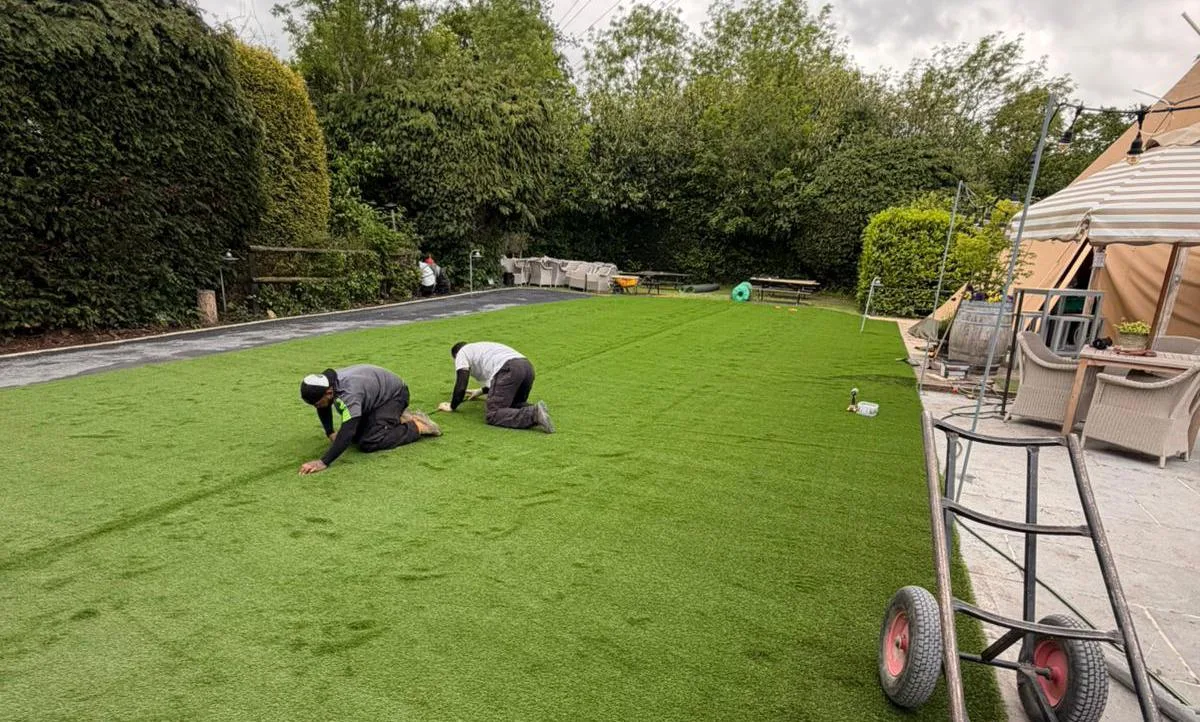
Grass laying and joining: The chosen artificial grass product is rolled out, cut to shape, and secured at the edges. Any joins are carefully positioned and bonded to be invisible.
Infill application: A silica sand or rubber infill is brushed into the grass fibres to support the pile, add weight, and help the grass stand upright.
The whole process for an average-sized London garden (around 20–30m²) takes one to two days with a professional team.
What Does Astroturf Installation Cost in London?
Prices vary depending on the size of the area, the quality of the grass chosen, and the condition of the existing ground. As a general guide:
- Budget range: £40–£60 per m² — functional, mid-pile products suitable for average domestic gardens.
- Mid-range: £60–£90 per m² — better fibre quality, fuller pile, more natural appearance.
- Premium: £90–£120+ per m² — top-of-the-range products with realistic colouration and long warranties.
Most London homeowners end up in the mid-range bracket. A 25m² garden professionally installed with a quality product typically comes in around £1,500–£2,000 fully fitted, including sub-base preparation.
Always request a full breakdown of costs covering materials and labour separately. Be cautious of any quote that seems unusually low — cutting corners on the sub-base is the most common cause of problems further down the line.
Maintenance: How Much Work Is Actually Involved?
Compared to natural grass, the maintenance requirement is minimal. You will need to:
- Brush the grass occasionally (every few weeks during heavy use periods) to keep the fibres standing upright.
- Remove fallen leaves and debris — a leaf blower or a stiff brush works well.
- Rinse the surface with water during dry periods to remove dust and keep it fresh.
- Treat any stains promptly with a mild soap and water solution.
That is genuinely it. No mowing, no feeding, no scarifying, no reseeding bare patches. For busy London households, that freedom is one of the biggest selling points.
Choosing the Right Installer
Installation quality makes all the difference. A beautifully sourced grass product laid on a shoddy sub-base will look terrible within a year. When choosing a company, look for:
- Proof of previous installations (photographs, case studies, or the ability to visit a completed job).
- Clear written quotes with materials specified by name and grade.
- A minimum five-year guarantee covering both the grass product and the installation.
- Evidence of public liability insurance.
If you are based anywhere in London, working with astroturf specialists in London who know the local ground conditions will always produce a better outcome than using a generalist contractor unfamiliar with the area.
Final Thoughts
Astroturf installation has become one of the most popular garden upgrades across London, and it is not hard to see why. For homeowners who want a consistently tidy, low-maintenance outdoor space that works year-round regardless of the weather, it delivers in ways natural grass simply cannot. Do your research, invest in quality, and you will be enjoying your lawn for fifteen-plus years without lifting a mower once.