Urban V2I Communication: A Complex Challenge
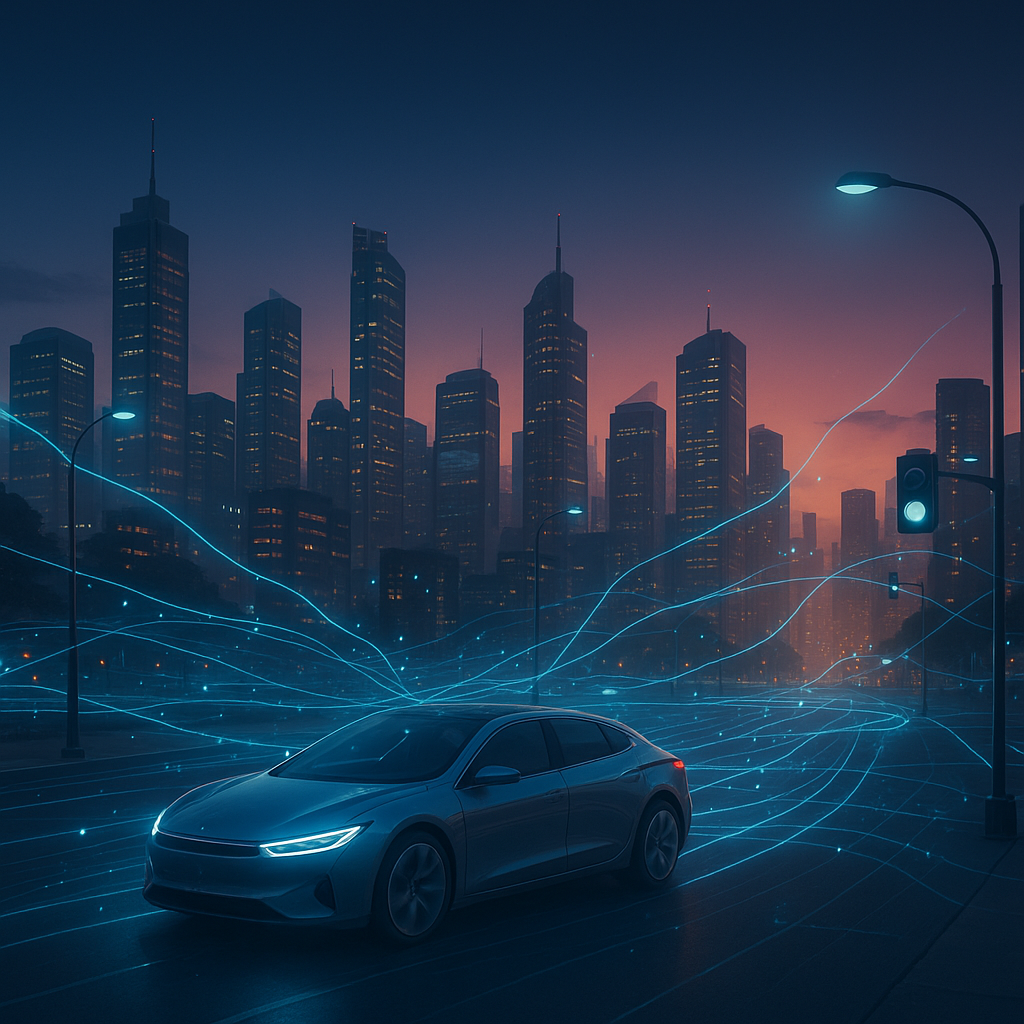
As cities worldwide become denser and more connected, vehicle-to-infrastructure (V2I) communication systems have emerged as a cornerstone of next-generation intelligent transportation systems (ITS). These systems enable vehicles to communicate with roadside units (RSUs), traffic lights, and other infrastructure to improve safety, traffic flow, and fuel efficiency. However, the urban environment presents a unique set of challenges for wireless communication, particularly when it comes to predicting path loss—the attenuation a signal undergoes as it travels through space and obstacles.
Path loss prediction in urban V2I contexts is notoriously difficult due to complex signal propagation conditions. Buildings, vehicles, pedestrians, and other urban features cause multipath fading, shadowing, and obstruction effects that vary dynamically with time and location. Traditional empirical and deterministic models often fail to capture this complexity, leading to suboptimal communication performance and degraded reliability.
Recent industry reports suggest that unreliable path loss prediction contributes to up to a 25% drop in effective data rates in dense urban corridors, directly impacting the latency-sensitive applications essential to autonomous driving and real-time traffic management. This makes improving prediction accuracy a critical research and engineering priority.
“Reliable path loss prediction is the linchpin for robust urban V2I communication, directly influencing safety and efficiency outcomes in smart cities,” explains Dr. Lena Kurth, a leading researcher in vehicular communications at the German Institute of Technology.
Historical Context: From Traditional Models to AI Integration
In the early days of V2I system design, path loss prediction relied heavily on classical models such as the Okumura-Hata model, COST 231, and ray-tracing simulations. These models, while foundational, are primarily empirical or deterministic and require extensive fine-tuning to specific environments. Their limitations became apparent as urban environments evolved and communication demands intensified.
By the late 2010s and early 2020s, researchers began exploring machine learning (ML) approaches to supplement or replace traditional methods. Early ML models attempted to learn path loss characteristics from datasets generated through measurements and simulations, showing promise in adapting to varied urban morphologies without requiring exhaustive manual parameterization.
However, initial efforts were hampered by limited training data, computational constraints, and the nascent state of ML algorithms tailored to wireless channel modeling. The advent of more powerful computational platforms and the accumulation of vast urban wireless datasets have catalyzed significant progress.
Today, the integration of ML with domain knowledge in radio propagation marks a paradigm shift. Hybrid models that combine physical principles with data-driven learning provide enhanced accuracy and generalizability. This evolution aligns with broader trends documented in the article The Three Ages of Data Science, which highlights the maturation from traditional ML to deep learning and large language models (LLMs) in complex data domains.
Deep Dive: Machine Learning Techniques Transforming Path Loss Prediction
Machine learning methods applied to urban V2I path loss prediction span from classical regression algorithms to cutting-edge deep neural networks (DNNs) and graph-based models. Each approach offers distinct advantages and challenges in modeling the intricate wireless propagation phenomena.
Regression and Ensemble Models: Early ML efforts favored linear regression, support vector regression (SVR), and random forests due to their interpretability and efficiency. These models use input features such as distance, building density, road geometry, and environmental conditions to predict path loss. Random forests and gradient boosting machines, in particular, have demonstrated robustness against overfitting and noise in measurement data.
Deep Learning Architectures: More recently, convolutional neural networks (CNNs) and recurrent neural networks (RNNs) have been leveraged to capture spatial and temporal correlations in urban scenarios. CNNs process spatial data such as map images and urban layouts, effectively learning complex scattering patterns caused by buildings. RNNs and long short-term memory (LSTM) networks model temporal dynamics induced by moving vehicles and changing environmental factors.
Graph Neural Networks (GNNs): Given that urban environments can naturally be represented as graphs—nodes as infrastructure elements and edges as connectivity—GNNs have emerged as a potent tool. They excel in capturing relational information and non-Euclidean spatial dependencies, providing nuanced path loss predictions that reflect the intricate topology of urban road networks.
“Graph neural networks unlock a new dimension in modeling urban wireless channels by inherently understanding spatial relationships,” notes Prof. Miguel Alvarez from the University of Barcelona's Wireless Research Lab.
These ML models typically ingest features such as:
- 3D building geometry and heights
- Road and lane layouts
- Vehicle density and speed
- Weather and atmospheric conditions
- Material properties of urban surfaces
Training datasets come from real-world measurements collected via drive tests, fixed sensor networks, and vehicular telemetry, augmented by high-fidelity ray-tracing simulations. The integration of heterogeneous data sources enhances model robustness and predictive accuracy.
Current 2026 Developments: Industry Adoption and Technological Breakthroughs
As of mid-2026, machine learning-driven path loss prediction is no longer a theoretical pursuit but has entered practical deployment phases in leading smart cities and automotive OEM strategies. Several key developments have accelerated this trend:
- Standardized Urban Wireless Datasets: Collaborative efforts spearheaded by the 5G Automotive Association (5GAA) and the IEEE Vehicular Technology Society have produced open-access datasets covering diverse urban areas globally, facilitating reproducible ML research and benchmarking.
- Edge AI Implementations: Advances in edge computing hardware enable real-time ML inference directly on RSUs and onboard vehicle units, reducing latency and allowing adaptive communication strategies based on instantly updated path loss predictions.
- Hybrid Model Deployment: Companies like Qualcomm and Huawei have integrated hybrid ML-physical models into their V2X chipsets, improving signal quality and network resource allocation in congested urban corridors.
- Regulatory Support: Governments in Europe and Asia have incorporated path loss prediction accuracy standards into V2I communication certification processes, accelerating the adoption of AI-enhanced models.
These advances have led to demonstrable improvements in communication reliability metrics:
- Up to 18% increase in successful packet delivery rates in dense urban canyons
- 20-30% reduction in dropped connections at intersections and tunnels
- Enhanced support for ultra-low latency applications critical to autonomous vehicle control
This progress also aligns with broader AI trends discussed in Harnessing Machine Learning to Revolutionize Urban V2I Path Loss Prediction, which emphasizes the transformative impact of ML on urban vehicular networks.
Case Studies: Real-World Successes and Lessons Learned
Several pilot projects worldwide have validated the effectiveness of ML-powered path loss prediction in urban V2I contexts. A few prominent examples include:
- Oslo Smart Mobility Project (Norway): Utilizing a combination of CNNs and LSTM networks trained on extensive 3D urban maps and vehicle telemetry, this initiative achieved a 22% improvement in V2I communication reliability across downtown Oslo. The system dynamically adjusted transmission power and modulation schemes based on ML-predicted path loss, reducing interference and enhancing throughput.
- Shanghai Connected Vehicle Pilot: Employing GNN-based models, the Shanghai pilot interconnected over 5,000 RSUs with vehicles, enabling precise path loss prediction despite the city’s complex high-rise topography. The approach facilitated seamless handovers and minimized communication black spots in critical traffic junctions.
- San Francisco V2I Deployment: Combining edge AI with hybrid ML-physics models, this project demonstrated real-time adaptation to environmental changes such as weather and roadworks. The deployment resulted in a 15% reduction in urban traffic accidents linked to communication failures.
“These real-world deployments underscore the tangible benefits of ML-based path loss prediction—improving not just connectivity but public safety and urban mobility,” remarks Sarah Martinez, Chief Engineer at UrbanComm Solutions, a key technology provider for several of these pilots.
Lessons learned from these cases highlight the need for continuous data collection, model retraining, and integration with wider ITS ecosystem components to maintain peak performance.
Future Outlook: Challenges and Opportunities
Looking ahead, the trajectory of machine learning for path loss prediction in urban V2I systems is promising but not without hurdles. Key areas to watch include:
- Data Privacy and Security: The collection and processing of large-scale urban wireless data raise concerns about user privacy and cyber-security that must be addressed through robust anonymization and encryption techniques.
- Model Explainability: Increasing demand from regulators and operators for transparent AI models may drive research into interpretable ML techniques, balancing accuracy with explainability.
- Integration with 6G and Beyond: Emerging 6G networks with terahertz frequencies and massive MIMO will introduce new propagation challenges; ML models must evolve accordingly to handle complex channel characteristics.
- Cross-Domain Collaboration: Effective path loss prediction will benefit from interdisciplinary collaboration involving urban planners, automotive engineers, and data scientists to holistically model the environment.
“The future of urban V2I communication hinges on adaptive, intelligent systems that can learn and evolve with the city itself,” predicts Dr. Kurth, emphasizing the symbiotic relationship between ML and urban infrastructure design.
For stakeholders seeking to capitalize on these advances, investing in scalable data infrastructure, fostering open datasets, and adopting hybrid ML-physical modeling approaches will be critical steps. TheOmniBuzz readers interested in the broader AI evolution will find valuable insights in our comprehensive feature on The Three Ages of Data Science.
In conclusion, machine learning has transitioned from an experimental tool to a core technology that is reshaping how urban V2I path loss prediction is performed. This shift is pivotal for the realization of safe, efficient, and resilient urban transportation networks in the smart cities of tomorrow.