Making better use of commercial floor space has become an important part of modern building design.
Instead of constructing separate permanent rooms for every activity, many businesses now prefer interiors that can change according to the situation. A large area can remain open for an event and later be divided into smaller sections for meetings, training sessions or private discussions.
A Sliding Folding Partition helps make this possible.
However, choosing the partition itself is only one part of the planning process. The operating method also needs attention. Projects may require either a Manual Sliding Folding Partition or a Semi-Automatic Sliding Folding Partition.
Although both systems are intended to create adaptable spaces, they can suit different working environments.
This guide looks at the factors that can help determine which option is appropriate for your project.
Flexible Space Begins With the Right Operating Method
Before comparing features, consider one simple question:
How will the partition be used during a normal day?
A partition installed in a training room may only be moved occasionally. In contrast, a conference venue might need different room arrangements several times within a single day.
The operating frequency can significantly influence the type of system that makes sense.
For this reason, selecting between manual and semi-automatic operation should be based on practical requirements rather than simply choosing the system with more advanced features.
Manual Sliding Folding Partition: A Straightforward Approach
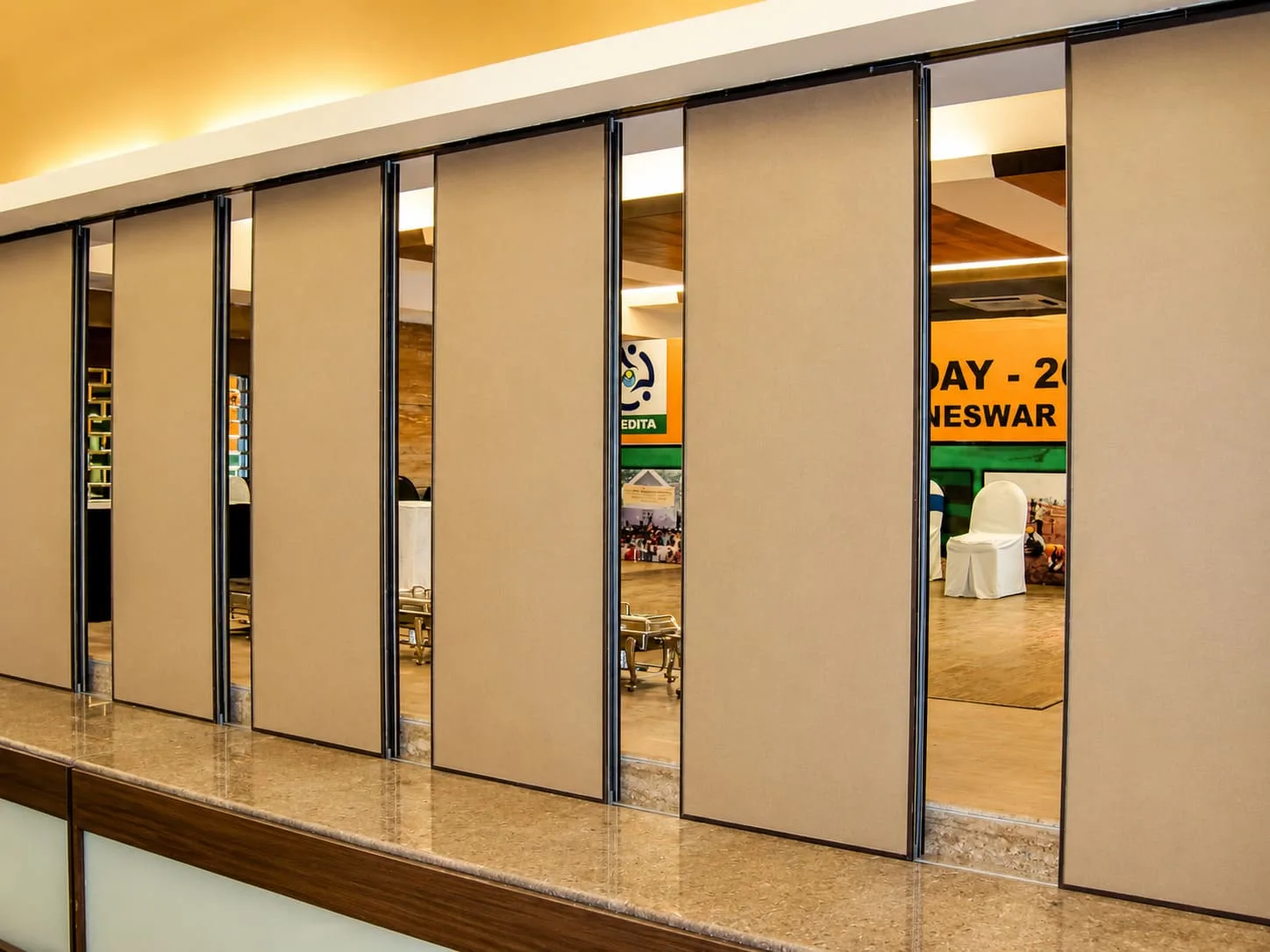
Envirotech Manual Sliding Folding Partition requires the operator to move and position the panels directly.
The panels travel along their designed track arrangement and are brought into place when the room needs to be separated. Once the division is no longer required, the partition panels can be moved towards their planned storage or parking position.
This operating method can work effectively in environments where flexibility is required but frequent automated assistance is unnecessary.
Manual Sliding Folding Partitions may be considered for:
- Office meeting spaces
- Training facilities
- Educational rooms
- Corporate interiors
- Studios
- Multipurpose halls
- Commercial buildings
The main advantage is simplicity. The system provides the ability to change the layout of an interior while keeping the operation relatively direct.
Semi-Automatic Sliding Folding Partition: Support for Regular Operation
Envirotech Semi-Automatic Sliding Folding Partition incorporates assisted functions within the overall operating system.
The specific features can vary according to the manufacturer and project specification. Some actions may be supported through mechanical or automated components while other parts of the operation remain manual.
This type of arrangement can be useful when managing the partition is a regular part of the facility's daily routine.
For example, a hotel may need to prepare different spaces for breakfast meetings, business conferences and evening events. A convention facility may also need to create multiple room combinations throughout the day.
In such applications, operational convenience can become a major consideration.
Semi-automatic systems can therefore be suitable for:
- Hotels
- Conference facilities
- Banquet spaces
- Convention centers
- Event locations
- Corporate facilities
- Large multipurpose interiors
Manual vs Semi-Automatic: The Practical Difference
The difference is mainly related to the way the partition is managed.
Manual Operation
With a manual system, the operator is directly involved in moving and arranging the partition panels.
This option can be appropriate when:
- Room changes happen occasionally
- A direct operating method is preferred
- The application has straightforward requirements
- Additional assisted features are not necessary
Semi-Automatic Operation
A semi-automatic system includes assistance for selected operational functions.
It may be considered when:
- The room configuration changes regularly
- Facility staff operate the system frequently
- Convenience is an important priority
- The space supports multiple activities or events
Neither option is automatically better. The suitability depends on the demands placed on the partition system.
Consider the Frequency of Use
Frequency is one of the most useful factors when making a decision.
Imagine two different projects.
The first is a corporate meeting room that is divided only for occasional training sessions.
The second is a hotel event floor where several rooms are opened and separated every day.
Both spaces may require flexible partitions, but their operating requirements are very different.
A manual system may provide everything needed for the first application. The second project may benefit from additional operating assistance.
Understanding the actual usage pattern can prevent over-specification or under-specification of the partition system.
Acoustic Performance Is a Separate Consideration
A common misunderstanding is that the operating method alone determines sound performance.
In reality, Manual and Semi-Automatic Sliding Folding Partitions can both be designed to meet specific acoustic requirements.
An Acoustic Sliding Folding Partition may incorporate features such as:
- Specialized panel construction
- Sound-insulating internal materials
- Designed panel connections
- Vertical sealing arrangements
- Top and bottom sealing systems
- Perimeter sealing
The final result depends on the complete system and the quality of installation.
Projects involving simultaneous meetings, confidential discussions or multiple events should identify their acoustic requirements before the partition specification is finalized.
Plan the Parking Position Before Installation
When the partition is closed, it creates separate spaces.
But what happens when the room needs to be completely open?
The panels must be positioned somewhere.
This is why parking planning is an essential part of a Sliding Folding Partition project.
The final parking arrangement may depend on:
- Opening size
- Number of panels
- Panel configuration
- Available architectural space
- Movement routes within the building
- Interior design requirements
A poorly planned parking area can affect the usability of an otherwise well-designed space.
Including this requirement during the early design stage can help create a cleaner and more functional installation.
Maintenance Should Also Be Considered
Sliding Folding Partitions contain moving elements that should continue to operate smoothly throughout their working life.
Regular inspection of components such as tracks, rollers and panel connections can help maintain reliable performance.
Semi-automatic systems may contain additional operating components, which should be maintained according to the recommended requirements of the system.
Proper use and periodic maintenance can help protect the long-term functionality of the installation.
Questions to Ask Before Selecting Your Partition
Before making a final decision, review the following points:
How often will the room layout change?
Frequent use may make operational convenience more important.
Who will operate the partition?
The system should be appropriate for the people responsible for managing it.
Does the project require sound separation?
If privacy is important, acoustic specifications should be included during planning.
Is there enough room for panel parking?
The open position of the partition is just as important as the closed position.
Could the use of the space change later?
A flexible interior should ideally support future requirements as well as current ones.
Choosing the System That Fits Your Space
A Manual Sliding Folding Partition can be an effective choice for projects that require practical flexibility and straightforward operation.
A Semi-Automatic Sliding Folding Partition may offer advantages in facilities where room configurations change frequently and assisted functions can improve convenience.
The selection should not be based only on appearance or technology.
Instead, consider the daily operation of the building, the people using the space, the frequency of room changes, acoustic expectations and available parking arrangements.
Flexible Partition Solutions for Commercial Interiors
Modern buildings need to make efficient use of every available square meter.
A well-planned Sliding Folding Partition System allows one interior to support different activities without requiring permanent structural changes.
At Envirotech Partitions, customized partition solutions can be planned for offices, hotels, educational institutions, conference facilities and other commercial environments.
Whether the requirement is for a Manual Sliding Folding Partition, a Semi-Automatic Sliding Folding Partition or an Acoustic Sliding Folding Partition, the right system should be designed around the practical needs of the project.
A flexible interior gives a business more options—and the right partition system helps make those options possible.