
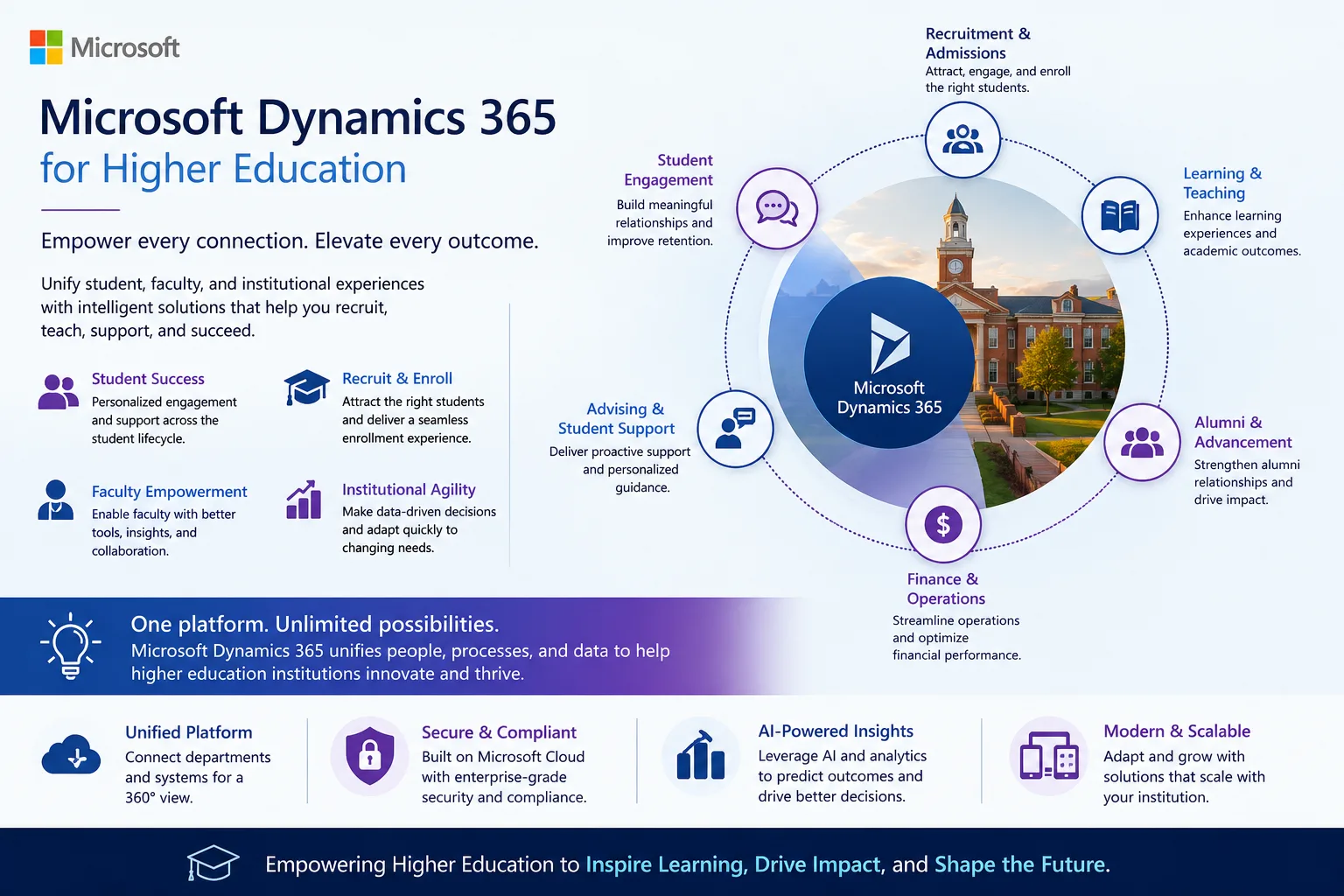
The education sector is undergoing a significant digital transformation. Universities, colleges, and educational institutions are increasingly looking for technology solutions that can streamline operations, improve student engagement, and enhance decision-making capabilities. This is where Microsoft Dynamics for education has emerged as a powerful platform, helping institutions create connected campuses and deliver exceptional educational experiences.
The Growing Need for Digital Campus Management
Modern educational institutions manage a wide range of processes, including admissions, academics, examinations, finance, human resources, hostel management, and student services. When these functions operate through disconnected systems, inefficiencies and data silos can impact productivity and the overall student experience.
A unified platform enables institutions to consolidate information across departments, ensuring consistent data, better collaboration, and improved operational efficiency. By bringing all functions together, educational organizations can reduce manual work, eliminate duplication, and improve service delivery.
Benefits of Microsoft Dynamics for Education
One of the primary advantages of Microsoft Dynamics for education is its ability to provide a comprehensive institutional view. Administrators can access real-time information from multiple departments through a centralized platform, leading to faster and more informed decision-making.
The platform also helps automate critical administrative and financial processes, including admissions, fee management, payroll, procurement, and resource allocation. Automation reduces operational bottlenecks while improving accuracy and compliance.
Additionally, educational institutions benefit from enhanced security, data protection, and governance capabilities. With growing concerns around cyber threats and data privacy, having enterprise-grade security measures in place is essential for protecting sensitive student and institutional information.
Enhancing Student Engagement with Dynamics 365 CRM
Building meaningful relationships with students has become increasingly important throughout the learner lifecycle. A robust Dynamics 365 CRM for education helps institutions manage student recruitment, admissions, engagement, alumni relations, and donor interactions through a single platform.
With CRM-driven insights, institutions can personalize communication, monitor student interactions, and create targeted engagement strategies. This approach not only improves enrollment outcomes but also contributes to stronger student satisfaction and retention rates.
The CRM platform can also support alumni engagement programs by helping institutions maintain long-term relationships, organize outreach initiatives, and strengthen fundraising efforts.
Leveraging AI and Data Intelligence
Educational organizations are increasingly adopting artificial intelligence and analytics to improve academic and administrative outcomes. AI-powered tools can automate routine workflows, support student services through chatbots, and provide predictive insights that help institutions identify students who may require additional support.
By combining AI capabilities with a unified data platform, institutions can generate real-time dashboards, monitor performance metrics, and make data-driven decisions regarding enrollment, academic planning, and resource utilization.
Conclusion
As higher education continues to evolve, institutions require flexible and intelligent technology solutions that support both operational excellence and student success. Microsoft Dynamics for education offers a unified framework for managing campus operations, while Dynamics 365 CRM for education enables personalized engagement across the student lifecycle. Together, these solutions help institutions create connected campuses, improve efficiency, and prepare for future growth in an increasingly digital world.