The Shift Toward Modern Data Platforms
As organizations generate and consume larger volumes of data, traditional data architectures are struggling to keep up with modern business demands. Many enterprises still rely on a combination of data warehouses, integration tools, analytics platforms, and reporting systems that operate independently. While this approach has served businesses for years, it often creates complexity, data silos, and governance challenges.
To overcome these limitations, many organizations are evaluating modern unified platforms that can simplify data management and analytics. This has led to increasing interest in Microsoft Fabric as a next-generation solution for enterprise data transformation.
Understanding Traditional Data Architecture
Traditional data architecture typically consists of multiple technologies working together. Data is collected from business applications, moved through ETL pipelines, stored in databases or warehouses, and finally processed for reporting and analytics.
Although effective in many situations, this architecture often introduces several challenges:
Data Silos
Business data is frequently stored across different systems, making it difficult to create a unified view of operations.
Complex Integrations
Managing multiple technologies requires additional integrations, maintenance efforts, and specialized expertise.
Delayed Insights
Data often moves through scheduled processes, resulting in reporting delays and slower decision-making.
Higher Management Overhead
Organizations must manage multiple vendors, licensing models, and infrastructure environments.
As business requirements continue to evolve, these challenges can impact agility and operational efficiency.
How Microsoft Fabric Changes the Approach
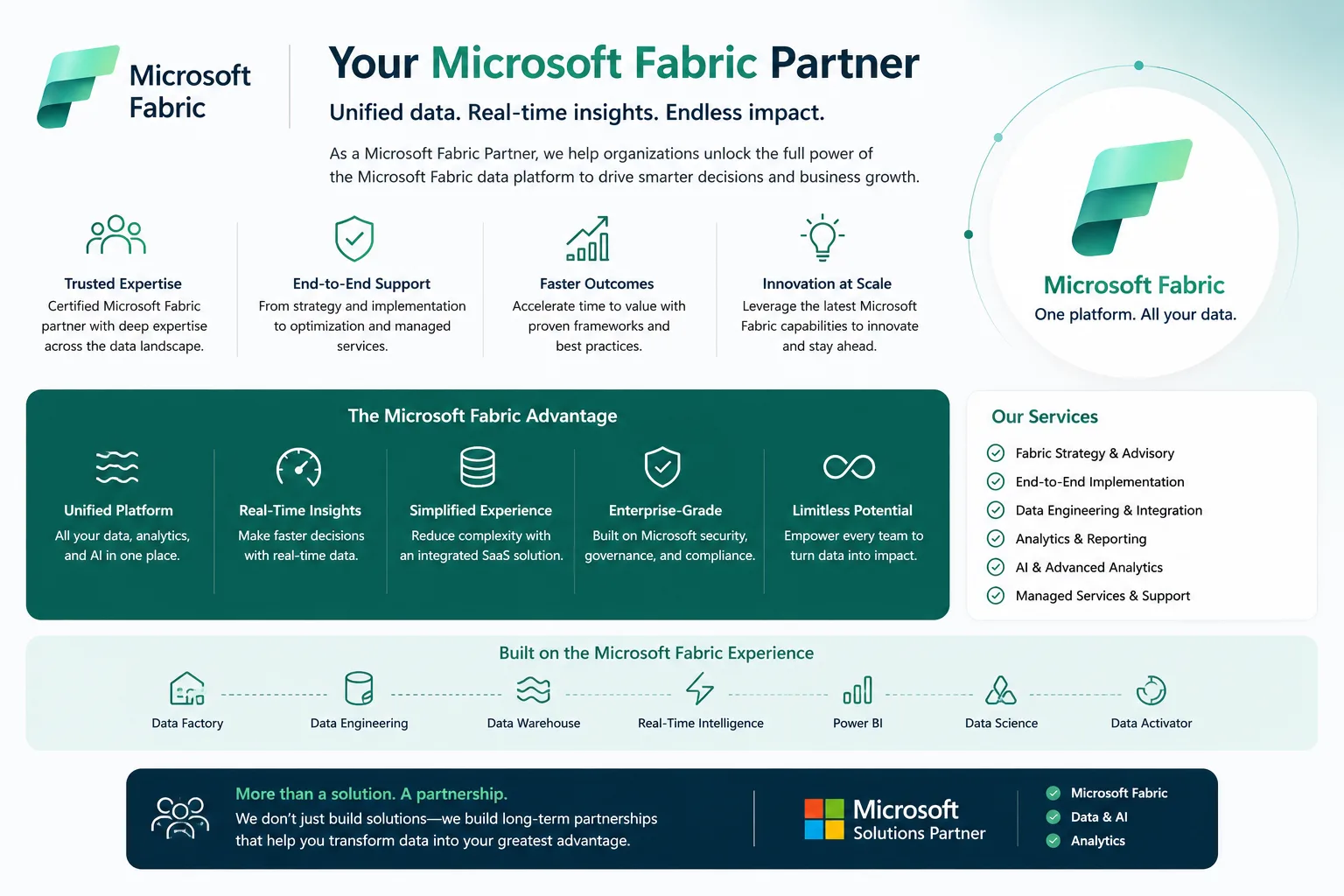
Microsoft Fabric introduces a unified data platform designed to bring together data engineering, integration, storage, analytics, governance, and business intelligence within a single ecosystem.
Rather than moving data across disconnected systems, organizations can centralize their data operations and analytics processes. This simplifies data management and creates a more consistent experience for both business users and IT teams.
A significant advantage of Fabric is its ability to support multiple workloads from a shared data foundation, reducing duplication and improving accessibility across teams.
Why Enterprises Are Accelerating Their Microsoft Fabric Journey
The growing demand for real-time insights, AI-driven decision-making, and centralized governance is encouraging organizations to begin their Microsoft Fabric Journey.
Modern enterprises are looking for solutions that can simplify architecture while supporting future growth. Fabric enables businesses to create a connected environment where data can be managed, analyzed, and governed more effectively.
By reducing dependency on fragmented technologies, organizations can improve collaboration between departments and accelerate innovation initiatives.
Evaluating the Microsoft Fabric Adoption Path
The Microsoft Fabric Adoption Path is often more strategic than disruptive. Organizations can gradually modernize their data ecosystem while continuing to leverage existing reporting investments.
Key benefits include:
Improved Data Accessibility
Users gain access to trusted and consistent data across various business functions.
Stronger Governance
Centralized governance helps maintain data quality, security, and compliance.
Enhanced Analytics
Organizations can move from static reporting to advanced analytics and AI-powered insights.
Greater Scalability
Fabric supports growing data volumes and evolving business requirements without significant infrastructure complexity.
Which Option Is Better for Modern Enterprises?
Traditional data architecture can still be suitable for organizations with stable environments and limited modernization requirements. However, businesses seeking agility, scalability, and streamlined operations are increasingly turning to unified platforms.
For enterprises focused on digital transformation, the Microsoft Fabric Journey offers a practical way to modernize data operations while reducing complexity. Following a structured Microsoft Fabric Adoption Path allows organizations to unlock better analytics, stronger governance, and improved collaboration across the business.
As data continues to become a strategic asset, unified platforms like Microsoft Fabric are helping organizations build a more efficient and future-ready foundation for innovation and growth.