
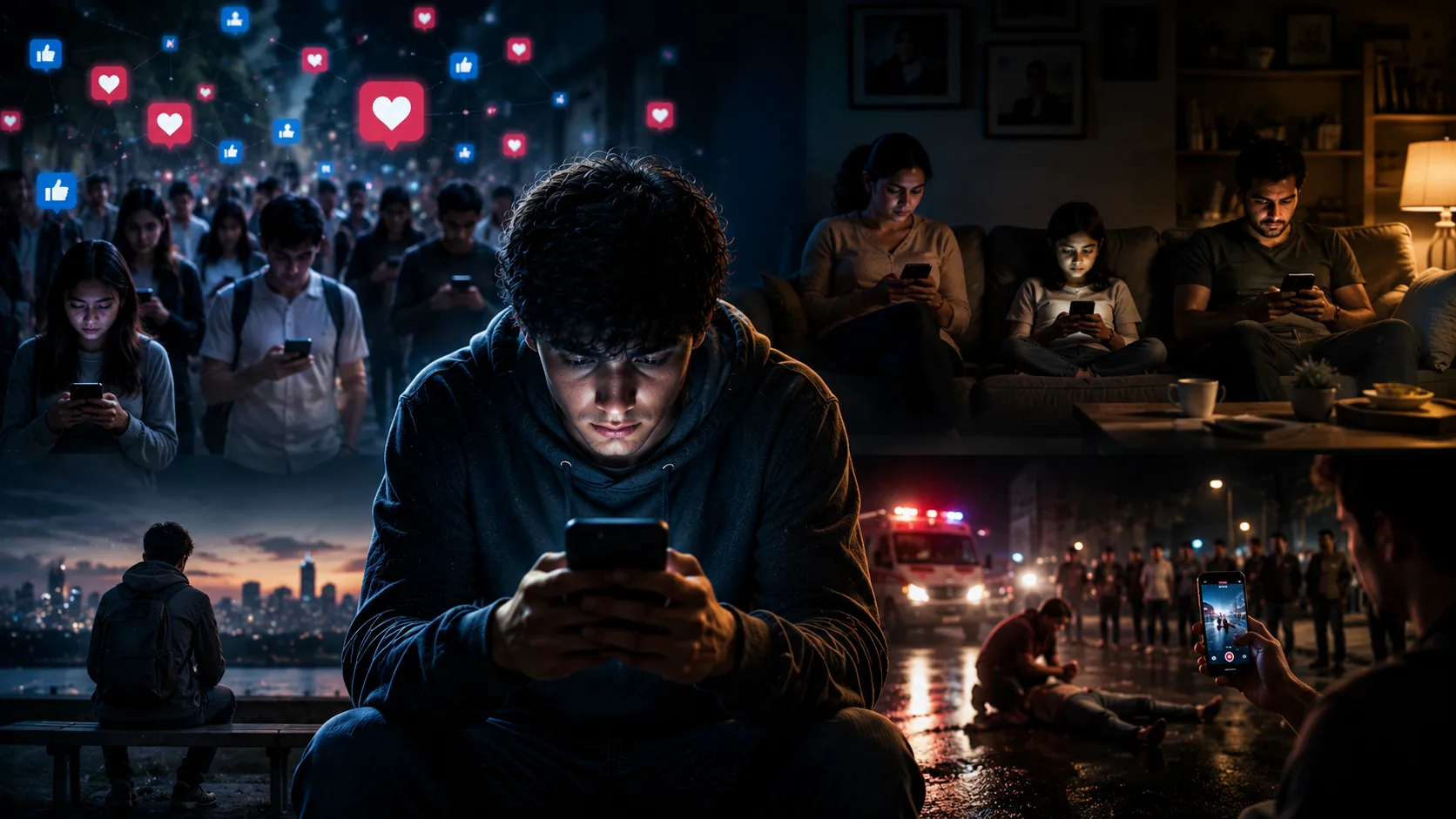
We live in the most connected era in human history.
With a single tap, we can reach people across the globe, join video calls, share experiences instantly, and stay updated on the lives of friends, family, and even strangers. Technology has transformed communication in remarkable ways.
Yet despite being constantly connected, many people feel increasingly isolated. This growing contradiction has become one of the defining challenges of modern life. We are digitally connected but emotionally disconnected.
The Gizmo Effect: Connected Virtually, Disconnected Emotionally
Modern technology promised connection, and in many ways it delivered. However, it also created what many psychologists call the "Gizmo Effect"—a paradox where devices bring people together online while creating distance in real-world relationships.
Today, people spend hours scrolling through social media feeds, watching videos, reading updates, and consuming endless content. We often know more about strangers online than we do about the emotions of people sitting beside us.
As screen time increases, genuine human connection often decreases.
Hundreds of Contacts, Yet No One to Call
Most people have hundreds of contacts, countless social media followers, and multiple messaging groups.
Yet when life becomes difficult, many discover something painful: there is no one they feel comfortable opening up to.
No one who listens without judgment.
No one who offers undivided attention.
No one who truly understands.
This is a different kind of loneliness—not the absence of people, but the absence of emotional connection.
Families Living in Invisible Digital Worlds
One of the saddest realities of modern life can be seen inside our homes.
Family members often sit together in the same room while living in separate digital spaces. One person scrolls through social media, another watches videos, while someone else replies to messages.
Everyone is physically present but emotionally absent.
Conversations become shorter. Shared moments become rarer. Relationships slowly weaken as screens replace meaningful interaction.
When Scrolling Replaces Feeling
Years ago, moments of silence encouraged reflection and self-awareness.
Today, silence often feels uncomfortable.
Whenever we feel bored, anxious, stressed, or lonely, we instinctively reach for our phones. Scrolling becomes an escape from difficult emotions.
The problem is that avoiding emotions does not heal them.
Instead, constant distraction can create a deeper sense of disconnection from ourselves and others.
The Loss of Human Sensitivity
Perhaps the most concerning consequence of digital overload is emotional desensitization.
When accidents happen or someone experiences distress in public, many people reach for their cameras before offering help.
Human suffering has increasingly become content.
A person crying becomes a viral video.
An emergency becomes entertainment.
Constant exposure to emotional content can reduce our ability to empathize deeply, even as we witness more human experiences than ever before.
Why Are We Becoming Emotionally Numb?
The digital world thrives on speed.
Instant messages.
Instant gratification.
Instant validation.
But meaningful human experiences move slowly.
Trust takes time.
Healing takes time.
Personal growth takes time.
Strong relationships require patience, vulnerability, and presence—qualities that cannot be rushed.
The Illusion of Constant Connection
Technology creates the impression that we are never alone.
Yet being online is not the same as being emotionally connected.
Someone can receive hundreds of likes and still feel lonely.
Someone can appear happy online while privately struggling with anxiety, stress, or emptiness.
Human beings need more than visibility. They need understanding, empathy, and authentic connection.
Reconnecting in a Digital World
As emotional disconnection becomes more common, many people are seeking guidance and support. This is one reason searches for a life coach near me continue to grow. People are looking for clarity, purpose, and meaningful ways to improve their emotional well-being.
The solution is not to reject technology. Instead, we must learn how to use it without allowing it to replace genuine human connection.
Simple changes can make a significant difference:
- Put phones away during meals.
- Call a friend instead of only reacting to their posts.
- Listen fully when someone speaks.
- Spend screen-free time with family.
- Offer help before reaching for a camera.
- Create space for reflection and self-awareness.
Human Beings Heal Through Connection
Modern loneliness is not simply about being alone.
It is about feeling unseen in a world that constantly watches.
It is about having endless communication but very little connection.
We have built a society where Wi-Fi signals are often stronger than emotional bonds. Perhaps the future of mental wellness is not just about advancing technology but about becoming emotionally present again.
For those feeling disconnected, overwhelmed, or uncertain about their direction in life, working with a professional mentor or searching for a life coach near me can be a meaningful first step toward rebuilding connection, confidence, and purpose.
Because at the end of the day, people do not heal through notifications.
They heal through connection.