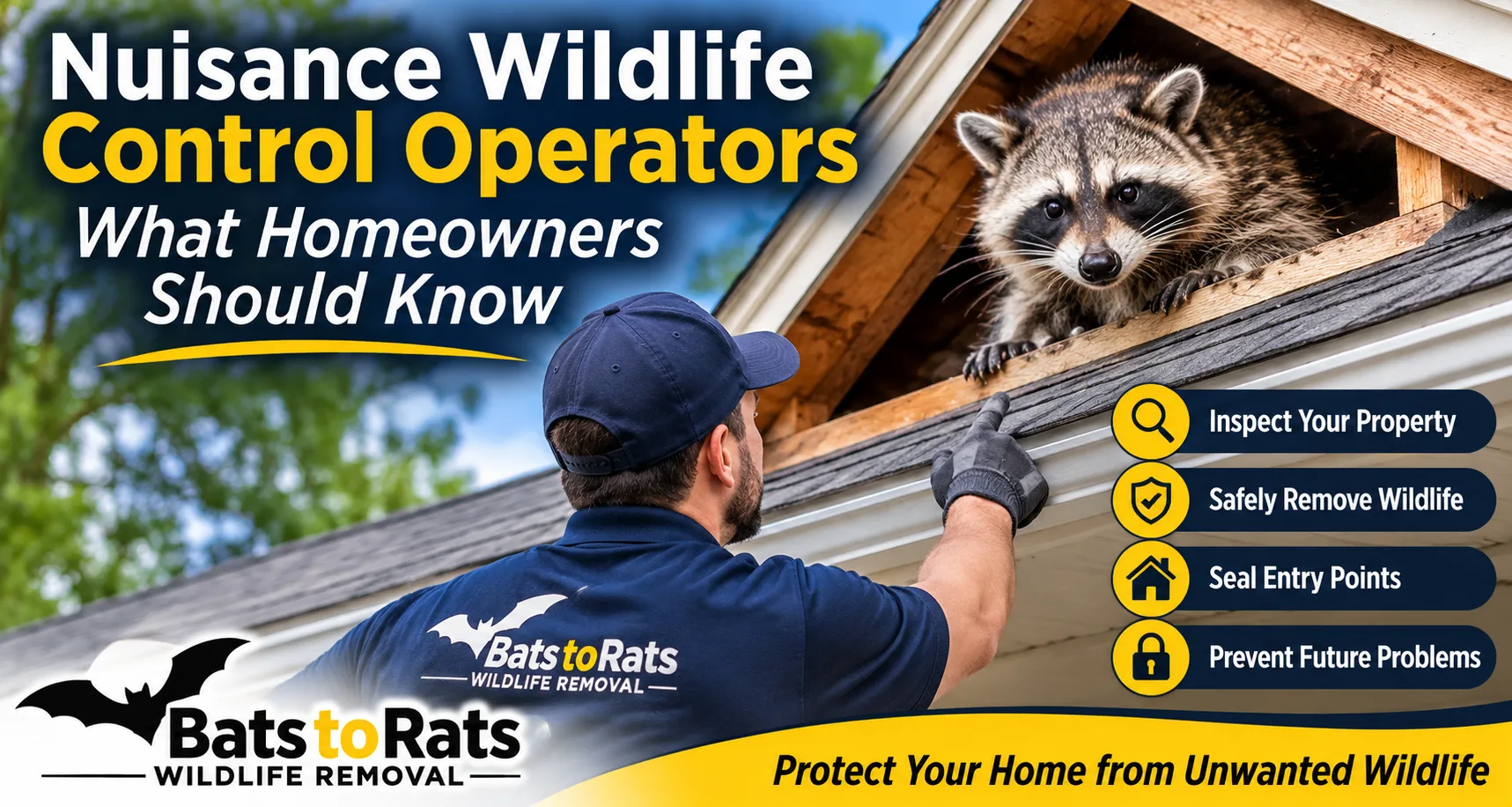
Finding a wild animal inside your home can quickly become a stressful experience. Scratching noises in the attic, damaged roof vents, droppings in the basement, or animals nesting around the property are signs that professional attention may be needed.
This is where nuisance wildlife control operators can help. These specialists work with homeowners to identify wildlife problems, address animal entry points, and develop solutions that protect buildings from unwanted animal activity.
For Nebraska homeowners, choosing the right wildlife professional is important. A complete solution should address not only the animal currently causing trouble but also the conditions that allowed it to enter the property.
What Are Nuisance Wildlife Control Operators?
Nuisance wildlife control operators are professionals who help manage conflicts between people and wild animals. Their work may involve inspecting properties, identifying animal activity, removing or excluding wildlife where legally permitted, and preventing future intrusions.
Common wildlife situations they may handle include:
- Raccoons entering attics and crawlspaces.
- Bats living in roof spaces or wall cavities.
- Squirrels damaging soffits and roof openings.
- Rats and mice nesting inside buildings.
- Birds nesting in vents and other structures.
- Snakes entering basements, garages, or other areas.
- Skunks and opossums taking shelter near homes.
The exact services offered depend on the operator's training, equipment, experience, and the wildlife regulations that apply to the species involved.
When Should You Contact a Wildlife Control Professional?
Not every wildlife sighting requires professional removal. However, an animal inside a building or repeated activity around a home may indicate a more serious issue.
Consider contacting a wildlife specialist if you notice the following signs.
1. Unusual Sounds in the Attic
Scratching, running, thumping, or movement above the ceiling may indicate that an animal has entered the attic. Raccoons and squirrels can cause damage to insulation, roof materials, and other building components.
2. Droppings and Strong Odors
Animal droppings and urine can accumulate in attics, basements, and crawlspaces. These materials may create sanitation concerns and should be handled with appropriate precautions.
3. Damaged Roofs and Exterior Openings
Wildlife can enter through loose soffits, damaged vents, gaps around rooflines, and openings near foundations. Repeated damage may indicate that animals are using the same access point.
4. Repeated Wildlife Activity
If animals continue appearing around your property or returning to the same area, there may be an accessible food source, shelter, or entry point that needs attention.
Early inspection can help homeowners understand the source of the problem before additional damage occurs.
What Services Do Nuisance Wildlife Control Operators Provide?
A professional wildlife control service should look beyond simply removing an animal. The goal is to understand why the animal entered and what changes will help prevent another intrusion.
Property Inspection
An inspection helps identify animal activity, nesting areas, access points, and possible damage. Depending on the situation, professionals may examine rooflines, attics, basements, crawlspaces, vents, and exterior walls.
Wildlife Removal and Exclusion
The appropriate method depends on the animal species, its location, and applicable wildlife regulations. Depending on the circumstances, professionals may use approved removal, exclusion, or deterrent methods.
For example, a one-way exclusion device may allow certain animals to leave a building without returning. However, the method must be appropriate for the species and should account for dependent young.
Entry Point Repairs
Removing an animal without securing the opening can leave the property vulnerable to another intrusion. Wildlife exclusion may involve reinforcing vents, repairing soffits, sealing gaps, and protecting other weak areas.
Cleanup and Damage Assessment
Wildlife activity can leave behind contaminated materials, damaged insulation, nesting debris, and other problems. A professional assessment can help determine what needs cleaning, repair, or replacement.
How to Choose the Right Nuisance Wildlife Control Operator
Homeowners should compare more than just the quoted removal price. The quality of the inspection, removal plan, and prevention work can make a major difference in the long-term outcome.
Here are some important questions to ask before hiring a company.
1. Are they properly qualified and insured?
Ask about relevant training, experience, insurance, and any permits required for the specific work. Wildlife regulations vary by species and location.
2. Do they inspect the entire problem area?
A reliable operator should investigate how animals are entering and identify other vulnerable areas rather than focusing only on the animal that was spotted.
3. Do they explain their removal methods?
Ask what method will be used, whether nonlethal options are suitable, and how the company handles situations involving baby animals.
4. Do they provide exclusion and prevention services?
Long-term protection often requires repairing the openings that allow wildlife to enter. Ask whether the company can complete or arrange these repairs.
5. Is the estimate clear?
Request a written explanation of the inspection, proposed work, materials, cleanup, and any warranty or follow-up conditions. This makes it easier to compare service providers.
Understanding Wildlife Control Regulations in Nebraska
Wildlife removal is subject to state and local regulations. Homeowners should not assume that every animal can be trapped, transported, or handled in the same way.
Nebraska Administrative Code Chapter 4 addresses private wildlife management. It includes requirements for permits in certain paid wildlife damage-control activities, with specific exceptions for some unprotected wildlife. The rules also address protected species and acceptable control methods.
Before hiring an operator, ask whether the proposed work complies with the applicable Nebraska regulations and whether the required permits are in place for the species and activity involved.
You can review the Nebraska wildlife regulations for additional information.
Why Wildlife Exclusion Is Important for Long-Term Protection
Wildlife removal addresses the immediate problem, but exclusion focuses on preventing another animal from entering the building.
For example, removing a raccoon from an attic will not solve the underlying issue if a damaged soffit remains open. Another animal may eventually discover the same opening.
Effective exclusion may include:
- Installing durable vent covers.
- Repairing damaged soffits and roof edges.
- Sealing appropriate gaps around the structure.
- Reinforcing vulnerable areas with suitable materials.
- Removing accessible food sources.
- Inspecting the property for additional entry points.
The right prevention plan depends on the building, the animal species, and the conditions around the property.
Professional Wildlife Control Services in Nebraska
If you are dealing with unwanted wildlife around your home or business, working with an experienced wildlife control company can help you understand the problem and identify practical solutions.
Bats to Rats Wildlife Control & Prevention provides wildlife control and exclusion services in Lincoln, Omaha, and communities throughout Nebraska.
The company handles a range of wildlife issues, including bats, rats, mice, squirrels, raccoons, snakes, birds, skunks, and other animals. Its approach includes inspecting buildings, identifying entry points, and recommending solutions designed to prevent future wildlife intrusions.
Whether you are hearing noises in your attic, finding signs of rodents, or dealing with repeated wildlife activity around your property, a professional inspection can help determine the next steps.
Visit Bats to Rats to learn more about wildlife control, exclusion, and property protection services.
Frequently Asked Questions
What do nuisance wildlife control operators do?
They help homeowners address wildlife problems through property inspections, appropriate animal removal or exclusion, entry-point repairs, and prevention recommendations.
Are wildlife control operators required to have permits in Nebraska?
Certain paid wildlife damage-control activities require a permit under Nebraska regulations. Requirements and exceptions depend on the species and type of activity. Homeowners should confirm the applicable rules before work begins.
Can wildlife control operators prevent animals from returning?
They can help reduce repeat intrusions by identifying and securing entry points, reinforcing vulnerable areas, and recommending changes that make the property less attractive to wildlife.
Should I remove wildlife from my attic myself?
DIY removal can be risky. Animals may bite or scratch when threatened, and contaminated droppings or nesting materials may create health concerns. Professional guidance is recommended when wildlife has entered a building.
What should I ask before hiring a wildlife control company?
Ask about experience, insurance, applicable permits, removal methods, inspection procedures, entry-point repairs, cleanup, written estimates, and warranty terms.
Final Thoughts
Nuisance wildlife control operators play an important role in helping homeowners manage problems involving wild animals. However, effective wildlife management should involve more than removing an animal from a property.
A thorough inspection, appropriate removal or exclusion methods, and durable repairs can help protect your home over the long term.
If wildlife is entering your attic, basement, roof, or other areas of your property, contact a qualified professional to assess the situation and recommend an appropriate solution.