
Erectile dysfunction affects millions of men worldwide and can significantly impact confidence, relationships, emotional well-being, and overall quality of life. While oral medications such as sildenafil and tadalafil work for many patients, some men experience persistent ED due to diabetes, prostate surgery, vascular disease, spinal cord injuries, or other medical conditions. In such cases, penile implant surgery offers a reliable and long-term solution.
Modern penile implants are highly advanced, discreet, durable, and designed to provide natural-looking results. Many patients report high satisfaction rates after the procedure because implants restore spontaneity and sexual confidence.
This comprehensive article explains everything you need to know about penile implants, including types, benefits, procedure details, recovery, risks, cost, candidacy, and frequently asked questions.
What Is a Penile Implant?
A penile implant is a surgically inserted device placed inside the penis to allow men with erectile dysfunction to achieve an erection suitable for sexual intercourse.
Unlike medications that temporarily increase blood flow, a penile implant creates a mechanically controlled erection. The implant remains hidden inside the body and is not visible externally.
Penile implants are typically recommended for men who:
- Have severe erectile dysfunction
- Do not respond to oral ED medications
- Cannot tolerate medication side effects
- Have Peyronie’s disease with ED
- Have experienced pelvic trauma
- Have undergone prostate cancer surgery
- Want a permanent and reliable solution
Penile implants do not affect sexual desire, orgasm, ejaculation, or sensation in most cases. They primarily restore erectile function.
Types of Penile Implants
There are two major types of penile implants:
1. Inflatable Penile Implants
Inflatable implants are the most popular and widely used type because they provide the most natural erection and appearance.
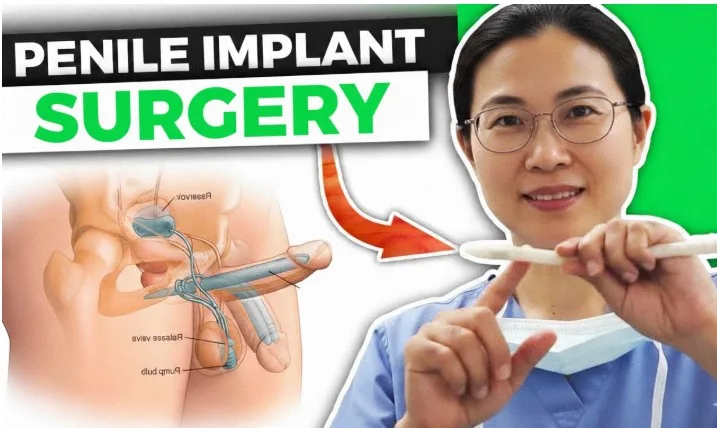
Three-Piece Inflatable Implant
This advanced device consists of:
- Two inflatable cylinders inside the penis
- A fluid reservoir placed in the abdomen
- A pump located inside the scrotum
When the patient squeezes the pump, fluid moves into the cylinders, creating an erection. Pressing the release valve returns the penis to a flaccid state.
Advantages
- Natural-looking erection
- Better flaccidity when not in use
- Greater control over firmness
- High patient satisfaction
Disadvantages
- More complex surgery
- Slightly higher risk of mechanical failure
- Higher cost
2. Semi-Rigid (Malleable) Penile Implants
Malleable implants use bendable rods inserted into the penis. The penis remains semi-firm at all times and can be manually positioned upward for intercourse or downward for concealment.
Advantages
- Simpler surgical procedure
- Easier to use
- Lower risk of mechanical malfunction
- Suitable for patients with limited hand strength
Disadvantages
- Penis remains somewhat firm constantly
- Less natural appearance
- May be less comfortable
Who Is a Candidate for Penile Implant Surgery?
Penile implant surgery may be suitable for men who:
- Have chronic erectile dysfunction
- Fail to respond to oral medications
- Cannot use ED medications safely
- Have diabetes-related ED
- Experience erectile dysfunction after prostate surgery
- Have severe penile curvature due to Peyronie’s disease
- Seek a long-term and dependable treatment
Ideal Candidates Usually:
- Are in good overall health
- Understand the surgical risks
- Have realistic expectations
- Are emotionally prepared for surgery
Causes of Erectile Dysfunction That May Require Implants
Several medical and psychological conditions can lead to erectile dysfunction severe enough to require a penile implant.
Common Causes Include:
Diabetes
Diabetes damages nerves and blood vessels essential for erections. Men with long-standing diabetes often develop severe ED.
Cardiovascular Disease
Poor blood circulation caused by hypertension or heart disease can reduce penile blood flow.
Prostate Cancer Surgery
Some men experience nerve damage after prostate removal surgery.
Spinal Cord Injuries
Neurological disorders and spinal injuries can impair erectile function.
Peyronie’s Disease
This condition causes scar tissue buildup and penile curvature.
Psychological Factors
Stress, depression, anxiety, and relationship problems may worsen ED.
Benefits of Penile Implants
Penile implants offer several important advantages over other ED treatments.
1. High Success Rate
Penile implant surgery has one of the highest satisfaction rates among erectile dysfunction treatments.
2. Long-Term Solution
Unlike pills or injections, implants provide a permanent solution.
3. Spontaneous Sexual Activity
Patients can achieve erections whenever desired without waiting for medication to work.
4. Improved Confidence
Restoring sexual function often improves emotional well-being and relationships.
5. Natural Sensation
Most patients maintain penile sensation and orgasm ability.
6. Hidden Device
Modern implants are concealed entirely inside the body.
Penile Implant Surgery Procedure
Preoperative Evaluation
Before surgery, the doctor performs:
- Physical examination
- Medical history review
- Blood tests
- Urine analysis
- Discussion of expectations and implant options
Patients may be advised to stop smoking or discontinue certain medications before surgery.
The Surgical Procedure
Penile implant surgery usually takes 1–2 hours and is performed under general or spinal anesthesia.
Surgical Steps
- A small incision is made near the penis or lower abdomen.
- Implant components are inserted into the penis.
- The pump and reservoir are positioned.
- The incision is closed with stitches.
Most patients return home the same day or after one night in the hospital.
Recovery After Penile Implant Surgery
Recovery varies between individuals but generally follows a predictable timeline.
First Few Days
Patients may experience:
- Swelling
- Bruising
- Mild pain
- Temporary discomfort
Pain medications and antibiotics are usually prescribed.
Activity Restrictions
Doctors typically recommend avoiding:
- Heavy lifting
- Vigorous exercise
- Sexual activity for 4–6 weeks
Follow-Up Appointments
The surgeon checks healing progress and teaches the patient how to operate the implant.
Results and Patient Satisfaction
Penile implants have extremely high satisfaction rates among patients and their partners.
Many Patients Report:
- Stronger confidence
- Improved intimacy
- Better relationship satisfaction
- Reliable erections
- Greater sexual spontaneity
Studies show satisfaction rates often exceed 85–90%.
Risks and Complications
Like any surgical procedure, penile implant surgery carries some risks.
Possible Complications Include:
Infection
Infections are uncommon but serious and may require implant removal.
Mechanical Failure
Modern implants are durable, but device malfunction can occur over time.
Pain
Temporary discomfort is common during healing.
Scar Tissue Formation
Rarely, scar tissue can develop inside the penis.
Implant Erosion
In rare cases, the implant may erode through tissue.
Anesthesia Risks
General surgical risks apply to all procedures.
Choosing an experienced urologist significantly reduces complications.
How Long Does a Penile Implant Last?
Most modern penile implants last between 10–15 years or longer.
Some patients may require revision surgery if:
- The device malfunctions
- Infection develops
- Components wear out
Advances in implant technology continue to improve durability and performance.
Does a Penile Implant Affect Fertility?
A penile implant does not directly affect fertility.
Men who can ejaculate before surgery usually retain the ability afterward unless another medical condition interferes.
However, implants do not increase fertility or sperm production.
Can You Feel the Implant?
Most patients and partners cannot easily detect the implant during intimacy.
Inflatable implants especially provide a more natural feel and appearance.
The device remains entirely internal and discreet.
Penile Implant vs Other Erectile Dysfunction Treatments
Oral Medications
Examples:
- Sildenafil
- Tadalafil
Pros:
- Non-invasive
- Convenient
Cons:
- May not work in severe ED
- Require planning
- Potential side effects
Penile Injections
Pros:
- Effective for some men
Cons:
- Painful injections
- Risk of prolonged erection
- Less spontaneity
Vacuum Erection Devices
Pros:
- Non-surgical
Cons:
- Mechanical inconvenience
- Unnatural feeling
Penile Implants
Pros:
- Permanent solution
- High satisfaction
- Reliable erections
Cons:
- Requires surgery
- Higher initial cost
Psychological Impact of Penile Implants
Erectile dysfunction often affects mental health, confidence, and relationships.
Many men experience:
- Anxiety
- Depression
- Low self-esteem
- Relationship stress
Penile implant surgery can significantly improve emotional wellness by restoring intimacy and confidence.
Open communication between partners also contributes to successful outcomes.
Cost of Penile Implant Surgery
The cost of penile implant surgery varies depending on:
- Country
- Surgeon expertise
- Hospital facility
- Implant type
- Insurance coverage
Inflatable implants generally cost more than malleable implants because of their advanced design.
Some insurance providers may partially or fully cover the procedure if medically necessary.
Choosing the Right Surgeon
Selecting an experienced urologist is crucial for successful outcomes.
Look for a Surgeon Who:
- Specializes in penile implant surgery
- Has extensive experience
- Uses modern implant technology
- Provides thorough consultation
- Has positive patient reviews
A qualified surgeon can minimize risks and optimize results.
Life After Penile Implant Surgery
Most men return to normal activities within several weeks.
Patients Can Usually:
- Resume sexual activity after healing
- Travel normally
- Exercise regularly
- Enjoy improved confidence
Penile implants do not interfere with urination or routine daily life.
Many couples report renewed intimacy and relationship satisfaction after surgery.
Common Myths About Penile Implants
Myth 1: Implants Reduce Sexual Pleasure
Most men maintain normal sensation and orgasm ability.
Myth 2: The Implant Is Visible
Modern implants are fully concealed inside the body.
Myth 3: Only Elderly Men Need Implants
Men of various ages may require implants due to medical conditions or injuries.
Myth 4: Implants Automatically Increase Penis Size
Implants restore rigidity but do not necessarily enlarge the penis.
Frequently Asked Questions (FAQs)
Is penile implant surgery painful?
Patients may experience temporary discomfort after surgery, but pain is usually manageable with medications.
How soon can I have sex after surgery?
Most doctors recommend waiting approximately 4–6 weeks.
Can the implant fail?
Although modern implants are highly durable, mechanical failure is possible over time.
Will ejaculation still occur?
In most cases, yes—if the patient could ejaculate before surgery.
Is penile implant surgery safe?
Yes, when performed by an experienced surgeon, the procedure is generally safe and effective.
Conclusion
Penile implants represent one of the most advanced and effective solutions for men suffering from severe erectile dysfunction. For patients who do not respond to medications or other treatments, penile implant surgery can restore sexual function, confidence, intimacy, and quality of life.
Modern implants are discreet, durable, and highly satisfying for both patients and partners. With proper medical evaluation, realistic expectations, and an experienced surgeon, penile implants can provide life-changing results.
Although surgery involves certain risks, advances in technology and surgical techniques have made penile implants safer and more reliable than ever before. Men struggling with persistent erectile dysfunction should consult a qualified urologist to determine whether a penile implant is the right solution for them.