
Peonies are among the most rewarding flowering plants a gardener can grow. Their large, fragrant blooms and long lifespan make them a favorite in many home gardens. In fact, a healthy peony plant can continue producing beautiful flowers for more than 50 years when given proper care.
However, many gardeners become disappointed when their plants produce fewer flowers or stop blooming altogether. In most cases, the issue is not the plant itself but improper nutrition. Using the right Peony Fertilizer at the right time can make a significant difference in flower size, stem strength, and overall plant health.
Peonies do not require frequent feeding, but they benefit from a thoughtful fertilizing routine that supports their natural growth cycle. This guide explains how to fertilize peonies correctly and avoid common mistakes that limit flower production.
Why Proper Fertilization Is Important for Peonies
Every season, peonies invest a tremendous amount of energy into producing large flowers, strong stems, and healthy foliage. Over time, soil nutrients become depleted, especially if plants have been growing in the same location for several years.
A balanced Peony Fertilizer helps replenish essential nutrients and supports:
- Strong root development
- Larger and more vibrant flowers
- Better stem strength
- Improved disease resistance
- Healthy green foliage
- Consistent yearly blooming
The goal is not to encourage excessive growth but to provide the nutrients the plant needs to perform naturally.
Understanding What Nutrients Peonies Need
Before choosing a fertilizer, it helps to understand the three primary nutrients plants use.
Nitrogen (N)
Nitrogen encourages leaf and stem growth. While important, excessive nitrogen can reduce flower production because the plant will focus more on foliage than blooms.
Phosphorus (P)
Phosphorus supports root development and is one of the most important nutrients for abundant flowering.
Potassium (K)
Potassium improves overall plant health, strengthens stems, and helps peonies withstand environmental stress.
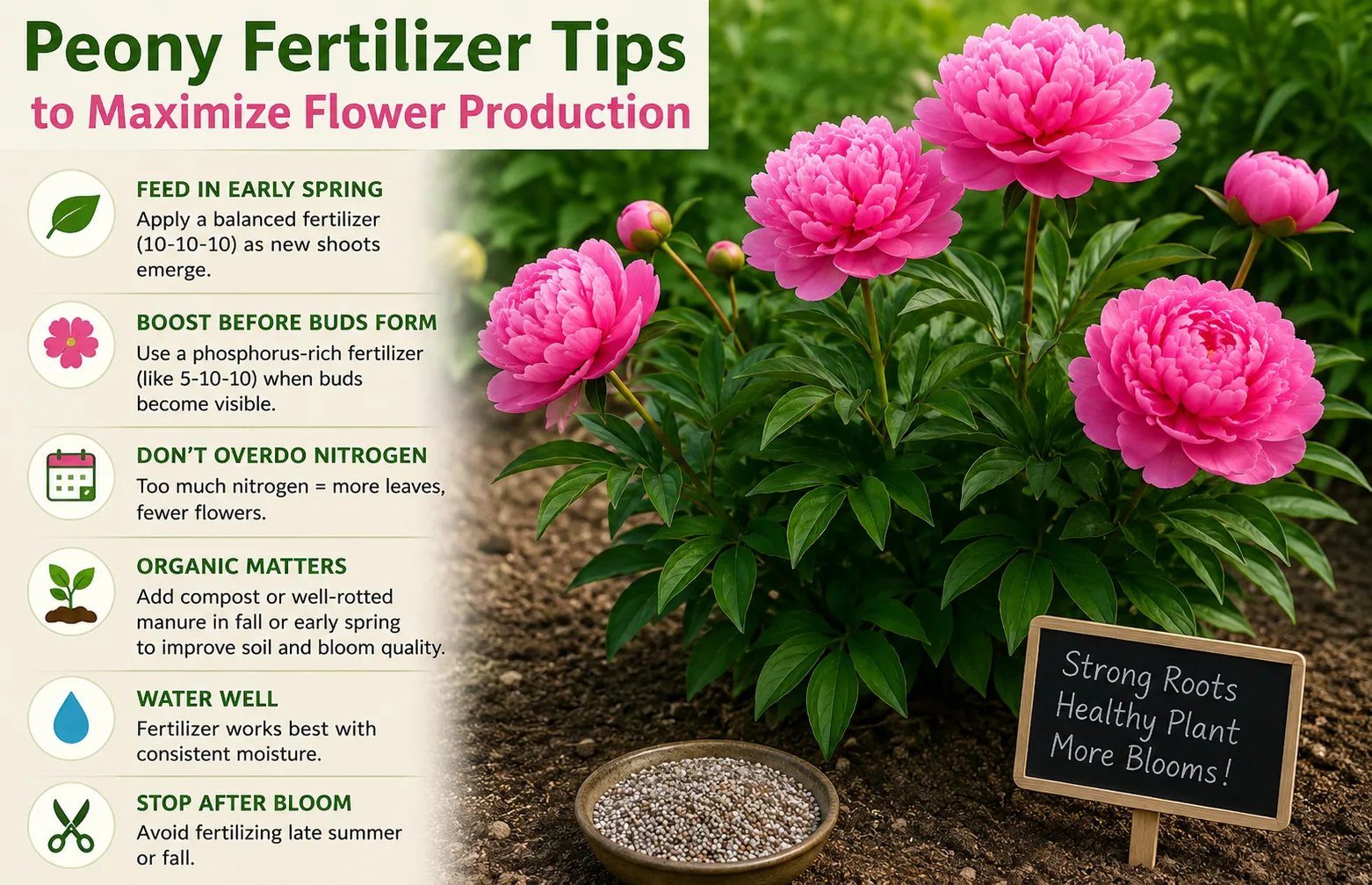
For most gardens, a balanced or low-nitrogen fertilizer works best.
Recommended formulas include:
- 5-10-10
- 10-10-10
- 5-10-5
Avoid high-nitrogen lawn fertilizers around peonies.
When Is the Best Time to Apply Peony Fertilizer?
Timing plays a major role in successful flower production.
Early Spring
Apply fertilizer when new shoots emerge and reach approximately 2 to 3 inches tall.
At this stage, the plant begins active growth and can efficiently absorb nutrients.
After Blooming
Once flowering has finished, apply a light feeding to help the plant restore its energy reserves for next year's blooms.
Avoid fertilising in late summer or fall, as it may encourage excessive growth before winter dormancy.
How to Apply Peony Fertilizer Properly
Applying fertilizer correctly protects the roots and ensures nutrients reach the plant safely.
Follow these steps:
- Remove weeds around the base of the plant.
- Sprinkle fertilizer in a circle 6 to 12 inches away from the crown.
- Avoid direct contact with stems and roots.
- Gently work it into the top layer of soil.
- Water deeply after application.
Never place fertiliser directly against the crown, as this can damage sensitive plant tissues.
Less is often more when feeding peonies.
Improve Soil Naturally with Organic Matter
Healthy soil is the foundation of long-term flowering success.
Organic matter improves soil structure, water retention, and nutrient availability.
Excellent additions include:
- Compost
- Well-aged manure
- Leaf mold
- Worm castings
Apply a thin layer around the plant every year without burying the crown.
Organic materials release nutrients slowly and support beneficial microorganisms that naturally improve soil quality.
Combining compost with a balanced Peony Fertilizer creates an ideal growing environment.
Watering and Fertilizer Work Together
Even the best fertilizer will not be effective without proper watering.
Peonies prefer deep watering rather than frequent shallow watering.
Follow these guidelines:
- Provide approximately one inch of water each week.
- Water early in the morning.
- Avoid wetting the leaves whenever possible.
- Increase watering during periods of extreme heat.
Consistent moisture helps plants absorb nutrients efficiently and maintain strong flower production.
Signs Your Peonies Need Nutritional Support
Healthy peonies usually communicate their needs through visible changes.
Watch for these common signs.
Smaller Flowers
This may indicate insufficient phosphorus.
Pale or Yellow Leaves
Nutrient deficiencies or poor drainage may be affecting the plant.
Weak Stems
Low potassium levels can reduce stem strength.
Slow Growth
Soil fertility may need improvement.
Addressing these issues early can help restore plant health before the next blooming season.
Common Peony Fertilizer Mistakes to Avoid
Many gardeners unintentionally reduce flower production by making a few simple mistakes.
Over-Fertilizing
Too much fertilizer can encourage excessive leaf growth and fewer flowers.
Applying Fertilizer Too Late
Late-season feeding can produce weak growth before winter.
Using High-Nitrogen Products
Peonies need balanced nutrition rather than rapid foliage growth.
Ignoring Soil Quality
Poor soil limits nutrient absorption.
Covering the Crown with Mulch
Heavy mulch can trap moisture and interfere with flowering.
Avoiding these mistakes will help your peonies thrive for many years.
A Simple Seasonal Peony Care Routine
Following a yearly schedule keeps plants healthy without overcomplicating the process.
Spring
- Remove winter debris.
- Apply Peony Fertiliser.
- Water thoroughly.
Late Spring
- Monitor plant growth.
- Support heavy blooms if necessary.
Summer
- Remove spent flowers.
- Apply compost if needed.
Fall
- Cut back dead foliage.
- Clean surrounding debris.
- Prepare plants for dormancy.
Winter
Allow the plant to rest naturally.
This simple routine helps maintain consistent flowering year after year.
Final Thoughts
Growing spectacular peonies is not about using large amounts of fertilizer. Success comes from understanding the plant's natural growth cycle and providing balanced nutrition at the right time.
The right Peony Fertilizer supports stronger roots, healthier foliage, and bigger, longer-lasting blooms without overwhelming the plant.
Yourhomify Community shares practical home and gardening ideas that inspire people to create beautiful, healthy, and sustainable living spaces.