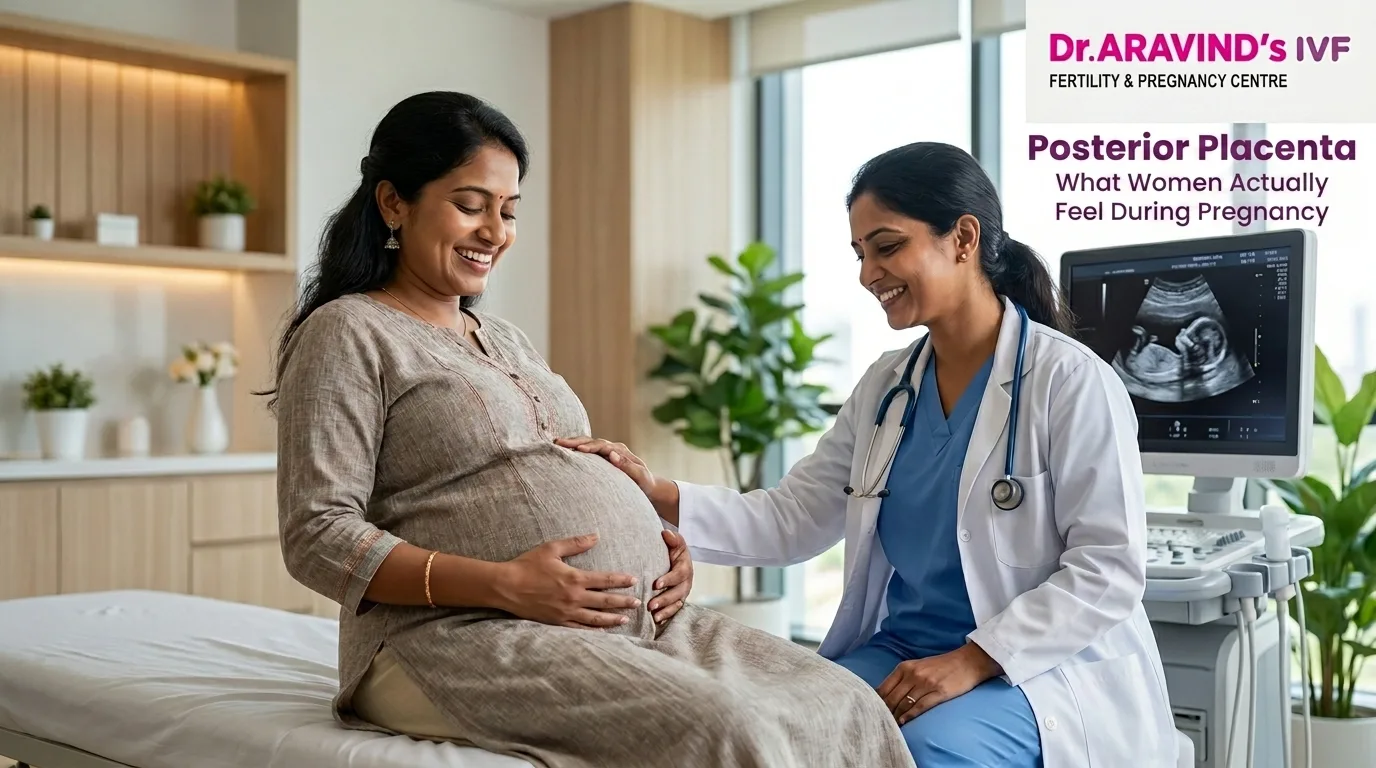
Learning that you have a posterior placenta often brings questions about what symptoms to expect. The good news is that a posterior placenta is considered a normal placental position and usually supports a healthy pregnancy. Many women even notice certain pregnancy experiences earlier than expected.
If you are looking for the best IVF centre in Coimbatore, understanding these normal changes can help you feel more confident throughout your pregnancy. At Dr. Aravind's IVF Fertility & Pregnancy Centre, we believe informed parents enjoy a more reassuring pregnancy journey.
A. Stronger and Earlier Fetal Movements
One of the most noticeable differences is posterior placenta and fetal movement.
Because the placenta is attached to the back wall of the uterus, it does not cushion your baby's kicks at the front of your abdomen.
Many women:
- Feel movements earlier.
- Notice stronger kicks.
- See visible baby movements sooner.
- Experience increasing movement as pregnancy progresses.
If you wonder, can you feel baby movements more with a posterior placenta? The answer is often yes, although every pregnancy is unique.
B. Back Pain and Pelvic Pressure
Some women experience mild lower back discomfort during pregnancy.
This happens because:
- The growing uterus changes posture.
- Pregnancy hormones loosen ligaments.
- Extra weight places pressure on the lower back.
Although posterior placenta and back pain are often mentioned together, the placenta itself is not usually the direct cause.
Contact your doctor if back pain becomes severe, is associated with bleeding, or is accompanied by regular contractions.
C. Abdominal Tightness and Pressure Sensations
As your baby grows, you may notice abdominal tightness or occasional pressure.
These sensations may include:
- Gentle stretching of the abdomen.
- Mild pelvic pressure.
- Braxton Hicks contractions during the second or third trimester.
Braxton Hicks are usually irregular and improve with rest or hydration. Persistent pain or regular contractions should always be assessed by your healthcare provider.
D. Heartburn and Digestive Discomfort
Heartburn is common during pregnancy regardless of placenta position.
As the uterus expands, it places pressure on the stomach and diaphragm, allowing stomach acid to move upward more easily.
Simple ways to reduce discomfort include:
- Eating smaller meals.
- Avoiding spicy foods before bedtime.
- Drinking enough water.
- Remaining upright after meals.
E. Visible Baby Movement and Bump Shape
Many mothers with a posterior placenta notice visible kicks across the front of the abdomen.
You may also observe:
- More noticeable rolling movements.
- Clearly defined baby stretches.
- A naturally changing bump shape as your baby grows.
These are usually normal signs of an active baby.
Conclusion
A posterior placenta is usually associated with a healthy pregnancy and may allow mothers to feel their baby's movements earlier and more clearly. While mild back pain, abdominal tightness, and heartburn are common pregnancy symptoms, regular prenatal care remains essential.
If you are searching for the IVF centres in coimbatore, Dr. Aravind's IVF Fertility & Pregnancy Centre offers expert pregnancy monitoring, personalized maternity care, and compassionate guidance to support every stage of your pregnancy with confidence.