Every parent wants to give their child the best possible start in life, and choosing the right early learning program is one of the first major decisions in that journey. However, many parents find themselves confused by terms like preschool, play school, nursery school, and kindergarten. While these programs all focus on early childhood education, they are designed for different age groups and developmental stages.
If you're searching for the Best Preschool in Varthur, understanding these differences will help you choose a learning environment that nurtures your child's confidence, curiosity, and overall development—not just academics.
In this guide, we'll explain what each program offers, who it's designed for, and the factors you should consider before enrolling your child.
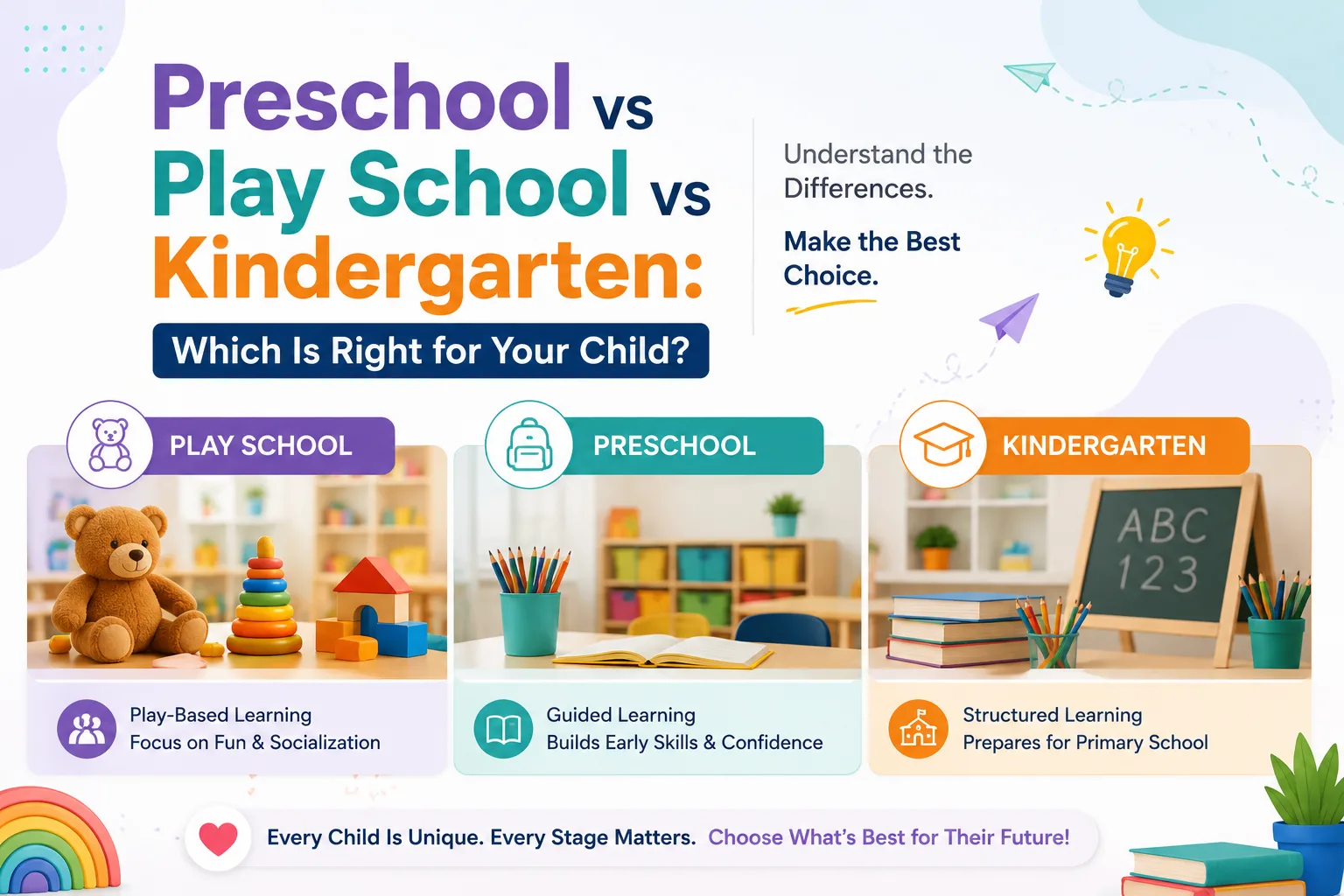
Play School vs Preschool vs Kindergarten: Quick Comparison

If your child is just beginning to explore the world outside home, a play school is often the first step. As they grow, preschool introduces structured learning through fun activities, nursery strengthens foundational skills, and kindergarten prepares children for formal primary education.
Why Early Childhood Education Is So Important
The first five years of a child's life are considered the most important for brain development. During this period, children rapidly develop language, social skills, emotional intelligence, creativity, and the ability to learn new concepts.
A quality early learning environment helps children:
- Develop communication and listening skills
- Learn to interact with other children
- Build self-confidence
- Improve fine and gross motor skills
- Strengthen creativity and imagination
- Develop problem-solving abilities
- Become emotionally independent
Research consistently shows that children who receive quality early education often adapt better to formal schooling and develop stronger lifelong learning habits.
Understanding the Different Stages of Early Learning
Many parents assume preschool, play school, nursery school, and kindergarten are simply different names for the same program. In reality, each stage has a unique purpose.
Choosing the right program depends on your child's age, developmental readiness, and learning needs rather than selecting the option that appears more academically advanced.
Let's understand each stage in detail.
What Is a Play School?
A play school is usually a child's first structured learning experience outside the home. The primary objective isn't academic instruction but helping children become comfortable in a safe, nurturing, and interactive environment.
Children learn through exploration, storytelling, music, games, and social interaction.
What Children Learn in a Play School
- Social interaction
- Communication skills
- Sharing and teamwork
- Daily routines
- Creative play
- Sensory exploration
- Emotional confidence
Rather than sitting at desks or completing worksheets, children participate in activities that encourage curiosity and independent thinking.
When searching for the Best Play School in Varthur, parents should look beyond colourful classrooms and consider the teaching approach, teacher-child interaction, safety standards, and opportunities for experiential learning.
What Is a Preschool?
A preschool introduces children to structured learning while maintaining a fun and engaging environment. At this stage, children begin building foundational academic skills without the pressure of formal classroom education.
The curriculum typically includes:
- Letter recognition
- Number concepts
- Vocabulary development
- Storytelling
- Rhymes and phonics
- Creative art activities
- Fine motor skill development
- Early science exploration
Learning continues to be activity-based, allowing children to understand concepts naturally through hands-on experiences.
If you're looking for the Best Preschool in Varthur, choose a school that balances academics with creativity, play, exploration, and emotional development instead of focusing only on worksheets or memorization.
What Is a Nursery School?
A nursery program acts as a bridge between preschool and kindergarten. Children begin following a more structured daily routine while continuing to learn through interactive activities.
The curriculum usually focuses on:
- Reading readiness
- Writing readiness
- Number recognition
- Language development
- Classroom discipline
- Communication skills
- Independent learning habits
A good Nursery School in Varthur gradually prepares children for the expectations of primary education while ensuring learning remains enjoyable and stress-free.
What Is Kindergarten?
Kindergarten is generally the final stage before children enter primary school. It builds upon the concepts learned during preschool and nursery years while strengthening academic readiness.
Children typically develop:
- Reading skills
- Basic writing
- Sentence formation
- Mathematics fundamentals
- Logical reasoning
- Critical thinking
- Team collaboration
- Self-confidence
A well-designed Kindergarten in Varthur should prepare children academically while continuing to encourage creativity, curiosity, and independent thinking.
Rather than emphasizing rote learning, effective kindergarten programs focus on helping children understand concepts through interactive classroom experiences.
Which Program Is Right for Your Child?
Every child develops differently. Instead of choosing a program based solely on age, parents should also consider their child's emotional readiness, communication skills, confidence level, and ability to adapt to new environments.
Consider Your Child's Personality
Some children enjoy social interaction immediately, while others need more time to adjust.
Choose a learning environment where your child feels comfortable exploring, asking questions, and participating in activities without pressure.
Evaluate the Teaching Philosophy
Before enrolling your child, understand how the school approaches learning.
Look for programs that emphasize:
- Play-based learning
- Activity-based education
- Experiential learning
- Inquiry-based teaching
- Child-centered classrooms
These approaches encourage children to enjoy learning while developing essential life skills.
Observe Teacher-Student Interaction
Teachers play one of the most significant roles in early childhood education.
During a campus visit, notice whether teachers:
- Speak patiently with children
- Encourage participation
- Appreciate curiosity
- Build confidence
- Provide individual attention
Positive teacher-child relationships often have a lasting impact on a child's educational journey.
Check the Learning Environment
An ideal early learning campus should include:
- Safe classrooms
- Child-friendly furniture
- Interactive learning materials
- Outdoor play areas
- Indoor activity zones
- Clean and hygienic facilities
- Age-appropriate educational resources
The environment should inspire curiosity while making children feel secure and welcomed.
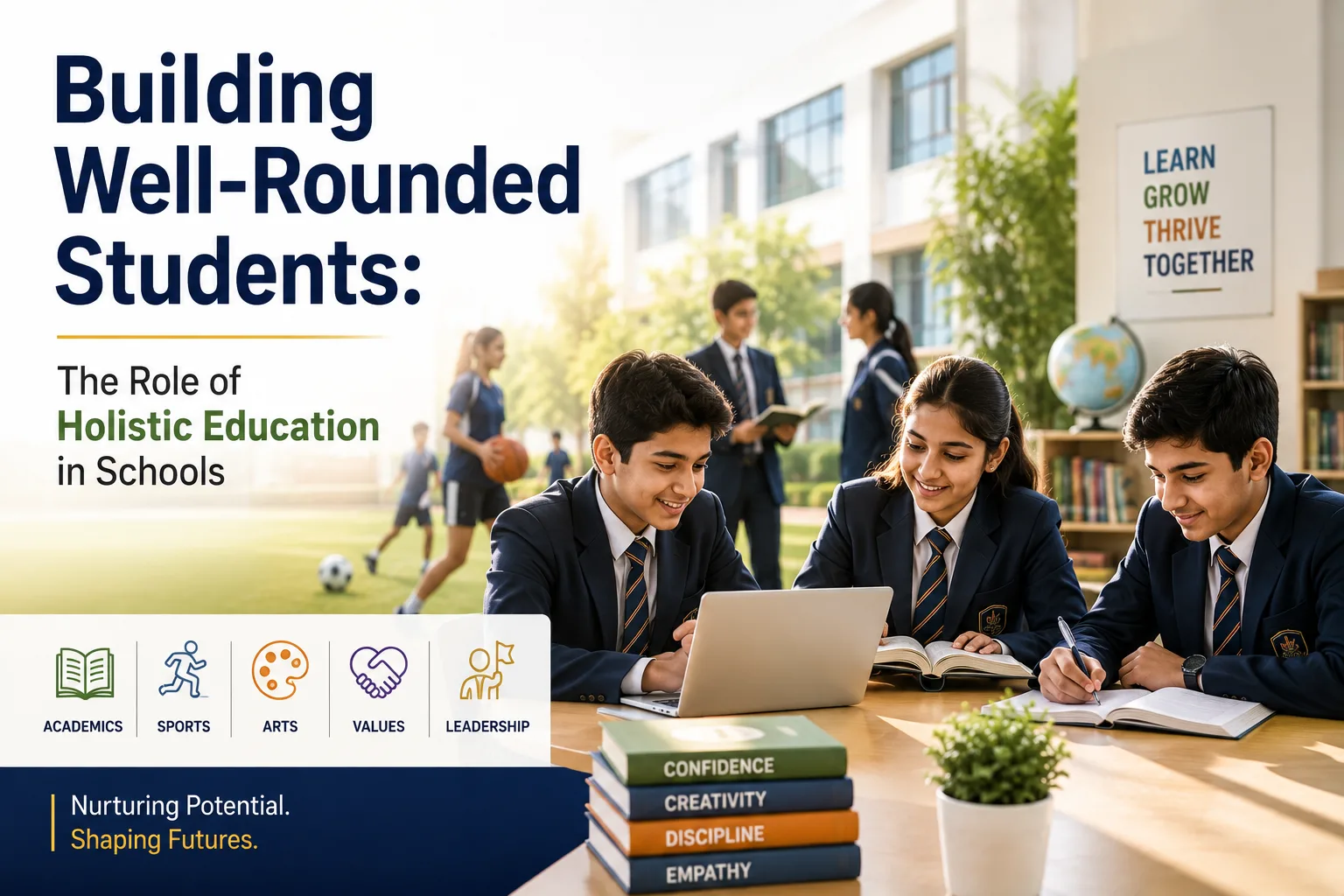
Focus on Holistic Development
Academic learning is only one part of early education.
Choose a school that encourages:
- Creative thinking
- Physical development
- Music and movement
- Art and craft
- Storytelling
- Communication skills
- Social interaction
- Emotional well-being
These experiences help children become confident learners and prepare them for lifelong success.
Common Mistakes Parents Should Avoid
While choosing an early learning program, many parents unintentionally make decisions based on marketing or peer recommendations rather than their child's individual needs.
Avoid these common mistakes:
- Choosing a school only because it is popular
- Prioritizing academics over overall development
- Ignoring teacher quality
- Overlooking safety measures
- Comparing your child with others
- Selecting a program that is not age appropriate
- Skipping the campus visit
Remember, the best early learning environment is one where your child feels happy, safe, supported, and excited to learn.
Questions Every Parent Should Ask Before Finalising a School
A campus visit is one of the best ways to understand whether a school is the right fit for your child. Don't hesitate to ask questions that help you evaluate the school's approach to learning and child development.
Here are some important questions to ask:
- What teaching methodology does the school follow?
- What is the student-teacher ratio?
- How do teachers communicate with parents?
- What safety and security measures are in place?
- How are children's learning milestones assessed?
- What extracurricular activities are included?
- How does the school encourage creativity and independent thinking?
- How are children prepared for primary school?
- What are the school's hygiene and health practices?
- How does the school support children who need extra attention?
The answers will help you make a well-informed decision based on your child's needs rather than marketing claims.
Signs Your Child Is Ready for Preschool
Every child develops at their own pace, but there are some common signs that indicate they may be ready to begin their early learning journey.
Your child may be ready if they:
- Can stay away from parents for short periods
- Follow simple instructions
- Show curiosity about new activities
- Enjoy playing with other children
- Express basic needs verbally
- Participate in group activities
- Adapt to simple daily routines
If your child is still shy or hesitant, don't worry. A nurturing school environment can gradually help build confidence and independence.
Why Parents in Varthur Choose Vishwa Vidyapeeth Group Of Schools
Choosing the right school isn't just about academics—it's about finding a place where children feel happy, safe, and inspired to learn every day.
At Vishwa Vidyapeeth Group Of Schools, early childhood education is designed to support every aspect of a child's development through engaging, age-appropriate learning experiences.
Parents appreciate the school's focus on:
- Child-centred and activity-based learning
- Experienced and caring educators
- Safe, secure, and hygienic campus
- Interactive classrooms
- Play-based learning methodology
- Individual attention for every child
- Strong parent-school communication
- Creative, physical, and social development
- Smooth transition to primary education
The objective is to help children develop confidence, curiosity, communication skills, and a lifelong love for learning.
Quick Checklist for Choosing the Right Early Learning School
Before making your final decision, use this simple checklist.
✔ Age-appropriate curriculum
✔ Qualified and experienced teachers
✔ Safe and secure campus
✔ Child-friendly classrooms
✔ Play-based and activity-based learning
✔ Clean and hygienic environment
✔ Indoor and outdoor play facilities
✔ Creative learning opportunities
✔ Strong parent communication
✔ Focus on holistic child development
If a school meets most of these criteria, you're likely choosing an environment where your child can thrive.
Benefits of Choosing the Right Early Learning Program
Selecting the right program during the early years offers long-term advantages that extend beyond academics.
Children often develop:
- Better communication skills
- Strong social confidence
- Curiosity and creativity
- Emotional resilience
- Problem-solving abilities
- Improved concentration
- Healthy learning habits
- Greater independence
These skills form the foundation for future academic success and personal growth.
Frequently Asked Questions
Is a play school and preschool the same?
No. A play school focuses primarily on social interaction, emotional development, and learning through play, while a preschool introduces structured early learning concepts such as letters, numbers, language, and communication skills.
What is the ideal age to join preschool?
Most children begin preschool between 2.5 and 4 years of age, depending on their developmental readiness and the school's admission criteria.
Should my child attend a play school before preschool?
While it's not mandatory, many children benefit from attending a play school because it helps them become comfortable in a classroom environment and develop social confidence before moving to preschool.
What should I look for in a preschool?
Parents should evaluate teaching quality, safety measures, curriculum, infrastructure, teacher-child ratio, learning methodology, cleanliness, and opportunities for holistic development.
Is kindergarten compulsory before primary school?
Kindergarten is generally recommended because it prepares children academically, socially, and emotionally for Grade 1, making the transition to formal schooling much smoother.
How important are extracurricular activities in early education?
Extracurricular activities are essential. They encourage creativity, physical development, teamwork, communication skills, and self-confidence while making learning enjoyable.
How can I know if my child is ready for school?
Children are usually ready when they can communicate basic needs, follow simple instructions, participate in group activities, and adapt to short periods away from parents.
Why is play-based learning important?
Play-based learning encourages exploration, creativity, problem-solving, language development, and social interaction while making learning enjoyable and meaningful for young children.
Conclusion
Choosing between a play school, preschool, nursery school, and kindergarten doesn't have to be confusing. Each stage plays an important role in supporting your child's overall development and preparing them for future learning.
Rather than selecting a school based solely on popularity or facilities, focus on factors that truly influence your child's growth—such as teaching quality, safety, learning methodology, emotional support, and opportunities for holistic development.
If you're looking for the Best Preschool in Varthur, take time to visit schools, interact with teachers, observe the learning environment, and choose a place where your child feels comfortable, encouraged, and excited to learn.
A positive start during the early years can build the confidence, curiosity, and skills your child will carry throughout their educational journey.
Ready to Give Your Child the Best Start?
At Vishwa Vidyapeeth Group Of Schools, we believe every child deserves an inspiring beginning.
Whether you're exploring preschool admissions or looking for a nurturing early learning environment, our dedicated educators and child-centred approach help children learn, grow, and thrive with confidence.
Take the next step today:
- 📅 Book a Campus Visit
- 📖 Download the Admission Brochure
- 👩🏫 Meet Our Early Learning Experts
- 📝 Enquire About Admissions
- 🎓 Begin Your Child's Learning Journey
We look forward to welcoming your family and helping your little one build a strong foundation for a bright future.