Live streaming depends on clear video, smooth framing and reliable operation. Whether the setting is a lecture hall, boardroom, event venue, house of worship or hybrid meeting room, camera type affects how viewers experience the session. The debate around PTZ camera vs fixed camera is therefore about use case, not only image quality.
Both options can produce professional results. The better choice depends on room size, presenter movement, operator availability, automation needs and budget. Dutco Tennant LLC fits naturally into professional AV discussions where camera selection must match the wider room technology plan.
How a PTZ Camera Works
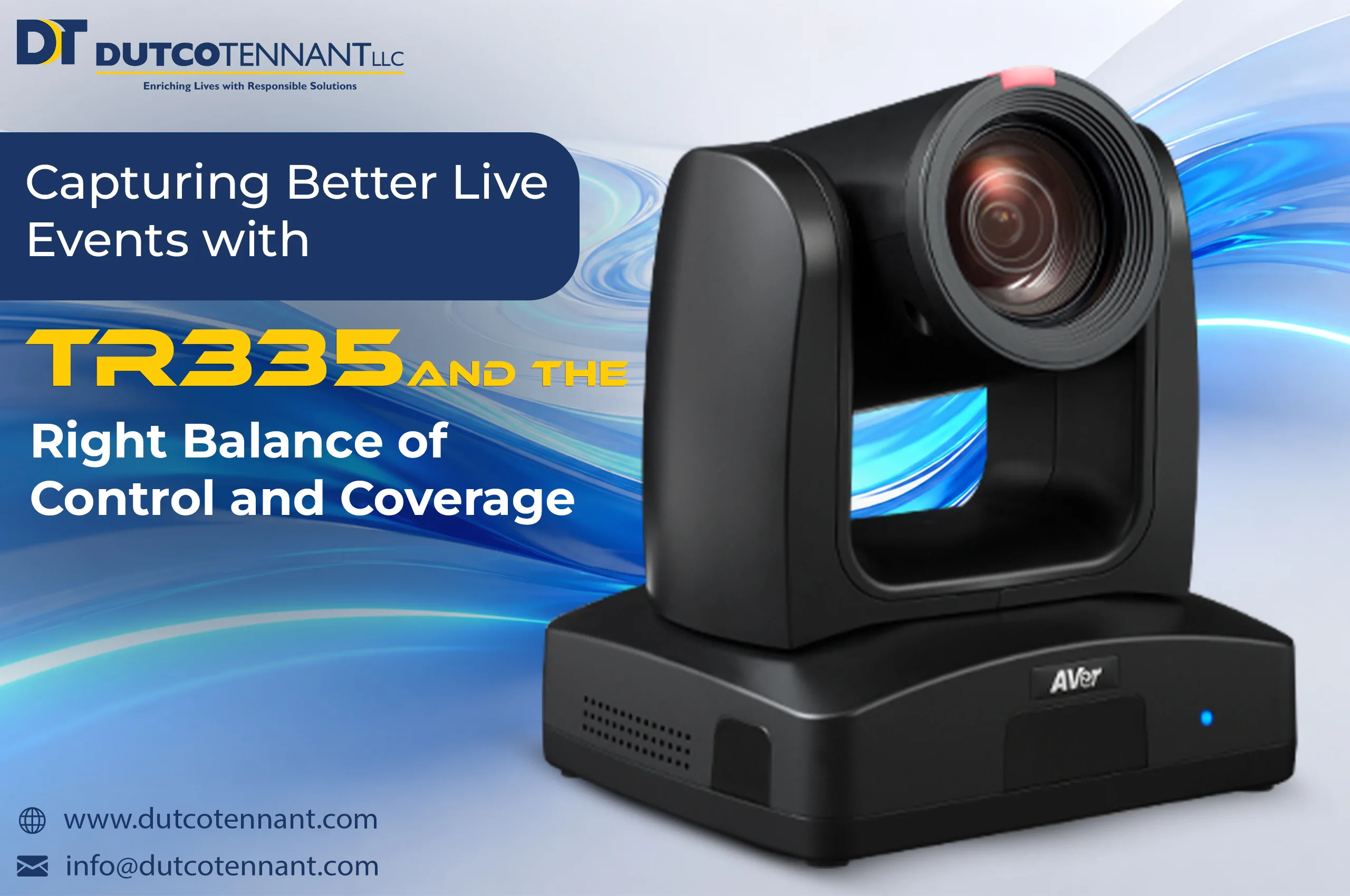
A PTZ camera can pan, tilt and zoom, allowing one unit to cover different areas of a room. It can follow presenters, capture audience questions or switch between preset views. This flexibility is valuable in dynamic spaces where the subject is not always in one position.
Many PTZ models like TR335 PTZ Camera can be controlled remotely through software, hardware controllers or AV systems. Presets allow operators to move quickly between views without manually adjusting the camera body.
How Fixed Cameras Differ
A fixed camera captures a specific view. Once installed and aimed, it does not move during normal operation. This simplicity can be useful for small rooms, predictable framing and applications where the camera always needs the same shot.
Fixed options usually require less control complexity. However, covering multiple angles may require multiple cameras, which can increase cabling, switching and installation planning.
Live Streaming in Conference Rooms
A conference room camera should capture participants clearly without making remote viewers feel disconnected. In small rooms, a fixed wide-angle camera may be sufficient. In larger rooms, a PTZ camera can provide closer shots of speakers, whiteboards or presentation areas.
For hybrid meetings, camera placement should be reviewed with microphone coverage and display location. Video quality alone will not solve a poor meeting experience if audio pickup or room layout is weak.
Events, Training Rooms and Auditoriums
PTZ cameras often perform better in spaces where presenters move across a stage or where different viewpoints are needed. They can switch from a wide audience shot to a close-up of the speaker, then move to a panel discussion or demonstration area.
Fixed cameras may still be used as locked-off wide shots. Many professional setups combine both: PTZ units for dynamic coverage and fixed cameras for stable reference angles.
Operational Differences
· PTZ cameras offer movement, zoom and preset control.
· Fixed cameras are simpler and stable for predictable views.
· PTZ systems may need control planning and operator training.
· Fixed multi-camera layouts may need more switching hardware.
· Room size and subject movement should guide the decision.
Choosing a Professional AV Camera Setup
A professional AV camera should be selected according to lens range, resolution, low-light performance, connectivity, control method and mounting location. Streaming platforms, capture devices and room control systems should also be checked for compatibility.
The strongest setup is not always the most complex. A small meeting room may benefit from a clean fixed solution, while a large training space may need PTZ flexibility to keep remote viewers engaged.
Which Is Better?
PTZ is usually better when movement, zoom, presets and multiple angles matter. Fixed cameras are better when the frame is consistent, operation needs to stay simple and the space is compact. For many live streaming projects, the best answer is a planned mix that supports both reliable wide coverage and active speaker framing.