Rain does not have to interrupt your day, but the wrong rainwear can make it uncomfortable. A wet back, damp trousers, a hood that blocks your view, or a poncho that lifts in the wind can turn a simple commute into a frustrating experience.
A rain poncho can be a practical solution for city life. It slips over everyday clothes, offers broad coverage, and can be packed away when the weather clears. But not every poncho is suitable for cycling, walking, or daily commuting.
The right choice depends on how you move, how long you stay outside, and what you need protection from. This guide explains what to look for before buying, so you can choose a poncho that works in real conditions.
Start With Your Daily Routine
Before starting fabric, color, and price comparisons, consider how exactly you will use your poncho.
A cyclist will have a different need than a walker. A commuter might need an over-the-backpack model while a traveler might appreciate a light design. If you are cycling daily, you definitely need a product that will keep you safe from rain and will stay on you while you are pedaling without restricting your movements.
Ask yourself:
- Do I cycle every day? Sometimes? Mostly walk?
- What kind of protection do I need for brief showers or rain rides?
- Is it necessary for me to wear it over my work clothes/casual clothes/backpack?
- Should I be able to store it easily in case of better weather?
- Should my rain cape look good in town as well?
Your rain poncho should be designed specifically to address your problem. If you are cycling, your priorities should include coverage, windproofing, visibility, and mobility. If you are walking – comfort, breathability, hood, and packability.
Waterproofing Is Important, but Not Enough
Waterproofing is always the first thing people consider, and rightfully so. A poncho that allows water to pass through or be absorbed into the material will make you uncomfortable very quickly.
Make sure that the waterproof rating is clearly stated, and this is typically indicated by the water column. The higher this figure is, the more water the fabric can take before the moisture will penetrate it. For normal city rainfall and cycling, 10,000 mm would be an excellent rating.
Nevertheless, this rating cannot provide you with all the information you need. Moisture may come through stitching, zippers, openings, or even bad design of the hood. While one poncho uses high-quality material, another might have seams that are not waterproofed.
Here are some things you should look at when purchasing a poncho:
- Rating of waterproofing.
- Seamed or thermally welded seams.
- Hood that does not move when you move.
- Openings protected from moisture on your neck, front, and sides.
- Design that covers most of the vulnerable zones.
Breathability Prevents That Damp Feeling
A number of people acquire a water-repellent poncho, go walking or cycling in the rain, and are still left damp. In many cases, it is not because of the rain that penetrates through the exterior; rather, it is due to the accumulation of sweat and moisture from the interior side.
The breathability aspect allows moisture vapor to escape from the body. It is crucial if you are going to walk briskly, go cycling to your workplace, or simply wear a poncho for some time. Otherwise, you will be left with heat and humidity inside the fabric.
A quality rain poncho has to combine the following aspects:
- Exclusion of external rain.
- Escape of internal moisture.
The importance of breathability is lower when you cycle slowly, while with brisk riding or climbing hills, it takes a prominent position as a comfort factor.
In the case of choosing between several products, you should consider not only their waterproofing but also their breathability.
Fit and Wind Control Matter Most for Cycling
Rain ponchos should allow you enough space, but they should not act as an unruly piece of clothing material. Too much material would mean catching the wind and movement, which could also block your handlebars. Insufficient material means your clothes and legs are left open.
The importance of fit cannot be overemphasized when riding. Your poncho must cover your torso and upper legs but without coming into the way of your front wheel or your handling of the handlebars.
Features for fit include the following:
- Sufficient length to prevent spray from hitting your thighs.
- Wide enough to pedal with ease.
- Waist cinch or a fitting system to eliminate unnecessary movement.
- Leg loops or any other fastening to keep the front end in place.
- Heavy bottom hems to minimize flapping in windy conditions.
- Hood for head protection without limiting your side view.
Protect Your Legs, Not Just Your Torso
The problem with rainwear often lies in wet pants. While a jacket keeps your top half dry, the front side of your legs remains unprotected when you cycle, as you get sprayed from the front wheel.
Longer raincoats could be helpful in solving this problem. Ponchos create a shield between your clothes and road spray while giving you freedom of movement.
In the case of city cycling, one should find a poncho that would go down to your knees. This way, your thighs will be protected better and will stay dry.
A poncho won't take the place of waterproof trousers in every situation. For example, in case of very heavy rain or strong wind, one might need rainwear in combination. However, for everyday city cycling, ponchos could do just fine.
Material and Long-Term Value
Because a poncho is an item which will probably have multiple uses, durability should be taken into account. While a cheap poncho may appear to be convenient, it is likely to require replacement due to its poor quality and fragile nature.
Durability in terms of ponchos means the presence of a durable technical fabric, solid build, and maintenance of the design over time. The poncho by BYBROWN is made from Bluesign® certified technical material used in the Agile line, and the poncho itself is manufactured in Portugal.
Recycled materials are not the only aspect of sustainability. It also means the longevity of the item, repairability, and usability for more than just a season.
Find Rain Protection That Fits Your Life
A poncho is supposed to make life on rainy days much simpler, not more difficult. For those who cycle around the city, commute in varying weather conditions, or require rain gear that fits well with everyday wear, consider a poncho that strikes a balance between all the elements.
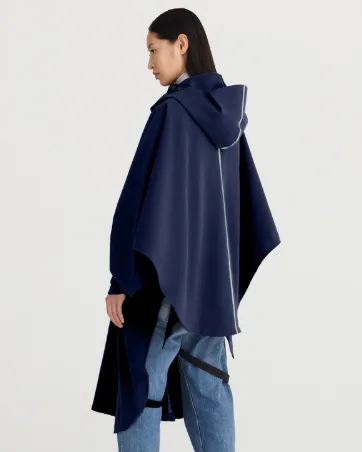
BYBROWN makes rain gear for individuals who navigate through actual cities; namely, bikers who require protection without having to compromise on either their comfort or style. The BYBROWN Agile rain poncho provides waterproofing, breathability, reflective visibility, biking-specific coverage, and packability in one single garment.
Explore BYBROWN’s rain poncho collection to encounter a raincoat designed for cycling, commuting, and everyday city life, so the next shower becomes a reason to keep moving, not a cause to change your plans.
FAQs
1. Can I use a rain poncho for everyday cycling?
Yes, but ideally one that is made for cycling. Make sure that it has waterproof materials, breathability, leg protection, snug fit, and reflectivity.
2. What waterproof material is required for a rain poncho?
A good rule of thumb would be for the poncho to have a waterproof rating of 10,000 mm water column. Seams must be sealed, and the hood design must be spot-on.
3. Why do I need breathability in my rain poncho?
This will help allow your sweat and moisture vapor to pass through so that you remain dry when walking or cycling.
4. How do I maintain my technical rain poncho?
Make sure that you dry it thoroughly, wipe any stains with a sponge, and follow the instructions in the garment. According to BYBROWN, machines wash the Agile product at 30°C on delicate settings.