A heritage journey becomes more meaningful when travellers look beyond individual monuments and notice how places differ from one another. Rajasthan’s cities, forts and historic districts each have their own visual character. Palace on Wheels connects several destinations in one route, making it possible to see those contrasts as parts of a wider regional story.
The official itinerary lists Jaipur, Sawai Madhopur, Chittorgarh, Udaipur, Jaisalmer, Jodhpur and Bharatpur, followed by Agra and a return to Delhi. The train describes its principal journey as seven nights and eight days. Confirm your departure itinerary directly before travelling, as the official timetable and excursion arrangements are the authoritative source for your booking.
Jaipur: a planned city and a lively introduction
The route’s Jaipur visit offers an introduction to a city shaped by urban planning, markets and historic landmarks. The official itinerary highlights places including Albert Hall, City Palace, Jantar Mantar and Amer Fort. Rather than trying to see every detail at once, choose a few features to notice: the arrangement of streets, the use of colour, the craftsmanship of building details or the way a historic site relates to the surrounding city.
A guided visit can provide context that is hard to gather from photographs alone. Listen for the stories behind a building’s use, design and changes over time. Leave room to notice everyday activity too, because a city’s character is not limited to its monuments.
The Palace on Wheels heritage itinerary is a useful starting point for seeing which cities and sites are currently listed.
Chittorgarh: scale, memory and fort architecture
Chittorgarh Fort is one of the official itinerary’s listed highlights. Large fort complexes can be challenging to absorb in a short visit, so it helps to focus on how the site is organised: gates, walls, open spaces, towers and buildings each contribute to its scale and history.
Wear practical footwear and follow the guide’s instructions about where to walk and how much time is available. If you are interested in architecture, look for contrasts between defensive structures and spaces associated with daily or ceremonial life. Ask questions, but be mindful of the group’s pace and the time available.
Udaipur: water, palaces and visual composition
Udaipur’s place on the route adds a different relationship between architecture and landscape. The official itinerary includes a Lake Pichola boat ride and identifies Jag Mandir as a destination. Looking at the city from the water can change how its buildings relate to the lake and surrounding hills.
Consider how reflections, shorelines and the arrangement of buildings shape the view. If you take photographs, allow time to look with your eyes before framing the scene. Historic places can feel more vivid when you notice materials, proportions and the setting rather than only seeking a familiar postcard angle.
Jaisalmer and Jodhpur: sandstone, craft and colour
Jaisalmer and Jodhpur offer distinct architectural impressions. The official itinerary describes Jaisalmer’s sandstone fort and havelis, while Jodhpur’s listed highlights include Mehrangarh Fort, Jaswant Thada and Umaid Bhawan Palace Museum. These sites can help travellers notice how local materials, urban form and the surrounding environment contribute to each city’s character.
For a richer visit, pay attention to the details that often go unnoticed at first: carved windows, doorways, courtyards and the relationship between a building and its street. If time permits, ask the guide about conservation and the continued life of heritage areas.
Connect the monuments rather than collecting them
A multi-destination route can make each site feel like a separate stop on a list. To avoid that, keep a small travel journal. Note one architectural detail, one question and one impression from each city. Later, you may see connections between different places, along with important differences.
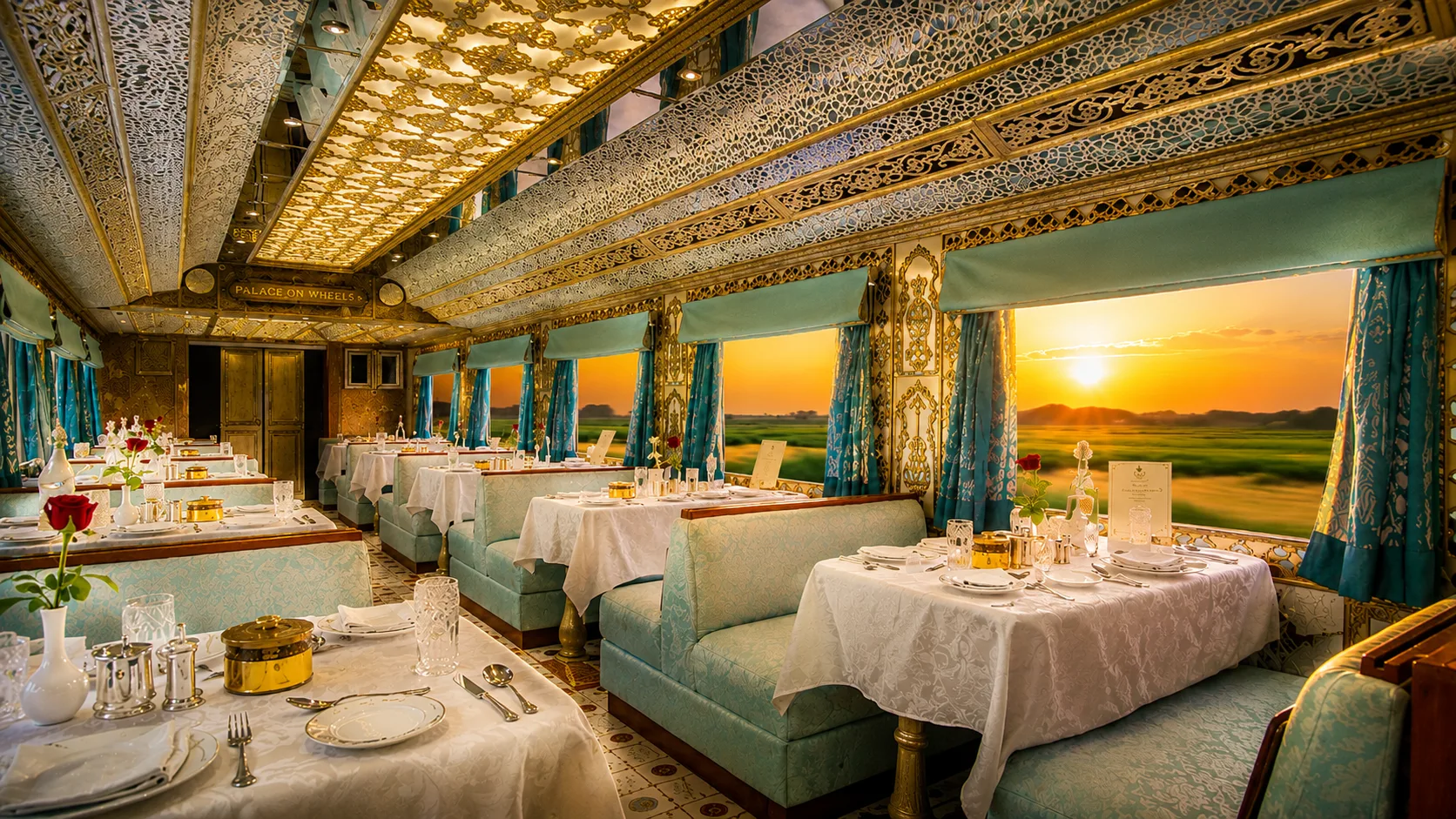
The train is designed to connect these visits within one itinerary. That can be useful for travellers who want a structured introduction to several destinations, while the excursions provide individual context. Review the official Palace on Wheels cabin information when considering how your onboard stay fits into the broader travel plan. Cabin facilities vary by category, so verify what applies to your booking.
Travel with respect for historic places
Historic sites are living places as well as tourist destinations. Follow signage, respect restricted areas and listen to your guide about photography rules. Avoid touching fragile surfaces or leaving litter. When local people are present, be considerate about photographing them and ask permission where appropriate.
A heritage itinerary is most rewarding when curiosity is paired with respect. The purpose is not simply to collect images, but to understand something about the places and the people who continue to live and work around them.
For practical questions about dates, route, cabins and booking, use the Palace on Wheels official website and confirm details for your departure.
FAQs
1. Which heritage destinations are included on Palace on Wheels in Rajasthan?
The official route lists Jaipur, Sawai Madhopur, Chittorgarh, Udaipur, Jaisalmer, Jodhpur and Bharatpur, with Agra in Uttar Pradesh before the return to Delhi. The specific attractions and timings are shown on the current itinerary. Palace on Wheels travellers should confirm the schedule for their departure before making separate plans around a city visit.
2. What Jaipur landmarks are listed on the Palace on Wheels itinerary?
The official itinerary highlights Albert Hall, City Palace, Jantar Mantar and Amer Fort for Jaipur. The actual excursion schedule should be checked for the selected departure. Palace on Wheels guests can use the itinerary as a guide, then follow the tour team’s instructions about visit duration, transport and any changes to the planned programme.
3. How can I make the most of historic sites during the Palace on Wheels journey?
Choose a few details to observe at each location instead of trying to take in everything at once. A guide can explain context, while a short travel journal helps you remember contrasts between cities. Palace on Wheels excursions have defined schedules, so check your departure information and follow the group’s timing at each heritage site.
4. Are cabin facilities the same for every Palace on Wheels guest travelling through Rajasthan?
No. The official factsheet presents facilities by cabin category, and some services differ between categories or depend on availability and operating terms. Palace on Wheels guests should review the factsheet and their booking confirmation to understand what applies to their cabin. If a facility matters to your travel plans, verify it directly with the official booking team.
5. Which official website should I use to verify Palace on Wheels itinerary details?
Use palaceonwheels.rajasthan.gov.in, the official Palace on Wheels website, for itinerary, cabin, booking and terms information. It is sensible to recheck details close to departure because schedules and excursion arrangements can change. Palace on Wheels travellers with questions about a specific date should contact the official representatives listed on the site.