Compressed air powers countless industrial operations, from manufacturing and automotive workshops to fabrication units and service centres. When reliability, affordability, and consistent air delivery are essential, a Reciprocating Air Compressor remains one of the most trusted solutions. Also known as a Piston Air Compressor, it is widely used across industries for powering pneumatic tools, spray painting, tyre inflation, packaging, and general engineering applications.
Available in capacities ranging from 1 HP to 15 HP, reciprocating compressors are suitable for both light-duty and heavy-duty industrial requirements. They are known for their robust construction, easy maintenance, and excellent performance under intermittent and continuous operating conditions. Single-stage models are commonly used for general-purpose applications, while two-stage compressors are preferred for higher pressure and industrial workloads.
At Air Care Equipment, we manufacture high-performance Piston Air Compressors engineered for durability, energy efficiency, and reliable compressed air delivery. Our compressors are designed using high-quality cast iron components, precision-machined cylinders, and efficient cooling systems to deliver dependable performance in demanding industrial environments.
In this guide, we'll explain how Reciprocating Air Compressors work, their benefits, applications, types, maintenance practices, and how to choose the right model for your business.
What is a Reciprocating Air Compressor?
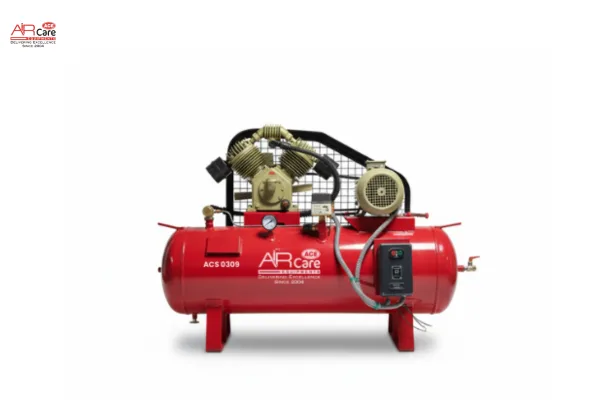
A Reciprocating Air Compressor, also called a Piston Air Compressor, is a positive displacement compressor that compresses air using the back-and-forth movement of one or more pistons inside cylinders. As the piston moves downward, atmospheric air enters the cylinder through the intake valve. During the upward stroke, the air is compressed and discharged into the receiver tank through the delivery valve.
This simple yet highly effective working principle makes reciprocating compressors suitable for a wide variety of industrial and commercial applications.
Why Choose a Piston Air Compressor?
Businesses continue to choose Piston Air Compressors because they provide an excellent balance of performance, durability, and affordability.
Reliable Performance
These compressors deliver consistent compressed air for pneumatic equipment and industrial machinery.
Heavy-Duty Construction
Most industrial models feature cast iron cylinders, durable crankshafts, and efficient cooling systems for long service life.
Cost-Effective Solution
Compared to larger rotary compressors, reciprocating compressors offer an economical solution for low to medium compressed air requirements.
Easy Maintenance
Their straightforward mechanical design allows routine maintenance and servicing with minimal downtime.
Wide Capacity Range
Models from 1 HP to 15 HP are available to suit everything from small workshops to industrial production facilities.
Benefits of a Reciprocating Air Compressor
Installing a quality Reciprocating Air Compressor offers several advantages:
- High air pressure output
- Reliable compressed air supply
- Low operating costs
- Long equipment lifespan
- Easy installation
- Durable cast iron construction
- Excellent cooling efficiency
- Suitable for intermittent and continuous operation
- Compact footprint
- Simple maintenance
These benefits make reciprocating compressors one of the most popular compressed air solutions across industries.
Types of Reciprocating Air Compressors
Single-Stage Piston Air Compressor
A Single-Stage Air Compressor compresses air in one piston stroke and is generally suitable for pressures up to around 8–10 bar, depending on the model. These compressors are commonly used in garages, fabrication shops, and small manufacturing units.
Ideal Applications- Tyre inflation
- Spray painting
- Pneumatic tools
- Small workshops
- Service centres
Two-Stage Piston Air Compressor
A Two-Stage Reciprocating Air Compressor compresses air in two stages, producing higher pressure with improved efficiency. It is designed for demanding industrial applications requiring continuous compressed air.
Suitable For- CNC machines
- Manufacturing plants
- Textile industries
- Packaging lines
- Heavy engineering
- Automotive workshops
Applications of Piston Air Compressors
A Reciprocating Air Compressor is widely used across multiple industries.
Common applications include:
- Manufacturing plants
- Engineering workshops
- Automotive service centres
- Fabrication industries
- Woodworking units
- Furniture manufacturing
- Spray painting
- Packaging industries
- Plastic processing
- Textile mills
- Food processing
- Pharmaceutical industries
- Agriculture
- Construction sites
- Pneumatic tool operations
Industries That Benefit from Reciprocating Air Compressors
Manufacturing
Reliable compressed air supports production equipment, assembly lines, and pneumatic automation.
Automotive
Used for tyre inflation, impact wrenches, spray booths, and repair equipment.
Furniture Industry
Ideal for powering nail guns, sanding equipment, and finishing tools.
Packaging Industry
Compressed air is used in filling, sealing, and packaging machines.
Textile Industry
Supports automated textile production and cleaning operations.
How to Choose the Right Reciprocating Air Compressor
Selecting the correct compressor improves productivity and reduces operating costs.
Horsepower (HP)
Choose a compressor based on your air demand. 1 HP to 3 HP models suit light-duty applications, while 5 HP to 15 HP models are ideal for industrial operations.
Air Delivery (CFM)
Ensure the compressor delivers sufficient airflow for your equipment.
Working Pressure
Select a compressor that meets the pressure requirements of your pneumatic tools and machinery.
Tank Capacity
Larger air receiver tanks provide more stable airflow and reduce frequent motor cycling.
Cooling System
Efficient air cooling improves performance and extends compressor life.
Duty Cycle
Consider how many hours the compressor will operate each day before selecting a model.
Maintenance Tips
Proper maintenance ensures reliable operation and a long service life.
Recommended practices include:
- Check oil levels regularly (for oil-lubricated models)
- Clean or replace air filters
- Drain moisture from the air receiver tank
- Inspect belts and pulleys
- Tighten electrical connections
- Monitor operating pressure
- Replace worn valves when required
- Schedule preventive servicing
Routine maintenance reduces breakdowns and helps maintain peak efficiency.
Why Choose Air Care Equipment?
At Air Care Equipment, we manufacture Reciprocating Air Compressors that combine performance, durability, and energy efficiency for industrial applications.
Our advantages include:
- Models from 1 HP to 15 HP
- Premium cast iron construction
- High-performance compressor pumps
- Efficient cooling systems
- Reliable compressed air delivery
- Low maintenance design
- Precision engineering
- Customized industrial solutions
- Professional technical support
- Strong after-sales service
Whether you need a compact compressor for a workshop or a high-capacity industrial solution, our team can help you choose the right compressor for your operational needs
Frequently Asked Questions
1. What is a Reciprocating Air Compressor?
A reciprocating air compressor uses one or more pistons to compress air inside a cylinder, delivering high-pressure compressed air for industrial and commercial applications.
2. What is the difference between a Single-Stage and Two-Stage compressor?
A single-stage compressor compresses air once, while a two-stage compressor compresses it twice to achieve higher pressure and greater efficiency.
3. Which industries use Piston Air Compressors?
Manufacturing, automotive, fabrication, woodworking, packaging, textiles, food processing, and engineering industries commonly use piston air compressors.
4. How do I select the correct compressor?
Consider horsepower, airflow (CFM), operating pressure, tank capacity, duty cycle, and the intended application before making a selection.
Conclusion
A Reciprocating Air Compressor is a dependable and cost-effective compressed air solution for businesses that require consistent performance, durability, and ease of maintenance. From 1 HP workshop compressors to 15 HP industrial piston compressors, these machines continue to be a preferred choice across a wide range of industries because of their versatility and robust design.
As a trusted manufacturer, Air Care Equipment provides high-quality Piston Air Compressors engineered to deliver reliable compressed air, reduce operational downtime, and improve productivity. If you're looking for a durable and efficient compressor solution, our expert team is ready to help you select the right model for your specific application.