
Rice processing generates several valuable byproducts, including rice husk, rice bran, broken rice, and other milling residues. With suitable processing technologies, these materials can be converted into fuel, fertilizer ingredients, animal feed components, industrial fillers, and other useful products.
Among these materials, husk-based residues require effective size reduction before they can be used in many downstream applications. Their bulky structure, low bulk density, and relatively hard outer surface can make direct processing inefficient. Grinding helps transform the original material into a more uniform feedstock that can be transported, mixed, pelletized, or further processed.
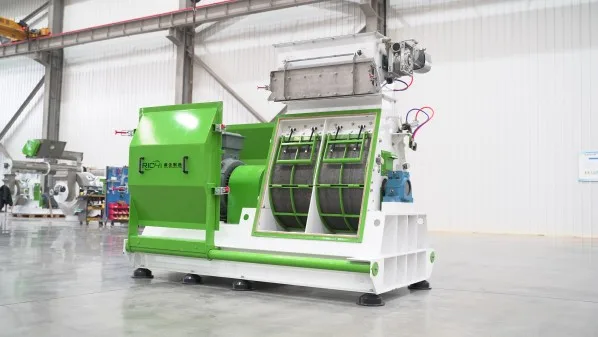
For rice mills and biomass processing businesses, an efficient grinding system can therefore provide an important connection between raw-material collection and value-added production. A rice bran husk grinder machine can be incorporated into a complete processing line when the project requires controlled particle size and continuous material preparation.
The exact equipment configuration depends on the characteristics of the incoming material, the desired production capacity, and the final application.
Understanding Rice Milling Byproducts
Rice milling produces different types of residues, and each has its own physical and chemical characteristics.
Rice husk is the hard outer covering removed from paddy during milling. It is lightweight, fibrous, and contains a relatively high proportion of silica.
Rice bran is produced mainly during the polishing and milling stages. Compared with husk, rice bran contains more oil and nutrients and is commonly associated with feed and food-related applications.
Because rice husk and rice bran behave differently during processing, they should not automatically be treated as the same raw material.
When a commercial project uses a combination of rice-processing residues, material testing is important before selecting grinding equipment.
Why Size Reduction Matters
Size reduction is often the first major step toward increasing the usability of agricultural residues.
Loose husk is bulky and difficult to feed uniformly into some downstream machines. Grinding can reduce particle size and improve the consistency of the material.
The main advantages include:
- More uniform particle size
- Improved material handling
- Easier conveying
- Better mixing
- More stable feeding
- Improved preparation for pelletizing
- Reduced volume of loose residues
- Greater flexibility for downstream applications
The ideal degree of grinding depends on what the material will become.
A fuel pellet producer may require a different particle size from a manufacturer using the material as a composite filler.
Physical Characteristics That Affect Grinding
Understanding the raw material is essential for selecting appropriate grinding equipment.
Low Bulk Density
Rice husk is lightweight compared with many other biomass materials.
A large amount of material may occupy considerable storage space.
This makes the feeding system particularly important. If the material is supplied unevenly, grinding efficiency can fluctuate.
Abrasive Components
Rice husk contains a relatively high amount of silica.
This can contribute to equipment wear during long-term processing.
Grinding equipment for high-volume applications should therefore use appropriate wear-resistant components and provide convenient access for maintenance.
Fibrous Structure
The physical structure of husk can make particle reduction different from grinding conventional grains.
The grinding system must be selected according to the required particle size and material characteristics.
Moisture Content
Moisture has a significant effect on grinding performance.
Excessively wet material may cause sticking or blockage, while very dry material can increase dust generation.
Maintaining suitable moisture conditions helps improve process stability.
Typical Processing Flow
A commercial rice-residue processing line can include several stages.
Raw Material Receiving
The process begins with receiving rice milling residues.
Raw materials should be inspected for moisture, contamination, and consistency before entering the production system.
Cleaning
A cleaning system removes stones, metal particles, soil, and other unwanted materials.
This protects downstream equipment and improves final product quality.
Drying
If the material contains excessive moisture, drying may be required.
An industrial rotary dryer machine can reduce moisture before grinding and help improve size-reduction efficiency.
Grinding
After preparation, the material enters the grinding system.
The grinder reduces the raw material into smaller particles according to the selected process parameters.
This stage is particularly important when the material will later enter a pellet mill, briquette press, mixer, or other processing equipment.
(Learn more: https://pelletisingmachine.com/rice-husk-grinder-machine/)
Screening
A screening system can separate particles according to size.
Oversized particles may be returned to the grinder, while qualified material moves to the next stage.
Dust Collection
Dry biomass grinding can generate fine particles.
Dust collection equipment helps control airborne material and maintain a cleaner working environment.
Storage
Finished powder can be stored in bags, silos, or other appropriate storage systems before being sold or processed further.
Equipment Selection for Rice Residue Grinding
Selecting a grinder should begin with the final application.
Determine Production Capacity
The first consideration is how much material must be processed per hour.
Small rice mills may have relatively low processing requirements, while large biomass facilities can require continuous high-capacity operation.
The selected machine should match the actual material supply and expected production volume.
Define Particle Size
Particle size should be determined before choosing equipment.
For pellet production, the material may need to meet the requirements of the pellet mill.
For composite applications, a finer and more controlled particle size may be necessary.
Test Material Moisture
Moisture testing is recommended before finalizing the equipment configuration.
If moisture is too high, a drying system may need to be installed before grinding.
Consider Wear
The silica content of rice husk can influence wear rates.
A suitable machine should provide durable grinding components and make maintenance straightforward.
Evaluate Dust Collection
Grinding systems should be designed together with appropriate dust collection equipment.
A dust collector that is too small may not provide adequate control, while an unnecessarily large system can increase investment and operating costs.
Using Ground Rice Husk for Biomass Fuel
One of the most practical applications of processed rice husk is biomass fuel production.
Rice husk can be converted into pellets or briquettes after suitable preparation.
Grinding improves feedstock uniformity and can help create more stable feeding conditions for the pelletizing process.
A typical fuel pellet production process may include:
Rice husk → cleaning → drying → grinding → screening → pelletizing → cooling → screening → packing
Depending on the raw material condition, some stages may be modified or removed.
For example, if the husk is already sufficiently dry and clean, the process can be simplified.
Rice Husk Pellets
Rice husk pellets are densified biomass products made by compressing processed husk under high pressure.
Compared with loose rice husk, pellets are more compact and easier to handle.
Grinding is an important preparation stage because large or irregular particles can make feeding and compression less consistent.
The final pellet quality depends on multiple factors, including:
- Raw material composition
- Particle size
- Moisture content
- Pellet mill configuration
- Compression conditions
- Die specifications
- Cooling efficiency
- Screening performance
Therefore, grinding should be optimized as part of the complete pellet production process.
Briquette Production
Ground rice husk can also be used in biomass briquette production.
Briquettes are larger and denser than loose residues and can be designed for easier storage and transportation.
The required feedstock size depends on the briquette machine and product design.
A grinding system can therefore be configured specifically for the requirements of the briquetting process.
Fertilizer Applications
Agricultural residues can also be incorporated into certain fertilizer and soil-related products.
Ground rice husk may be mixed with compost, manure, or other organic materials.
The grinding stage helps improve material uniformity before mixing and granulation.
For fertilizer production, the grinder should be selected based on the characteristics of the complete formula rather than rice husk alone.
Composite Material Applications
Ground agricultural residues have potential as fillers in selected composite products.
Rice husk particles can be incorporated into certain boards, panels, and wood-plastic composites.
Particle size distribution can affect mixing behavior and the properties of the finished material.
For industrial composite applications, a controlled grinding and screening process is therefore particularly important.
Grinding and Mixing
Many biomass processing projects do not use rice husk as the only raw material.
For example, a fuel producer may combine rice husk with:
- Sawdust
- Wood chips
- Straw
- Grass
- Other agricultural residues
Each material has different physical characteristics.
Separate grinding systems may be used before blending, or the process may be designed around a combined feedstock.
After grinding, a mixer can produce a more homogeneous material before pelletizing or briquetting.
Moisture Management
Moisture management is one of the most important factors in agricultural residue processing.
If the raw material is too wet, the grinding process can become unstable.
Possible problems include:
- Reduced grinding capacity
- Material sticking
- Screen blockage
- Uneven particle size
- Higher energy consumption
If the material is excessively dry, dust generation may increase.
The ideal moisture condition depends on the grinding technology and final application.
For a commercial project, raw material testing should be performed before deciding whether a dryer is required.
Improving Grinding Efficiency
Several operating practices can improve grinding performance.
Maintain a Stable Feed Rate
A consistent material flow helps keep the grinder operating under stable conditions.
Sudden increases in feed can overload the motor, while very low feeding can reduce production efficiency.
Match Screen Specifications
The screen should correspond to the required final particle size.
An inappropriate screen can result in excessive recirculation or insufficient size reduction.
Keep Grinding Components in Good Condition
Wear can change the performance of the grinding chamber.
Routine inspections help maintain consistent output.
Avoid Excessive Grinding
Producing extremely fine powder is not always beneficial.
If the downstream application only requires moderate particle reduction, excessive grinding can increase energy consumption without creating additional product value.
Optimize Conveying
The conveying system should match the output of the grinder.
Poor material transfer can create bottlenecks even when the grinder itself has sufficient capacity.
Dust Collection and Environmental Control
Agricultural residue grinding produces dust, particularly when processing dry materials.
A complete grinding system should therefore include appropriate dust collection.
Depending on the project, the system may include cyclone separation, bag filters, ductwork, and other components.
Effective dust collection can:
- Reduce airborne particles
- Improve workshop cleanliness
- Reduce material loss
- Protect downstream equipment
- Improve working conditions
Dust collection should be designed according to the actual airflow and processing capacity.
Automation for Commercial Production
Automation becomes increasingly useful as production capacity increases.
A centralized control system can coordinate different machines and reduce manual intervention.
For example, sensors and control devices can monitor:
- Feeding rate
- Motor load
- Dryer temperature
- Material flow
- Dust collection
- Conveyor operation
Automated systems can also provide interlocking protection, allowing equipment to stop when abnormal operating conditions are detected.
This type of control is especially useful for continuous biomass processing plants.
Maintenance Requirements
Proper maintenance helps keep the grinding system productive over the long term.
Operators should inspect grinding components regularly.
Screens should be checked for blockage and damage.
Bearings should be lubricated according to the equipment manufacturer's requirements.
Belts, motors, feeders, and conveyors should also be inspected regularly.
The dust collection system requires maintenance as well. Filters should be cleaned or replaced according to operating conditions.
Preventive maintenance is generally more effective than waiting until equipment failure causes extended downtime.
Safety During Grinding
Safety should be incorporated into the design and operation of the processing line.
Dry biomass dust can present combustion risks under certain conditions, so dust accumulation should be controlled.
The workshop should be cleaned regularly.
Moving components should be properly guarded.
Operators should never open the grinding chamber while the equipment is running.
Electrical systems should be appropriately installed and grounded.
Emergency stop devices should be accessible to operators.
Training is also important. Workers should understand normal operating procedures, shutdown procedures, cleaning requirements, and maintenance practices.
Small Scale Processing
A small rice mill may only need a basic grinding system.
A simple configuration can include:
Feeding → grinding → dust collection → finished material
This type of setup can be suitable when the material is already relatively clean and dry.
Manual bagging may be sufficient for small production volumes.
Medium and Large Scale Processing
Larger projects require more integrated systems.
A medium-scale facility may include:
Cleaning → drying → grinding → screening → conveying → storage
An industrial biomass plant may add:
Automatic feeding → drying → grinding → screening → dust collection → storage → pelletizing → cooling → packing
The exact configuration depends on the final product.
A complete line should be designed around the actual capacity of each processing stage.
Common Problems and Solutions
Grinder Capacity Is Lower Than Expected
Low capacity may result from excessive moisture, inappropriate screen selection, unstable feeding, or worn components.
Checking each part of the material preparation system can help identify the bottleneck.
Particle Size Is Inconsistent
Uneven particle size may be caused by incorrect grinding parameters or insufficient screening.
The screen and feeding rate should be checked.
Material Blocks the Grinder
Blockages are commonly associated with excessive moisture or excessive feeding.
Reducing moisture and stabilizing the feed can help improve operation.
Dust Levels Are Too High
High dust levels may indicate insufficient dust collection or poor airflow.
The collection system should be checked for filter condition, duct blockage, and appropriate capacity.
Wear Is Excessive
If wear components deteriorate quickly, the material characteristics and equipment configuration should be reviewed.
For silica-rich rice husk, wear-resistant components and regular inspection are particularly important.
Designing a Complete Rice Residue Processing Line
A grinder should not be selected independently from the rest of the production system.
The capacity of the feeder should match the grinder.
The grinder should match the screen and conveyor.
The dryer should match the material flow.
If pelletizing is included, the grinding system should provide the particle size required by the pellet mill.
This integrated approach helps reduce production bottlenecks.
For example, installing a high-capacity grinder while using an undersized conveyor can simply move the bottleneck to the conveying stage.
Complete process design therefore considers the entire material flow from raw material receiving to finished product packaging.
Factors Affecting Project Investment
The total investment for a rice residue processing project depends on many factors.
These may include:
- Required production capacity
- Number of processing stages
- Grinding technology
- Dryer type
- Dust collection system
- Automation level
- Storage requirements
- Packaging system
- Workshop size
- Installation requirements
- Material handling distance
A simple powder production line will normally require fewer machines than a complete biomass pellet plant.
Therefore, project planning should begin with the final product and target capacity.
Choosing Equipment for Future Expansion
Businesses expecting raw material volumes to increase should consider future expansion during the initial design.
The layout can reserve space for additional grinding capacity, storage, screening, or pelletizing equipment.
Electrical systems and conveying routes can also be planned with future production in mind.
This can make later expansion more practical and reduce the need for major reconstruction.
Frequently Asked Questions
What is the purpose of grinding rice husk?
Grinding reduces particle size and improves material uniformity, handling, mixing, and preparation for downstream processing.
Can ground rice husk be used to make pellets?
Yes. Properly prepared rice husk can be used as a feedstock for biomass fuel pellet production, depending on the required formulation and processing conditions.
Does rice husk need to be dried before grinding?
Not always. The need for drying depends on the initial moisture content and the requirements of the grinding and downstream processes.
How fine should rice husk be ground?
There is no universal particle size. The correct size depends on the final application, such as fuel pellets, briquettes, fertilizer, or composite materials.
Is dust collection necessary?
For commercial dry grinding systems, appropriate dust collection is generally an important part of safe and clean operation.
Can rice husk be mixed with other biomass?
Yes. Rice husk can be combined with suitable biomass materials such as sawdust, straw, or other agricultural residues, depending on the final product requirements.
(find out here now: RICHI Machinery Manufacture)
Conclusion
Rice milling residues represent an important source of biomass that can be converted into higher-value products through appropriate processing. Grinding is a key preparation stage because it reduces particle size, improves material uniformity, and makes rice-processing residues easier to handle and use.
The selection of grinding equipment should take into account raw material characteristics, moisture content, required particle size, production capacity, wear resistance, feeding conditions, and dust collection requirements.
A properly configured rice bran husk grinder machine can be integrated into a broader processing system for biomass fuel, pellet, briquette, fertilizer, or composite material production. Rather than treating grinding as an isolated operation, businesses can achieve better results by designing the entire process from raw material receiving to final product handling.
With suitable equipment and process control, rice milling residues can move beyond simple waste disposal and become useful raw materials for modern biomass and agricultural processing industries.