Modern businesses use multiple applications to manage sales, marketing, customer service, finance, operations, and communication. When these systems operate independently, employees may need to transfer information manually, creating duplicate data, errors, and unnecessary delays.
Salesforce provides a powerful platform for managing customer relationships, but businesses often need to connect it with other applications to create a truly connected technology environment.
This is where Salesforce integration becomes important.
What Is Salesforce Integration?
Salesforce integration is the process of connecting Salesforce with other business applications so that information can move between systems efficiently.
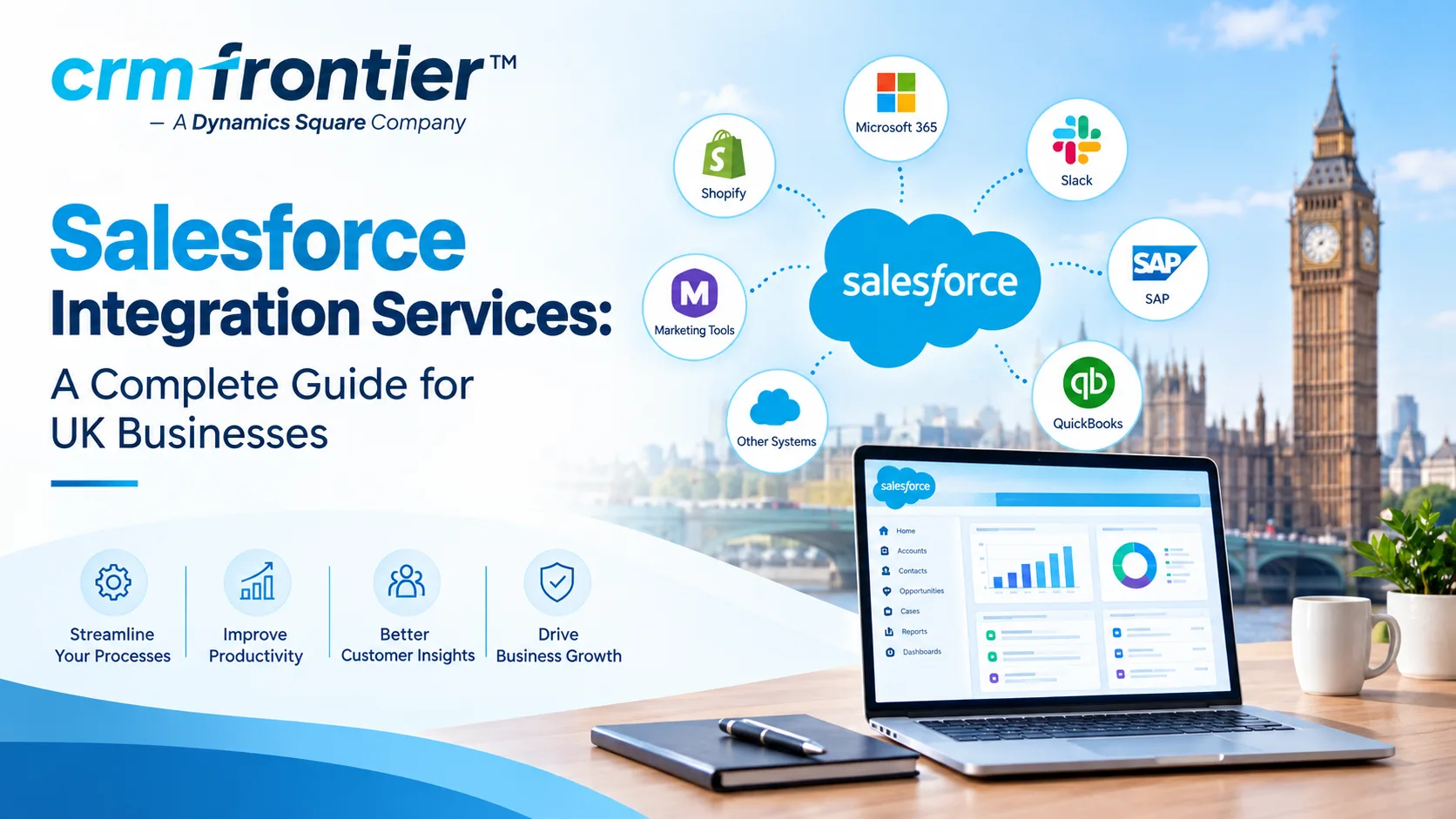
Businesses may integrate Salesforce with platforms such as:
- Microsoft Outlook
- Microsoft SharePoint
- ERP systems
- Accounting software
- Marketing automation platforms
- E-commerce platforms
- Customer service applications
- Analytics and reporting systems
The objective is to reduce manual processes and create a consistent flow of information across different business systems.
Why Is Salesforce Integration Important?
As businesses grow, they collect more customer and operational data. Managing this information across disconnected applications can become difficult.
A well-designed integration strategy can help businesses:
Improve Data Accuracy
Automated data synchronisation can reduce manual data entry, duplicate records, and inconsistencies between systems.
Increase Productivity
Employees can spend less time moving information between applications and more time focusing on customers and business activities.
Create a Connected Customer View
Sales, marketing, and customer service teams can access relevant customer information from connected systems, helping them understand customer interactions more effectively.
Support Business Growth
Scalable integrations allow businesses to connect new applications and technologies as their requirements change.
How CRM Frontier Supports Salesforce Integration
Choosing the right technology partner is an important part of a successful Salesforce integration project. CRM Frontier helps businesses plan and implement Salesforce solutions based on their specific business and technical requirements.
CRM Frontier's approach focuses on understanding existing systems, business processes, data requirements, and integration objectives before recommending an appropriate solution.
The team can help organisations identify which applications need to communicate with Salesforce and determine how information should flow between them.
For businesses that need a Salesforce integration service, CRM Frontier can support the integration journey from planning and implementation through to optimisation.
CRM Frontier's Role in Integration Projects
A successful Salesforce integration involves more than simply connecting two applications. Businesses need to consider data structure, security, automation, scalability, and long-term maintenance.
CRM Frontier can play an important role in areas such as:
Integration Planning: Understanding business requirements and identifying the systems that need to connect with Salesforce.
Data Synchronisation: Helping establish appropriate processes for moving relevant information between Salesforce and connected applications.
Process Automation: Identifying repetitive workflows that can be automated to reduce manual work.
System Connectivity: Supporting connections between Salesforce and business applications used by sales, marketing, finance, operations, and customer service teams.
Integration Optimisation: Reviewing existing integrations and identifying opportunities to improve performance, reliability, and efficiency.
Scalability: Helping businesses develop integration strategies that can support future applications, users, and business requirements.
Common Salesforce Integration Use Cases
One common use case is integrating Salesforce with Microsoft applications. This can help employees connect CRM information with the productivity tools they already use.
Another example is Salesforce and ERP integration. Connecting CRM and ERP systems can provide sales teams with greater visibility into orders, products, accounts, and other business information.
Marketing integration is another important area. Connecting Salesforce with marketing platforms can help businesses improve lead management and create better visibility between marketing and sales activities.
Customer service integrations can also bring relevant customer information into service workflows, allowing teams to respond to customers with better context.
Why Work With an Experienced Salesforce Partner?
Every organisation has different applications, data structures, workflows, and security requirements. A standard integration approach may therefore not be suitable for every business.
An experienced Salesforce partner can assess the existing technology environment and help develop an integration strategy aligned with the organisation's goals.
CRM Frontier works with businesses looking to improve their Salesforce environment through implementation, integration, optimisation, and other Salesforce-focused solutions.
Final Thoughts
Salesforce integration can help businesses connect their CRM with the applications they already depend on, creating more efficient workflows and improving access to business information.
From integration planning and data synchronisation to automation and optimisation, the right approach can help organisations get greater value from their Salesforce investment.
For businesses looking for a reliable Salesforce integration service, CRM Frontier can help develop and implement Salesforce solutions designed around their business requirements and future growth.
Contact us - https://www.crmfrontier.co.uk/contact-us/