
Running a successful salon involves more than providing quality beauty services. Salon owners also need to attract new customers, respond to enquiries, manage appointments, and maintain good customer relationships.
Every day, salons receive enquiries through phone calls, WhatsApp messages, social media, websites, and walk-in visits. However, not every person who enquires about a service books an appointment immediately.
When these enquiries are not recorded or followed up properly, salons may lose potential customers and business opportunities.
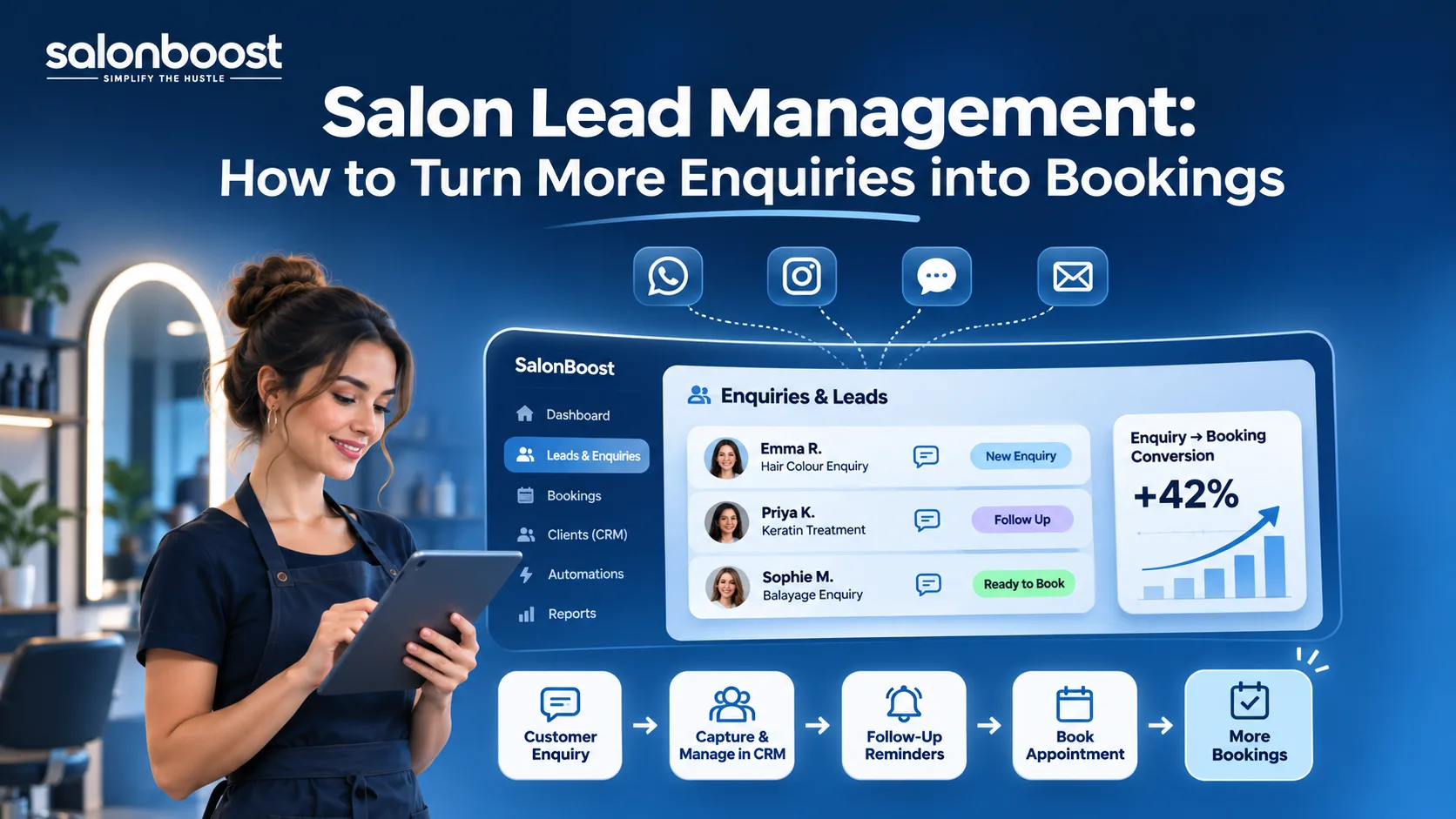
This is where salon lead management software can help. It allows beauty businesses to organise customer enquiries, schedule follow-ups, track customer interests, and improve booking opportunities.
What Is Salon Lead Management?
Salon lead management is the process of collecting, organising, tracking, and following up with potential customers who show interest in salon services.
A lead can be anyone who contacts a salon to ask about haircuts, hair colouring, bridal makeup, skincare treatments, spa services, or other beauty services.
For example, a customer may visit a salon to ask about hair colouring prices but leave without booking an appointment. Recording their contact information with permission and following up later can create another opportunity to secure a booking.
A salon lead management system helps businesses manage this process in an organised way instead of relying on notebooks, spreadsheets, or staff memory.
Why Is Lead Management Important for Salons?
Many salon owners focus on attracting new customers through advertisements, social media campaigns, and special offers. However, generating enquiries is only one part of growing a business.
Managing those enquiries effectively is equally important.
Without a proper lead management process, salon businesses may experience:
- Missed customer enquiries.
- Delayed responses.
- Forgotten follow-ups.
- Poor customer communication.
- Lost appointment opportunities.
- Difficulty measuring marketing performance.
Using a structured system helps salon owners understand customer requirements and provide better service from the first interaction.
1. Manage Customer Enquiries in One Place
Customers use different communication channels to contact salons. Some prefer WhatsApp, while others call directly, visit the salon, or submit an online enquiry form.
Managing information across multiple platforms can become difficult, especially during busy working hours.
Salon lead management software helps businesses maintain customer enquiry records in a centralised system.
Staff members can record information such as customer names, contact details, preferred services, enquiry dates, and follow-up requirements.
Having organised customer information reduces confusion and makes communication easier for the entire salon team.
2. Improve Customer Follow-Ups
Not every customer is ready to book an appointment immediately. Some customers need more information, while others may want to compare services or check their availability.
Following up at the right time can help customers make informed decisions.
For example, a customer interested in bridal makeup may need details about packages, available dates, and consultation options.
A follow-up reminder helps staff contact the customer at an appropriate time and provide the required information.
Personalised and respectful follow-ups can improve customer confidence without making customers feel pressured to book a service.
3. Track Customer Enquiries Through Different Stages
A lead management system allows salon owners to understand the progress of each customer enquiry.
Common lead stages include:
- New enquiry
- Customer contacted
- Interested customer
- Follow-up required
- Converted customer
- Lost opportunity
These stages help salon employees understand which customers need attention and which enquiries have already been handled.
A clear lead pipeline also helps salon managers identify communication gaps and improve their customer handling process.
Instead of checking multiple records, salon owners can review enquiry progress through a single system.
4. Understand Where Customers Come From
Salons often invest in different marketing activities to attract customers. These may include Instagram promotions, Google searches, referrals, local advertising, and WhatsApp campaigns.
However, understanding which marketing channels generate actual bookings can be challenging.
Lead source tracking helps salon businesses identify where potential customers discover their services.
For example, a salon may receive many enquiries through Instagram but generate more confirmed appointments through customer referrals.
By understanding these patterns, salon owners can make better marketing decisions and allocate their resources more effectively.
5. Improve Communication Through WhatsApp
WhatsApp has become a convenient communication channel for many beauty businesses. Customers often use it to ask about services, prices, appointment availability, and special offers.
However, managing a large number of conversations manually can be time-consuming.
Connecting lead management with WhatsApp automation can help salon businesses organise communication and manage follow-ups more efficiently.
Salons can use WhatsApp to share service information, respond to enquiries, confirm appointments, and send relevant reminders.
Businesses should always respect customer communication preferences and avoid sending unnecessary promotional messages.
6. Convert More Enquiries into Appointments
The main purpose of lead management is to help interested customers move from an initial enquiry to a confirmed appointment.
Consider a customer who contacts a salon about a hair spa treatment. The customer receives information about the service but does not book immediately.
With a proper lead management process, the salon can record the enquiry, schedule a follow-up, answer additional questions, and help the customer choose a suitable appointment time.
Connecting lead management with an appointment management system can make the booking process more convenient for both customers and salon employees.
This organised approach may help reduce missed booking opportunities.
7. Improve Salon Staff Productivity
Receptionists and salon employees often manage several responsibilities throughout the day. They answer calls, welcome customers, schedule appointments, and handle service enquiries.
When customer information is scattered across different platforms, employees may spend unnecessary time searching for details.
A centralised lead management system makes it easier to assign enquiries to staff members, check follow-up dates, and review previous conversations.
This also helps employees provide consistent information when customers contact the salon again.
Better organisation allows staff to spend more time focusing on customer service.
8. Build Better Customer Relationships
A positive customer relationship often begins before the first appointment.
When a salon responds promptly, understands customer needs, and provides helpful information, it creates a positive first impression.
Lead management helps staff remember customer preferences, service interests, and previous discussions.
For example, if a customer previously asked about skincare treatments for a special occasion, the salon can use that information to provide a more relevant response during the next conversation.
Personalised communication can help build trust and encourage long-term customer relationships.
9. Measure Lead Conversion and Business Performance
Understanding business performance is important for salon growth.
Salon owners can monitor lead management performance by tracking the number of new enquiries, completed follow-ups, confirmed appointments, and converted customers.
These records help businesses identify areas that need improvement.
For example, if a salon receives many enquiries but very few bookings, the owner can review response times, service information, pricing communication, and follow-up practices.
Some salon management platforms also connect customer enquiries with billing records, helping businesses understand which leads generate revenue.
10. Choose the Right Salon Lead Management Software
When selecting a lead management tool, salon owners should consider their business size, customer communication requirements, budget, and daily operations.
Important features to look for include:
- Customer enquiry tracking
- Follow-up reminders
- Lead source tracking
- Staff assignment
- Customer interaction history
- Appointment management
- WhatsApp integration
- Lead conversion reports
Platforms such as SalonBoost offer salon lead management software that supports enquiry tracking, follow-up scheduling, and customer conversion management.
Salon owners should evaluate available features and choose a solution that fits their business requirements.
Best Practices for Effective Salon Lead Management
Technology alone cannot guarantee better results. Salon businesses also need a consistent approach to managing customer enquiries.
Staff should respond to enquiries promptly, provide accurate service information, maintain updated customer records, and complete scheduled follow-ups.
It is also important to collect customer information responsibly, respect privacy, and communicate only with appropriate permission.
Regularly reviewing lead conversion reports can help salon owners identify challenges and improve their customer management strategies.
Conclusion
Salon lead management is an important part of running and growing a beauty business. It helps salon owners organise customer enquiries, improve follow-ups, manage communication, and create more booking opportunities.
Whether it is a small beauty parlour, hair salon, spa, or multi-branch salon, an organised lead management process can make daily operations more efficient.
By combining the right technology with quality customer service, salon businesses can reduce missed opportunities, build stronger customer relationships, and support sustainable business growth.