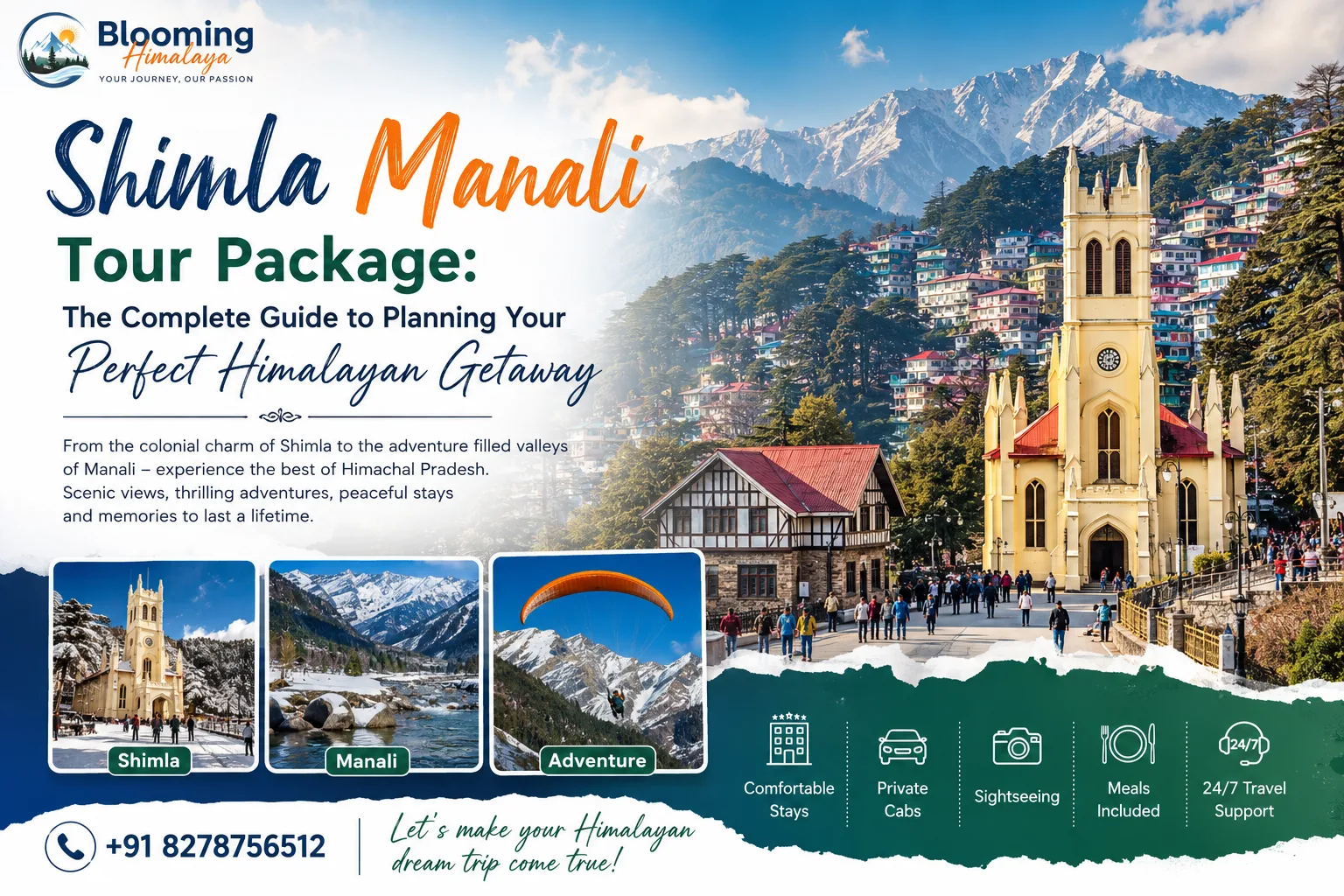
If there's one trip that keeps showing up on every Indian traveler's bucket list, it's the Shimla Manali tour. Snow-capped peaks, pine-scented air, colonial charm, and enough adventure activities to keep adrenaline junkies happy — this combo has earned its reputation as the ultimate hill station escape. But between choosing the right season, picking a route, and figuring out what a "package" actually includes, planning this trip can feel more overwhelming than it needs to be.
This guide breaks down everything you need to know before booking a Shimla Manali tour package, from ideal duration and budget to hidden gems most tourists miss.
Why Shimla and Manali Are Usually Paired Together
Shimla and Manali sit in Himachal Pradesh, roughly 250 km apart by road, which makes them a natural combination for a single trip. Most travelers fly or take a train into Chandigarh or Delhi, then travel by road through both destinations in a loop or a one-way itinerary.
Shimla, the former summer capital of British India, offers a slower, nostalgic charm — think Mall Road walks, toy train rides, and colonial architecture. Manali, on the other hand, is wilder and more adventure-driven, known for its proximity to Solang Valley, Rohtang Pass, and the Kullu valley's rafting spots.
Together, they give travelers a full spectrum experience: culture and leisure in Shimla, adventure and raw mountain beauty in Manali.
Best Time to Visit Shimla and Manali
Timing your trip changes the entire experience, so it's worth thinking through before you book.
March to June (Summer): Pleasant weather, blooming valleys, and ideal for families avoiding the plains' heat. This is peak season, so expect higher prices and crowded hotspots.
July to September (Monsoon): Lush greenery but landslide risks on mountain roads. Budget travelers sometimes prefer this window for lower rates, though it's not ideal for a first-time visit.
October to February (Winter): This is when Manali turns into a snow wonderland, and Shimla gets its own dusting too. December to February is prime time for snowfall chasers, though some higher passes may close.
For most travelers wanting a balance of good weather and manageable crowds, late April to June or October to early December tend to work best.
How Many Days Do You Actually Need?
A rushed trip through both towns does neither destination justice. Here's a rough breakdown of common itinerary lengths:
4-5 Days: Covers the basics — Shimla for a day or two, then Manali with a day trip to Solang Valley. Good for a quick escape but leaves little room for exploring offbeat spots.
6-7 Days: The sweet spot for most travelers. Allows time in Kufri near Shimla, a scenic drive to Manali via Kullu, and a couple of days for Manali's adventure activities.
- 8-10 Days: Ideal if you want to add Rohtang Pass, Kasol, or Manikaran to the itinerary, or simply want a relaxed pace without rushing between towns.
What's Typically Included in a Shimla Manali Tour Package
Package inclusions vary between operators, but most standard packages cover:
- Hotel accommodation (usually 3-star or 4-star, depending on the package tier)
- Private cab or shared transport for sightseeing and inter-city travel
- Daily breakfast, and sometimes dinner
- Airport or railway station pickup and drop
Sightseeing as per the itinerary
What's often not included: adventure activity charges (paragliding, skiing, river rafting), personal expenses, entry tickets to certain attractions, and sometimes lunch. Always ask for a detailed inclusion-exclusion breakdown before finalizing a package, since this is where hidden costs tend to sneak in.
Must-Visit Places in Shimla
Shimla's charm lies in its walkability and old-world character.
- Mall Road and Ridge: The heart of the city, perfect for evening strolls and shopping.
- Jakhu Temple: Requires a short trek or ropeway ride, rewarded with panoramic valley views.
- Kufri: Around 16 km from Shimla, known for snow activities in winter and horse riding year-round.
- Christ Church: One of the oldest churches in North India, worth a visit for its architecture.
- Chadwick Falls: A quieter, less touristy spot for nature lovers.
Must-Visit Places in Manali
Manali's appeal is its access to raw Himalayan landscapes.
- Solang Valley: The adventure hub — paragliding, zorbing, and in winter, skiing.
- Hadimba Temple: A centuries-old wooden temple set inside a cedar forest.
- Old Manali: A laid-back area with cafes, boutique stays, and a hippie-town vibe.
- Rohtang Pass: Weather and permit dependent, but a bucket-list drive for snow lovers.
- Vashisht Hot Springs: A relaxing stop after a day of sightseeing.
Budgeting for Your Trip
Costs vary widely based on season, hotel category, and how many activities you add on. As a rough guide:
- Budget travelers: Can expect to spend notably less by opting for shared transport, homestays, and skipping premium activities.
- Mid-range travelers: The most common bracket, covering standard hotels, private cabs, and a couple of adventure activities.
Luxury travelers: Opting for premium resorts, private transport throughout, and additional experiences like helicopter rides or all activities included, will naturally push costs higher.
A useful tip: book your package well in advance during peak season (April-June and December-January) since prices climb sharply closer to the dates.
Choosing the Right Route
There are generally two ways to structure this trip:
Delhi/Chandigarh → Shimla → Manali → Delhi/Chandigarh: The most common route, ending your trip after Manali.
- Delhi/Chandigarh → Manali → Shimla → Delhi/Chandigarh: Preferred by those who want to end on a relaxed note in Shimla rather than the more activity-heavy Manali.
Neither route is objectively better — it depends on whether you want your trip to peak with adventure or wind down gently.
Tips for a Smoother Trip
- Book accommodations in advance, especially during long weekends and holiday seasons when hill stations get packed.
- Carry warm layers even in summer, since mountain evenings get cold quickly.
- Check road conditions before traveling during monsoon months, as landslides can cause delays.
- Keep buffer days in your itinerary in case of weather-related disruptions, especially if Rohtang Pass or higher altitude spots are on your list.
- Negotiate package inclusions clearly with your tour operator — get everything in writing to avoid surprises.
Final Thoughts
A Shimla Manali tour package works best when it's tailored to your pace rather than squeezed into a generic template. Whether you're chasing snow, seeking quiet mountain views, or looking for an adventure-packed getaway, this region delivers a distinctly different flavor from Shimla to Manali within the same trip. Plan around the right season, build in some buffer time, and you'll come back with far more than just photographs.
Frequently Asked Questions
1. Which is better to visit first, Shimla or Manali?
Most travelers start with Shimla since it's closer to Delhi and Chandigarh, then continue to Manali. This route avoids unnecessary backtracking and eases you into the trip before the longer drive to Manali.
2. How many days are ideal for a Shimla Manali tour?
6 to 7 days is generally considered ideal, giving enough time to explore both towns along with nearby attractions like Kufri and Solang Valley without feeling rushed.
3. What is the best time to see snow in Shimla and Manali?
December to February typically offers the best chances of snowfall in both destinations, with Manali often getting heavier and more reliable snow than Shimla.
4. Is Rohtang Pass included in every Manali package?
Not always. Rohtang Pass requires a permit and is weather-dependent, so it's often offered as an optional add-on rather than a guaranteed inclusion.
5. How far is Manali from Shimla?
The distance is roughly 250 km, and the drive typically takes 8 to 10 hours depending on road and weather conditions.
6. Are Shimla and Manali good for a family trip?
Yes, both destinations are considered family-friendly, with Shimla being more relaxed and Manali offering activities suitable for various age groups, though some adventure sports may have age or health restrictions.
7. What should I pack for a Shimla Manali trip?
Layered clothing is essential, along with a good jacket, comfortable walking shoes, and sunscreen, since mountain sun can be intense despite cooler temperatures.
8. Is it necessary to book a tour package, or can I plan it independently?
Both options work. A package simplifies logistics like transport and hotel bookings, while independent planning offers more flexibility, especially for travelers who prefer a slower, customized pace.
9. Do I need any special permits to travel to Manali or Shimla?
Indian citizens generally don't need permits for Shimla or Manali itself, though visiting Rohtang Pass requires an online permit due to environmental regulations. Foreign nationals should check specific requirements in advance.
10. What adventure activities are available in Manali?
Popular options include paragliding at Solang Valley, river rafting in the Kullu valley, zorbing, and skiing during winter months, most of which are available as optional add-ons to standard packages.