They convert compressed air into linear motion, making them essential for applications such as lifting, pushing, clamping, positioning, and material handling. However, selecting the right cylinder is not always straightforward. One of the first decisions engineers and buyers need to make is whether to use a single-acting or double-acting cylinder.
Understanding the differences between these two types helps improve machine performance, reduce energy consumption, and increase system reliability. Choosing products from a trusted pneumatic cylinder manufacturer also ensures consistent quality, durability, and long-term operational efficiency.
What Is a Pneumatic Cylinder?
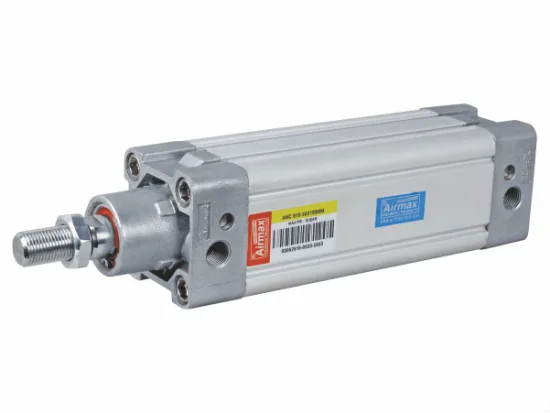
A pneumatic cylinder is a mechanical actuator that uses compressed air to create linear motion. It consists of a cylinder barrel, piston, piston rod, seals, and end caps. When compressed air enters the cylinder, it moves the piston, generating force that performs mechanical work.
Pneumatic cylinders are commonly used because they provide fast operation, simple construction, low maintenance, and reliable performance across numerous industrial applications.
What Is a Single-Acting Pneumatic Cylinder?
A single-acting pneumatic cylinder uses compressed air to move the piston in only one direction. Once the air supply is removed, an internal spring returns the piston to its original position.
Since compressed air is required for only one stroke, single-acting cylinders generally consume less air than double-acting models. Their simple construction also makes them economical for light-duty applications.
Advantages of Single-Acting Cylinders
- Lower compressed air consumption
- Simple design with fewer moving parts
- Easy installation
- Cost-effective for basic operations
- Suitable for light-load applications
Common Applications
Single-acting cylinders are frequently used in:
- Clamping systems
- Pressing operations
- Ejection mechanisms
- Door opening systems
- Simple automation equipment
What Is a Double-Acting Pneumatic Cylinder?
A double-acting pneumatic cylinder uses compressed air for both extension and retraction. Air is alternately supplied to each side of the piston, allowing complete control over movement in both directions.
Because compressed air powers both strokes, double-acting cylinders provide greater force, higher operating speed, and better control compared to single-acting designs.
Advantages of Double-Acting Cylinders
- Greater output force
- Controlled movement in both directions
- Suitable for longer strokes
- Higher productivity in automated systems
- Better performance under continuous operation
Common Applications
Double-acting cylinders are widely used in:
- Packaging machinery
- Automotive manufacturing
- Material handling systems
- Robotic automation
- Conveyor equipment
- Textile machinery
- Assembly lines
- Industrial production systems
Single-Acting vs. Double-Acting Pneumatic Cylinder
Although both cylinder types perform similar functions, they differ in several important ways.
FeatureSingle-Acting CylinderDouble-Acting CylinderAir SupplyOne directionBoth directionsReturn MovementSpring returnAir-powered returnForce OutputLowerHigherAir ConsumptionLowerHigherStroke LengthUsually shorterSuitable for long strokesSpeed ControlLimitedBetter controlApplicationsLight-duty operationsHeavy-duty automationThe best choice depends on the specific requirements of the application, including load, speed, operating conditions, and control requirements.
How to Choose the Right Pneumatic Cylinder
Selecting the correct cylinder involves more than simply choosing between single-acting and double-acting models. Consider the following factors:
Load Requirements
Determine the amount of force needed to move the load safely and efficiently.
Stroke Length
Choose a cylinder with the appropriate travel distance for the required movement.
Operating Pressure
Ensure the cylinder is compatible with the available compressed air pressure.
Mounting Arrangement
Select the proper mounting style to provide stability and accurate alignment.
Operating Environment
Consider exposure to dust, moisture, chemicals, or extreme temperatures when selecting cylinder materials and sealing options.
Working with an experienced pneumatic cylinder manufacturer can simplify this process and help ensure the cylinder is properly matched to the application.
Importance of Choosing a Reliable Pneumatic Cylinder Manufacturer
The quality of a pneumatic cylinder has a direct impact on machine performance and maintenance costs. A trusted pneumatic cylinder manufacturer focuses on precision engineering, quality materials, and strict quality control to produce cylinders that perform consistently in demanding industrial environments.
Reliable manufacturers also offer a wide range of cylinder sizes, mounting options, bore diameters, and stroke lengths to meet diverse application requirements. In addition, they provide technical support and product guidance, helping customers select the most suitable solutions for their automation systems.
Why Choose Airmax Pneumatics Ltd?
Airmax Pneumatics Ltd is a trusted pneumatic cylinder manufacturer offering a comprehensive range of pneumatic automation products for various industrial applications. The company's product portfolio includes single-acting and double-acting pneumatic cylinders, directional control valves, solenoid valves, FRL units, air preparation equipment, and other pneumatic components.
With a strong focus on quality, precision manufacturing, and dependable performance, Airmax Pneumatics Ltd delivers solutions designed to improve productivity, reduce maintenance requirements, and support efficient industrial automation. Its commitment to consistent product quality and customer satisfaction has made the company a preferred choice across multiple industries.
Conclusion
Both single-acting and double-acting cylinders have unique advantages, and the right choice depends on the demands of your application. Single-acting cylinders are ideal for simple, light-duty operations with lower air consumption, while double-acting cylinders provide greater force, improved control, and higher productivity for continuous industrial automation.
Selecting products from an experienced pneumatic cylinder manufacturer ensures reliable performance, longer service life, and better operational efficiency. By carefully evaluating application requirements and investing in quality pneumatic components from manufacturers such as Airmax Pneumatics Ltd, businesses can build automation systems that deliver dependable performance and long-term value.