You love the color. You love how your nails look. But now you are wondering, will taking this off leave your nails worse than before you started?
Introduction
This is the question that stops so many people from buying an at-home nail system. Not the price. Not the application. The removal.
Most people carry a memory of it. Long acetone soaks. Scraping. Nails that came out thin and peeling on the other side. Gel removal often involves drilling. Acrylic means foil wraps and waiting, and the nail plate pays the price each time.
So when Sistaco Reviews come up, and people ask about getting it off, that deserves a straight, factual answer pulled directly from the site.
The brand built its removal system around this exact fear. Let's look at how it works, what the formula actually contains, and what real named customers say about their nails after removal.
Why Traditional Removal Damages Nails
Salon gel removal means acetone soaking for 10 to 15 minutes, then filing or drilling. The acetone dehydrates the nail plate. Repeat every two weeks, and the damage builds, brittle nails that break before they grow. Acrylic removal is harsher still, often involving drilling or extended foil soaks.
How the Removal Process Actually Works
The brand offers two removal options, both for home use, with no salon visit needed.
Option 1: Erase Pads — exact steps from the product page:
StepActionTime1Gently buff the Top Coat surface to break the shine30 to 60 seconds2Open the Erase Pad and slide it over the finger, covering the full nailImmediate3Secure the sides together for a snug fit—4Leave the pad in place to let the formula workApprox. 5 minutes5Use the 3-in-1 nail tool to gently push off the softened manicure1 to 2 minutes6Apply the Nail Elixir to nourish and finish1 minuteThe Erase Pads are individually wrapped and pre-soaked. The formula contains acetone combined with nourishing oils. This matters; the pads do use acetone, but in a short, controlled format rather than a long open soak. That is what makes the process gentler than traditional salon removal.
Option 2: Rapid Removal Hub 3.0
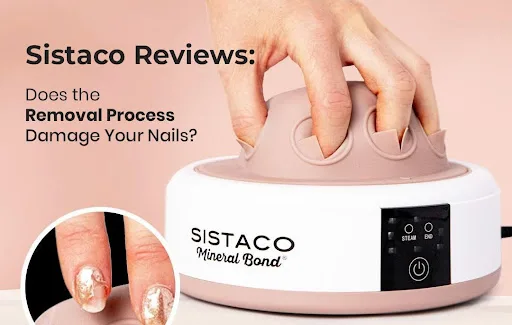
File off the top coat first. Pour 40 to 50ml of acetone onto the internal pad, heat the device, then insert your fingers into the slots and rub gently against the soaked pad. Total time is 5 to 10 minutes. No foil. No leaving hands submerged.
Both options use acetone, but the key difference from a salon soak is the short duration and the nail care built into the process.
What Real Named Customers Say
These are confirmed, named reviews from verified customers.
Kira D—
She said: The Perfect Partner For Rapid Remover, The Erase Pads work great in conjunction with the rapid remover. I find that the rapid remover sometimes doesn’t get all the color off the tips of my nails, but a few minutes with the erase pads and that last stubborn bit just slides right off!
Shannon K. O'Brien — Trustpilot, verified buyer
Shannon has tried many nail brands and says nothing comes close to this system. What stood out was not just the product quality, which she feels exceeds what the brand even promises, but the community itself. She describes it as welcoming, helpful, and like nothing else out there. She cannot recommend it enough.
Natasha
She is saying that I love them.
I have found the removal pads much better for my nails than the traditional remover. It took me a few tries to really get the hang of it, but once I did, it was a game-changer for me.
Helen S.
Erase Pads WOW
Sistaco sent me an order for Erase Pads during the Christmas period. They arrived so quickly. I’ve used them 3 times now. No mess, easy to use, leaves your fingers clean. Today I had to remove my nail color as I have to go to the hospital for tests. ( no polish on nails) It takes so little time, it’s the best you have brought out. Thank you, as the colors really last & so you don't have to remove as often as regular nail polish.
The Nail Health Picture Over Time
The most consistent theme across thousands of verified reviews is what happens to nail health over months, not just after one removal.
Every named customer above describes a version of the same outcome: nails that were weak, thin, or damaged before, growing stronger the longer they stayed with this system.
The formula needs no aggressive prep before application and no long, damaging soak for removal. The nail plate stays intact at both stages, and that is what makes the difference over time.
Sistaco Reviews: The Honest Answer
The answer, based on verified site data and real named customer accounts: the removal process does not damage nails when the steps are followed correctly.
Two things matter most:
File the top coat off first. The brand states this clearly across multiple product pages. Breaking the surface shine lets the formula penetrate and soften the powder. Skipping this is the most common reason removal takes longer than expected.
Give the pad the full five minutes. Rushing means the powder does not release cleanly. Patience is the only technique required.
The Nail Elixir at the end is not optional. It nourishes the nail plate at the exact moment it is most open to care.
Here is a simple comparison of removal methods:
MethodTimeDrillingExtended Acetone SoakNail Damage RiskSalon gel15 to 20 minSometimesYesHighAcrylic salon20 to 30 minOftenYesVery highSistaco Erase Pads6 to 8 minNoNoLowSistaco Rapid Removal Hub 3.05 to 10 minNoNoLowFinal Thoughts
The fear comes from real experience, years of methods that genuinely caused damage. What makes this different is how the process is built: a short, controlled formula with nourishing oils in the pad, a heated option for speed, and a final Elixir step that puts care back into the nail immediately after.
Thousands of verified Sistaco Reviews across Trustpilot UK, Trustpilot AU, Trustpilot CA, and the brand's own page point to the same result: nails that grew stronger and longer the more someone used this system. Not from one lucky manicure, but because the removal process protects the nail every single time.
For anyone who spent years watching salon removal thin their nails, that difference is everything.