Hospitality workers spend long hours on their feet and often work in environments where floors can become wet, greasy or contaminated with food and drinks. For chefs, kitchen staff, waiters, bar staff, cleaners and other hospitality professionals, choosing the right footwear is an important part of workplace safety.
One common question is: What is the difference between slip-resistant and non-slip shoes? While these terms are often used interchangeably, understanding what they actually mean can help hospitality workers make a more informed footwear choice.
The right shoes should provide reliable traction while also offering comfort, durability and protection for the specific conditions of the workplace.
What Are Slip-Resistant Shoes?
Slip-resistant shoes are footwear designed with outsoles that help improve traction on potentially slippery surfaces.
The outsole pattern, rubber compound and tread design can all influence how well a shoe grips the floor. Some footwear is also tested against specific substances or flooring conditions to assess its slip resistance.
This makes slip-resistant shoes particularly useful in hospitality environments where workers may encounter:
- Water and other liquids
- Cooking oils and grease
- Food spills
- Wet floors
- Cleaning products
- Smooth tiles
- Stainless steel surfaces
However, slip resistance does not mean a shoe can completely prevent every slip or fall. Workplace conditions, contamination, footwear condition and walking technique can all affect the risk.
What Does "Non-Slip" Mean?
The term non-slip shoes is widely used when describing footwear intended for slippery working environments. In practice, it generally refers to shoes designed to provide enhanced traction.
The important point is that "non-slip" should not automatically be interpreted as "impossible to slip in."
No work shoe can eliminate every slipping hazard. Even footwear with excellent traction can lose grip if the sole becomes heavily worn or encounters a substance that significantly reduces friction.
For hospitality workers, it is therefore better to look beyond marketing terminology and check the footwear's actual specifications, testing information and suitability for the intended workplace.
Slip-Resistant vs Non-Slip: Is There a Difference?
In everyday footwear terminology, there is often little practical difference between slip-resistant and non-slip. Both descriptions are commonly used to indicate shoes intended to improve traction.
"Slip-resistant" is generally the more precise term because it recognises that footwear reduces the risk of slipping rather than guaranteeing that slipping cannot occur.
When comparing shoes, hospitality workers should focus less on the label and more on measurable features and suitability.
Consider:
- Outsole material
- Tread pattern
- Slip-resistance testing
- Resistance to oils and liquids
- Durability
- Comfort
- Workplace requirements
Why Hospitality Workers Need Slip-Resistant Footwear
Hospitality workplaces present a combination of hazards that make appropriate footwear particularly important.
Wet Kitchen Floors
Water can accumulate around sinks, dishwashing areas, refrigerators and food preparation stations. A small spill can also spread across a large area when workers and equipment move through the space.
Footwear with an appropriate slip-resistant outsole can help workers maintain traction when walking across wet surfaces.
Oil and Grease
Commercial kitchens regularly use cooking oils and fats. These substances can create particularly slippery surfaces when spilled onto floors.
Workers should consider footwear designed for the specific conditions they encounter, including whether the outsole is suitable for greasy or oily environments.
Food and Drink Spills
Restaurants, cafés, bars and catering operations can experience frequent spills. A drink dropped in a dining area or food spilled in a kitchen can create a temporary slip hazard.
Quick spill management remains essential, but appropriate footwear provides an additional layer of protection.
Long Working Hours
Hospitality workers can spend most of their shift standing and walking. A typical shift may involve thousands of steps across hard flooring.
Consequently, traction isn't the only consideration. A suitable work shoe should also provide adequate cushioning, support and a comfortable fit.
What Features Should Hospitality Workers Look For?
Choosing the right work shoe involves more than selecting the most heavily traded sole.
1. Slip-Resistant Outsole
Look for a shoe specifically designed for workplace slip resistance. Examine the manufacturer's specifications and, where available, testing information.
2. Suitable Tread Pattern
The tread should provide appropriate contact with the floor while allowing liquids and contaminants to move away from the contact surface.
Deep or aggressive tread isn't automatically better. The design needs to suit the environment.
3. Oil Resistance
Kitchen workers should consider whether the footwear is designed to withstand exposure to oils and grease.
Oil-resistant construction can be particularly relevant in commercial kitchens, where cooking oils are routinely used.
4. Comfortable Fit
Shoes that fit poorly can cause discomfort during long shifts. Workers should select the correct size and consider the width, cushioning and overall shape of the footwear.
5. Easy-to-Clean Materials
Hospitality footwear can be exposed to food, grease, sauces and cleaning products. Easy-to-clean materials can make maintaining workplace hygiene more manageable.
6. Secure Fastening
A secure fit helps prevent the shoe from moving excessively while walking, turning or working quickly.
Depending on the workplace, workers may choose traditional laces, elastic systems or other fastening designs.
7. Durability
Hospitality shoes can experience considerable daily wear. Look for durable uppers, reinforced construction and outsoles designed for regular workplace use.
Are Running Shoes Suitable for Hospitality Work?
A common mistake is wearing ordinary athletic shoes because they feel comfortable.
Running shoes may provide cushioning and flexibility, but they are not necessarily designed for commercial kitchen or hospitality environments.
Their outsole may not provide the traction required for wet, greasy floors, and their materials may not be appropriate for frequent exposure to food and cleaning chemicals.
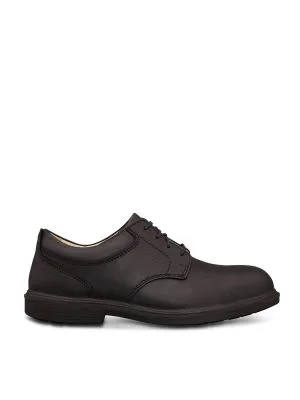
A purpose-designed hospitality work shoe can provide features more closely suited to the workplace.
How Can Workers Reduce Slipping Risks?
Footwear is only one part of slip prevention.
Hospitality businesses should also maintain effective housekeeping and workplace safety practices.
Workers can help reduce risks by:
- Cleaning spills promptly
- Using appropriate warning signs around wet areas
- Keeping walkways clear
- Following workplace cleaning procedures
- Replacing heavily worn footwear
- Checking soles regularly
- Walking carefully on contaminated surfaces
- Wearing footwear appropriate for the work environment
Even the best slip-resistant shoes cannot compensate for an uncontrolled spill or poorly maintained floor.
When Should You Replace Your Work Shoes?
The effectiveness of a work shoe can decrease as its outsole wears down.
Inspect your footwear regularly for:
- Worn tread
- Cracked soles
- Separation between the sole and upper
- Damaged materials
- Reduced cushioning
- Uneven wear
If the tread has become significantly worn, the shoe may no longer provide the traction it was designed to deliver.
Hospitality workers who spend long hours on their feet should also pay attention to changes in comfort and support.
Frequently Asked Questions
Are slip-resistant and non-slip shoes the same?
They are commonly used to describe similar types of workplace footwear. "Slip-resistant" is generally a more accurate description because no shoe can guarantee that a wearer will never slip.
Are non-slip shoes necessary for kitchen workers?
Kitchen workers frequently encounter water, grease, food and other substances that can make floors slippery. Footwear designed for improved traction can therefore be an important part of workplace safety.
Are slip-resistant shoes completely slip-proof?
No. Slip-resistant footwear is designed to improve traction under specified conditions, but slipping can still occur depending on the surface, contamination, footwear condition and other factors.
How often should hospitality workers replace their shoes?
There is no universal replacement period. Inspect footwear regularly and replace it when the sole, tread, cushioning or other components show significant deterioration.
Final Thoughts
For hospitality workers, the choice between "slip-resistant" and "non-slip" shoes is less important than understanding what the footwear is actually designed to do.
Workers should look for shoes with appropriate traction, a suitable outsole, good comfort, durable construction and features that match their workplace. Those working in commercial kitchens should also consider exposure to water, oils and grease.
Most importantly, slip-resistant footwear should be combined with good housekeeping and workplace safety practices. Keeping floors clean and dealing with spills promptly remains essential.
For anyone working long shifts in restaurants, cafés, commercial kitchens, bars or catering environments, investing in properly designed hospitality footwear can provide the combination of traction, comfort and durability needed for demanding working conditions.