
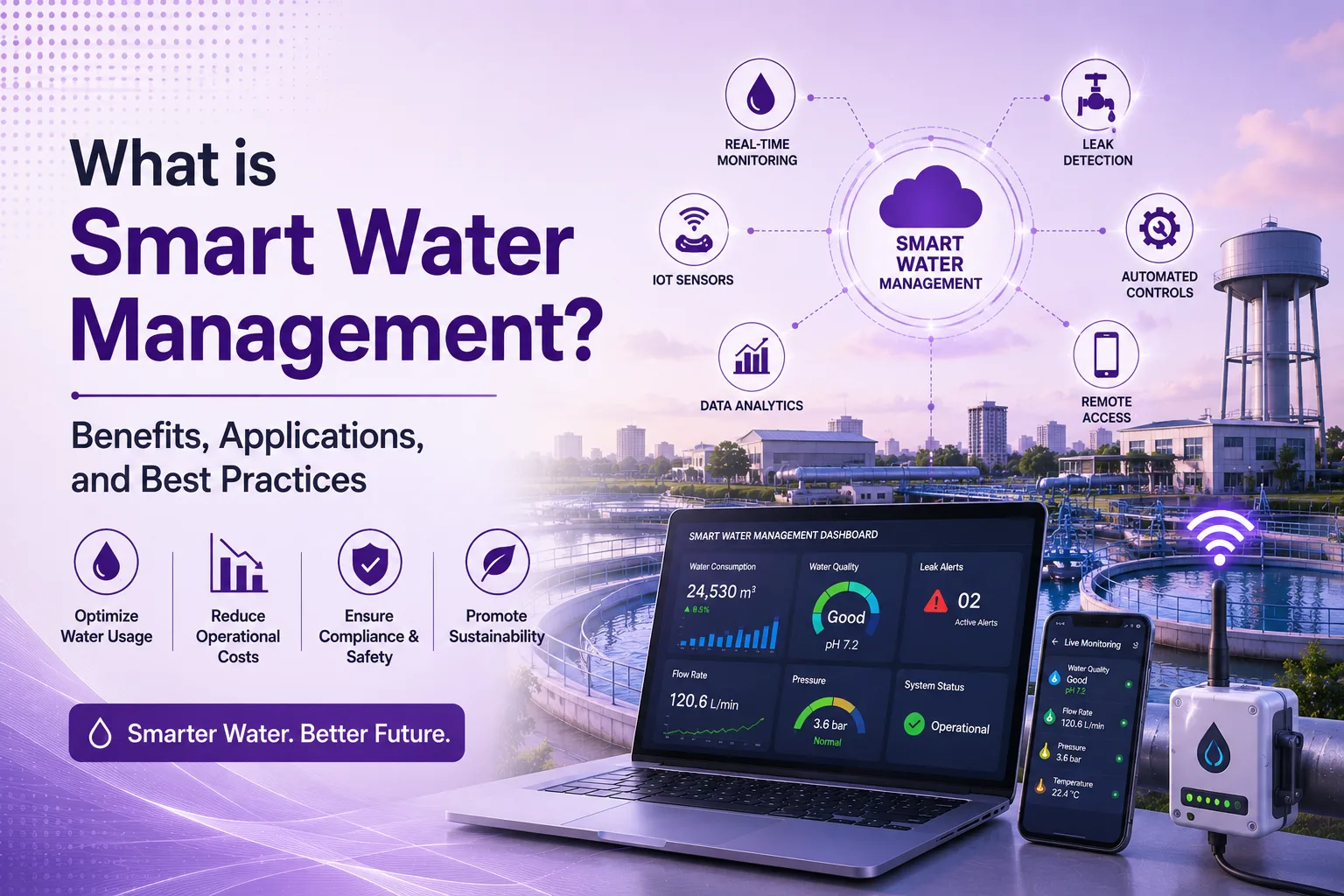
Water is one of the most essential natural resources, supporting homes, industries, agriculture, and communities around the world. As water demand continues to increase, managing this valuable resource efficiently has become more important than ever. Smart Water Management is transforming the way organizations monitor, control, and optimize water usage by combining advanced IoT technology with real-time data. This modern approach helps reduce water waste, improve operational efficiency, detect problems early, and support long-term sustainability.
Why Efficient Water Management Matters
Water plays a critical role in almost every industry. Manufacturing plants use it for production, agriculture depends on it for irrigation, healthcare facilities require it for sanitation, and commercial buildings need it for daily operations.
Despite its importance, many organizations still face challenges such as water leaks, inefficient distribution, excessive consumption, and outdated monitoring systems. These issues not only increase operating costs but also contribute to the growing problem of water scarcity.
Efficient water management allows organizations to make better use of available resources while reducing waste and improving overall performance.
The Role of IoT in Water Management
The Internet of Things (IoT) connects physical devices through the internet, allowing them to collect, share, and analyze data automatically.
In water management, IoT enables continuous monitoring of water systems without requiring constant human intervention. Sensors installed throughout the infrastructure collect information about water flow, pressure, storage levels, and equipment performance.
This information is transmitted to centralized platforms where it can be analyzed in real time. Operators receive instant alerts whenever unusual conditions occur, allowing them to respond quickly and minimize potential losses.
How IoT Improves Water Efficiency
Traditional monitoring methods rely heavily on manual inspections, which can delay the identification of problems.
IoT technology provides continuous visibility into water systems, enabling organizations to monitor their infrastructure around the clock.
Real-time information helps maintenance teams detect leaks, identify equipment failures, monitor water consumption, and optimize system performance without waiting for routine inspections.
This proactive approach significantly improves operational efficiency while reducing unnecessary water loss.
Key Components of an Intelligent Water Monitoring System
Several technologies work together to improve water management.
Water Level Sensors
These sensors continuously measure water levels in tanks, reservoirs, and storage facilities. They help prevent overflow while ensuring sufficient water availability.
Flow Sensors
Flow sensors monitor the amount of water moving through pipelines. They help identify abnormal flow patterns that may indicate leaks or blockages.
Pressure Sensors
Pressure monitoring helps maintain consistent water distribution while detecting pressure drops that could signal damaged pipelines.
Water Quality Monitoring
Water quality sensors measure parameters such as pH, temperature, turbidity, and contamination levels to ensure safe water distribution.
Automated Controllers
Automated controllers manage pumps and valves based on real-time conditions, reducing manual intervention and improving efficiency.
Cloud-Based Monitoring Platforms
Cloud platforms store operational data securely while providing users with remote access to dashboards, reports, and alerts.
Benefits of IoT-Based Water Management
Reduces Water Waste
Continuous monitoring helps identify leaks and excessive water usage before they become major problems.
Early detection allows maintenance teams to fix issues quickly, reducing water loss and conserving valuable resources.
Improves Operational Efficiency
Automation eliminates many manual monitoring tasks, allowing organizations to operate more efficiently.
Employees can focus on maintenance and strategic planning instead of routine inspections.
Lowers Operational Costs
Efficient water management reduces expenses related to water consumption, electricity usage, maintenance, and emergency repairs.
Organizations benefit from improved profitability through better resource utilization.
Supports Better Decision-Making
Access to real-time and historical data enables managers to make informed decisions about maintenance schedules, resource planning, and future infrastructure improvements.
Data-driven decisions improve both operational performance and long-term planning.
Enhances Sustainability
Reducing water waste helps preserve natural resources while lowering the energy required for water treatment and distribution.
Efficient operations contribute to environmental protection and support corporate sustainability initiatives.
Applications Across Different Industries
Manufacturing
Factories require large quantities of water for production, cleaning, and cooling processes. Intelligent monitoring helps reduce water consumption while improving productivity.
Agriculture
Farmers can optimize irrigation schedules by monitoring soil moisture, weather conditions, and water availability, resulting in healthier crops and lower water usage.
Commercial Buildings
Hotels, office buildings, shopping malls, and educational institutions benefit from automated monitoring that reduces water bills and simplifies facility management.
Healthcare
Hospitals depend on reliable water supplies for sanitation, patient care, laboratories, and medical equipment. Continuous monitoring ensures uninterrupted operations.
Municipal Water Utilities
Water authorities use digital monitoring systems to detect pipeline leaks, improve water distribution, and reduce non-revenue water losses across cities.
Smart Cities
Urban infrastructure increasingly relies on connected technologies to improve public services. Intelligent water monitoring supports efficient resource management and enhances city operations.
Challenges Solved by IoT
Many traditional water management systems struggle with delayed maintenance and limited visibility into daily operations.
IoT helps overcome these challenges by providing:
- Continuous monitoring
- Instant leak detection
- Automated alerts
- Remote system management
- Accurate consumption tracking
- Faster maintenance response
- Better infrastructure planning
These capabilities help organizations improve service reliability while reducing operational risks.
The Future of Water Management
Technology continues to reshape how organizations manage water resources.
Artificial intelligence, predictive analytics, machine learning, and cloud computing are making water systems more intelligent than ever before.
Future innovations will provide even greater accuracy, faster fault detection, predictive maintenance, and improved automation.
As digital transformation continues across industries, connected water management solutions will become an essential part of sustainable infrastructure.
Businesses that invest in these technologies today will be better prepared for future environmental challenges and increasing water demand.
Why Choose Karikala?
Implementing a reliable IoT solution requires experience, innovation, and technical expertise. Karikala delivers advanced IoT solutions that help businesses monitor water usage, detect leaks, automate operations, and improve overall efficiency.
With scalable technology, real-time monitoring capabilities, and customized solutions, Karikala supports industries including manufacturing, agriculture, healthcare, commercial buildings, and smart infrastructure projects. Their intelligent IoT solutions help organizations reduce water waste, improve operational performance, and achieve long-term sustainability goals.
Final Thoughts
Efficient water management has become essential for organizations seeking to reduce costs, improve operational performance, and protect valuable natural resources. IoT technology is making it possible to monitor water systems more accurately, detect problems earlier, and optimize resource usage through real-time data and automation. Businesses that embrace these modern technologies today will be better equipped to build sustainable and resilient operations for the future.