
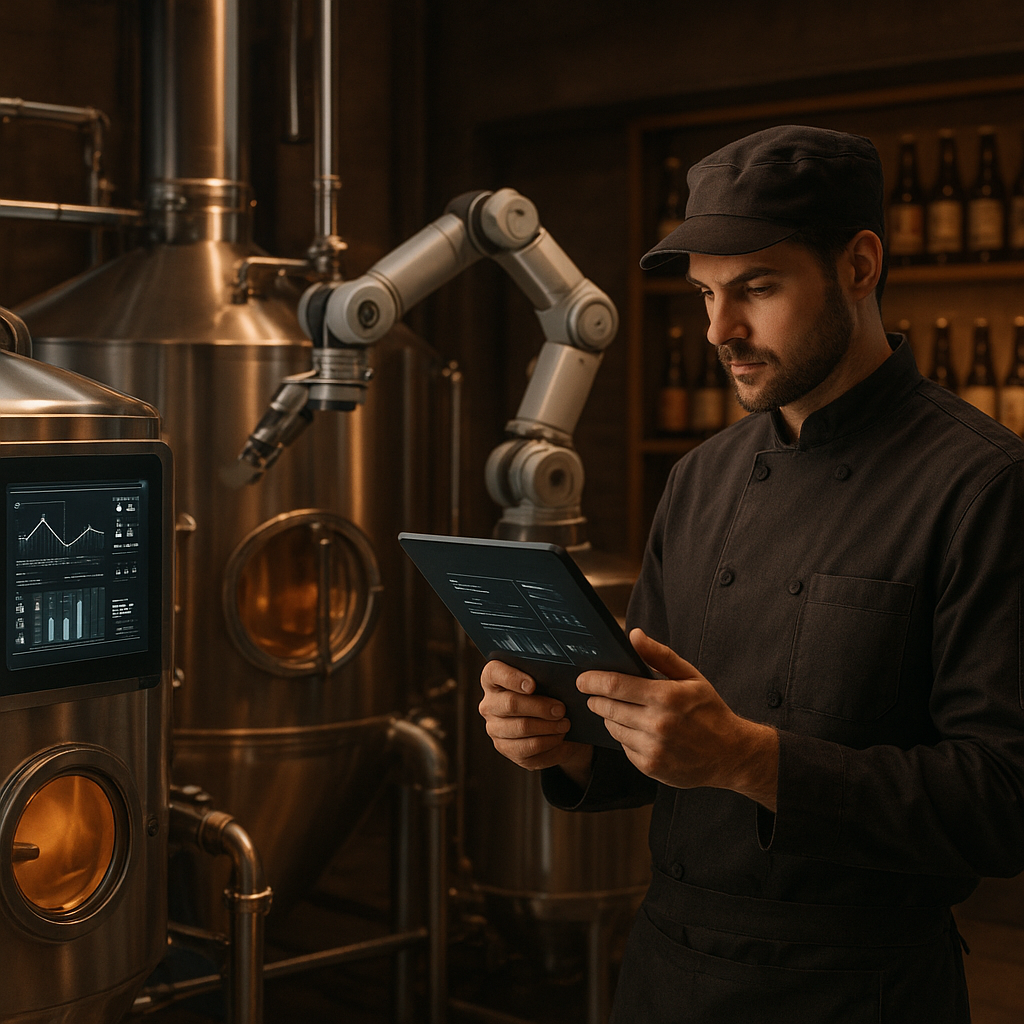
From Tradition to Transformation: A Brewing Revolution Begins
In the heart of Spain’s northern region, where centuries-old brewing traditions intertwine with a modern zeal for innovation, one leading brewing company is rewriting the rules on how technology can steer business strategy. This company, which has long been a staple in Spanish households, now stands at the forefront of digital transformation in the beverage sector. While brewing itself is an ancient craft, the integration of cutting-edge tech in production, marketing, and supply chain management has catapulted this company into a new era of strategic agility and competitive advantage.
Picture a sprawling brewery in La Rioja, where sensors embedded in fermentation tanks continuously relay data on temperature, yeast activity, and humidity to AI-powered dashboards. This is not just automation; it is strategic foresight in action. Behind the scenes, data scientists, marketing strategists, and operations managers collaborate in real time, interpreting streams of data to make decisions that affect everything from inventory levels to consumer engagement. This blend of tradition and technology is why the company’s market share in Spain’s fiercely competitive beer market has grown by over 15% in the past two years alone, according to industry analysts.
“Our goal was never to replace the human touch in brewing but to amplify our decision-making capabilities with data and technology,” explains the company’s Chief Digital Officer. “Technology is our lens to understand consumers better, optimize operations, and innovate faster.”
This opening snapshot sets the stage to explore how a prominent Spanish brewing company has leveraged technology not merely as a tool but as a strategic compass guiding its business decisions in 2026.
Evolution of a Spanish Brewing Giant: Setting the Context
To appreciate the current technological leap, understanding the company’s historical trajectory is essential. Founded in the late 19th century, the brewery grew through traditional methods, family ownership, and a strong regional identity. For decades, its strategy focused on product quality and regional loyalty, which served well in a fragmented Spanish market. However, the 2010s brought rising competitive pressures from international brewers, changing consumer tastes favoring craft beers, and a growing demand for sustainability.
By 2020, the company recognized that survival required more than brewing mastery—it demanded digital transformation. Early adoption of Enterprise Resource Planning (ERP) systems paved the way for an integrated data environment. But it was the strategic decision in 2022 to implement advanced analytics and IoT (Internet of Things) devices that marked a turning point. This was not just about digitizing existing processes but reimagining the entire value chain—from raw material sourcing to consumer experience.
Corporate reports from 2023 reveal investments exceeding €50 million in digital infrastructure, including partnerships with Spanish tech startups specializing in AI and blockchain. The company also embraced sustainability metrics tracked digitally to meet increasing regulatory and consumer demands.
“The brewing industry in Spain was ripe for disruption, and we saw technology as the way to scale our heritage while adapting to modern market forces,” said the CEO in a 2024 interview, emphasizing the forward-looking mindset.
Decoding the Data: How Tech Drives Strategic Decisions
At the core of the company’s transformation lies a sophisticated data ecosystem. Using IoT sensors installed throughout production lines, the company collects millions of data points daily. These data feed into AI models that forecast demand with high accuracy, reduce waste, and optimize energy consumption—a critical factor as the brewing process is energy-intensive.
For instance, fermentation tanks equipped with smart sensors monitor real-time biochemical changes. These insights enable brewers to adjust variables proactively, reducing batch failures by 20%, according to internal metrics. Moreover, this technology allows for experimentation with new recipes, shortening product development cycles by 30%, a significant competitive edge in the craft beer segment.
- Demand Forecasting: AI algorithms analyze historical sales, weather patterns, and social media trends to predict regional demand fluctuations.
- Supply Chain Optimization: Blockchain technology tracks raw material provenance, ensuring quality and transparency for consumers increasingly focused on sustainability.
- Consumer Insights: Data analytics platforms aggregate customer feedback from digital channels, helping tailor marketing campaigns and product offerings.
- Energy Management: Smart meters optimize electricity and water use, supporting the company’s commitment to carbon neutrality by 2030.
Furthermore, the company employs machine learning to analyze sales data across various channels—supermarkets, bars, and e-commerce—allowing marketing teams to identify underperforming products and pivot strategies swiftly. This level of responsiveness was unimaginable in the pre-digital era.
“Our technology doesn’t replace intuition but complements it, giving us a panoramic view of operations and market dynamics,” says the Head of Data Science.
2026 Breakthroughs: Current Innovations and Market Impact
In 2026, the company is pioneering several new tech-driven initiatives that deepen the integration of digital strategy and brewing tradition. One notable development is the launch of a fully automated “smart brewery” pilot facility in Barcelona, leveraging robotics for bottling and packaging alongside AI-guided quality control. This facility has increased throughput by 25% while maintaining product consistency.
Additionally, the company has embraced augmented reality (AR) for consumer engagement. Through an AR app, customers can scan a beer bottle to access interactive storytelling about the brew’s origin, ingredients, and brewing process. This immersive experience has boosted brand loyalty among younger demographics, with user engagement metrics showing a 40% increase year-over-year.
On the sustainability front, the company’s real-time environmental monitoring system uses satellite data and AI to optimize water usage in barley farming. This project, in collaboration with local farmers, has reduced water consumption by 15% while improving crop yields, positioning the company as a leader in sustainable brewing practices in Spain.
- Robotics Integration: Automated lines reduce manual errors and increase efficiency.
- AR Consumer Engagement: Interactive experiences create deeper brand connections.
- Precision Agriculture: AI-driven water management supports environmental goals.
- Carbon Footprint Transparency: Blockchain tracks emissions across the supply chain.
The company’s ability to marry these technological advances with its rich heritage has not only strengthened domestic market dominance but also fueled expansion into international markets, particularly in Latin America and the European Union.
Expert Insights: Industry Perspectives on Tech-Driven Brewing Strategy
Industry experts recognize the Spanish brewery’s approach as emblematic of a broader shift in the beverage sector. According to a leading analyst at a European market research firm, “What sets this company apart is its comprehensive integration of technology—from production and supply chain to marketing and sustainability—creating a holistic strategy that others are now emulating.”
Consultants specializing in digital transformation highlight the brewery’s success in balancing automation with artisanal values, a challenge many traditional food and beverage companies face. The company’s investment in talent development, including hiring data scientists and digital strategists, is often cited as a critical factor in sustaining innovation momentum.
Moreover, sustainability experts applaud the company’s transparent reporting practices made possible through blockchain, which provides consumers and regulators with verifiable data on environmental impact.
“Incorporating blockchain for sustainability reporting isn’t just compliance; it’s building trust in a market that increasingly values transparency,” notes a sustainability advisor working with European brewers.
These perspectives underscore how technological innovation in brewing is now inseparable from strategic business imperatives such as brand differentiation, operational excellence, and environmental stewardship.
Looking Ahead: Strategic Lessons and Future Opportunities
As the company continues to evolve, several key takeaways emerge for businesses aiming to harness technology for strategic advantage. First, embedding technology deeply within core operations—not just as an add-on—creates transformative potential. This brewery’s journey from ERP adoption to AI-powered decision-making illustrates a stepwise, integrated approach to digital maturity.
Second, aligning technology investments with sustainability goals is not only ethically sound but also commercially beneficial. The company’s progress toward carbon neutrality and resource efficiency resonates with increasingly eco-conscious consumers and regulators.
Third, leveraging data to enhance customer experience through personalization and storytelling can significantly boost brand loyalty. Augmented reality initiatives represent a new frontier in connecting tradition with digital engagement.
- Invest in cross-disciplinary teams combining brewing expertise with data science.
- Prioritize transparency and sustainability in tech-driven strategies.
- Explore immersive technologies to deepen consumer relationships.
- Use predictive analytics to stay agile amid market fluctuations.
Looking forward, the company is exploring AI-driven product innovation labs that will simulate consumer preferences before physical production, potentially revolutionizing new beer development. Additionally, expansion of blockchain use across the supply chain aims to create a fully traceable, circular brewing ecosystem.
For companies in the beverage industry and beyond, the Spanish brewery’s experience offers a compelling blueprint for marrying heritage with innovation, demonstrating that technology, when thoughtfully deployed, can be the compass guiding sustainable growth and competitive differentiation.
For a deeper understanding of how digital innovation is transforming Spanish brewing, readers can explore our detailed coverage in How Digital Innovation Is Brewing Success at a Spanish Beer Giant and Brewing Innovation: How a Spanish Company Turns Tech into Strategy Gold.