
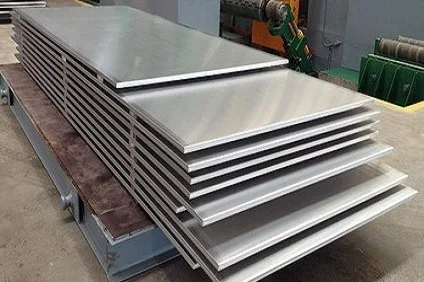
Stainless Steel 309 Plates
Stainless Steel 309 Plates are austenitic stainless steel products developed for industrial applications that require good corrosion resistance and reliable performance in elevated-temperature environments. The grade is widely considered for furnace equipment, heat-treatment systems, petrochemical facilities, power-generation equipment, thermal processing units, and other engineering applications exposed to heat and oxidation. Its chromium and nickel alloying provides a combination of corrosion resistance, thermal stability, and fabrication characteristics suitable for demanding industrial service.
The material can be supplied in different plate dimensions, thicknesses, surface finishes, and cutting conditions according to project requirements. Buyers may require standard plates, cut-to-size plates, or customized dimensions for fabrication and equipment manufacturing. AM Industries supplies stainless steel products for industrial requirements and supports customers with product selection, specifications, inspection documentation, and domestic or international supply.
Stainless Steel 309 Plate Standards and Specifications
Stainless Steel 309 Plates are commonly supplied according to internationally recognized product standards. ASTM A240 is an important specification associated with chromium and chromium-nickel stainless steel plate, sheet, and strip intended for pressure-vessel and general applications. ASME SA240 is the corresponding ASME specification frequently referenced for pressure-vessel and related applications.
Depending on the project, buyers may also specify requirements relating to dimensions, tolerances, surface condition, heat treatment, inspection, testing, marking, and certification. The purchasing specification should clearly identify the required grade and applicable standard before production or supply.
Stainless Steel 309 is commonly identified with UNS S30900, while EN 1.4828 is a designation associated with a related high-temperature stainless steel grade. Buyers should verify the exact equivalent required by the project specification rather than assuming that international designations are automatically interchangeable.
Types of Stainless Steel 309 Plates
The appropriate plate type depends on the fabrication process, equipment design, dimensional requirements, and intended service environment. Stainless steel plates may be supplied in standard mill dimensions or processed into specific sizes for downstream fabrication.
Common supply forms include:
- Hot rolled stainless steel plates
- Cut-to-size plates
- Heavy stainless steel plates
- Industrial stainless steel plates
- Custom-sized plates
- Plates supplied with specified surface finishes
The required thickness, width, length, edge condition, surface finish, tolerance, and quantity should be specified when requesting a quotation. This helps suppliers determine the most appropriate material and processing route.
Sizes, Dimensions and Surface Finish
Stainless Steel 309 Plates can be supplied in different thicknesses and dimensions depending on manufacturing capability and stock availability. For fabrication projects, buyers may request full-size plates or plates cut according to engineering drawings.
Dimensional requirements can include:
- Plate thickness
- Plate width
- Plate length
- Cut dimensions
- Dimensional tolerance
- Flatness
- Edge condition
- Surface finish
Surface condition is another important purchasing consideration. Depending on the application, buyers may specify a suitable mill finish or additional processing to meet fabrication and appearance requirements.
For custom requirements, providing the complete dimensional schedule at the inquiry stage allows the supplier to confirm feasibility, availability, and processing requirements more efficiently.
Features and Advantages
Stainless Steel 309 is particularly valued for applications involving elevated temperatures and oxidizing conditions. Its alloy design provides useful resistance to scaling and oxidation while retaining the characteristics expected from an austenitic stainless steel.
Important advantages include:
- Good high-temperature oxidation resistance
- Good resistance to many corrosive environments
- Suitable for thermal processing applications
- Good fabrication characteristics
- Suitable for welding with appropriate procedures
- Good durability in demanding industrial conditions
- Availability in different plate sizes
- Suitable for fabricated industrial equipment
- Useful performance during elevated-temperature service
Actual performance depends on the operating environment, temperature, exposure conditions, fabrication method, and design requirements. Material selection should therefore be based on the complete service conditions rather than grade name alone.
Manufacturing Process
Manufacturing Stainless Steel 309 Plates begins with controlled melting of stainless steel raw materials and alloying elements. The composition is carefully controlled during steelmaking to achieve the required grade specification.
After refining and casting, the material is processed through rolling operations to achieve the required plate dimensions. Hot rolling is commonly used for producing plate products, followed by appropriate heat treatment and surface processing when required by the product specification.
Further operations can include descaling, straightening, cutting, edge preparation, surface finishing, and dimensional inspection. Additional testing may be performed according to the purchaser's requirements or applicable standard.
For customized plates, cutting and finishing operations can be performed after the basic plate has been manufactured. Proper identification and traceability should be maintained throughout the processing stages.
Industrial Applications
Stainless Steel 309 Plates are used in industries where resistance to heat, oxidation, and industrial corrosion is important. The grade is particularly suitable for components exposed to elevated operating temperatures.
Typical applications include:
- Furnace components
- Industrial ovens
- Heat-treatment equipment
- Heat exchangers
- Petrochemical processing equipment
- Chemical processing equipment
- Power-generation equipment
- Thermal processing systems
- Kiln components
- Combustion equipment
- High-temperature fabrication
- Exhaust and thermal-system components
The material may also be selected for fabricated structures and equipment where both stainless steel corrosion resistance and high-temperature capability are required.
Furnace and Heat-Treatment Applications
One of the important application areas for Stainless Steel 309 is thermal processing equipment. Furnace components can experience continuous exposure to elevated temperatures and oxidizing atmospheres, making material selection particularly important.
The plates can be fabricated into furnace structures, supports, trays, panels, heat shields, and other components depending on the equipment design. The actual operating temperature and atmosphere should always be evaluated before final grade selection.
Petrochemical and Chemical Processing Applications
Petrochemical and chemical processing equipment can encounter combinations of elevated temperatures, process chemicals, pressure, and corrosive environments. Stainless Steel 309 may be considered for suitable equipment and components where its corrosion and high-temperature characteristics meet the service requirements.
Applications can include fabricated equipment, thermal-processing components, process-system parts, and other industrial structures. The exact suitability depends on the chemicals involved, concentration, temperature, pressure, and exposure duration.
Welding and Fabrication
Stainless Steel 309 can be fabricated using appropriate stainless steel welding and forming practices. Welding procedures should be selected based on plate thickness, joint design, service conditions, and applicable fabrication codes.
Proper surface preparation is important before welding. Contaminants, embedded iron particles, oils, and other foreign materials should be removed to help maintain the expected stainless steel surface condition.
For critical industrial equipment, welding procedures, filler materials, preheating requirements, heat input, and post-weld treatment should be determined by qualified fabrication personnel according to the applicable project requirements.
Testing and Quality Inspection
Quality inspection helps ensure that supplied plates comply with the purchaser's requirements. The scope of testing depends on the applicable material specification, application, and purchase order.
Inspection may include:
- Visual inspection
- Dimensional inspection
- Surface inspection
- Positive Material Identification
- Ultrasonic testing where specified
- Tensile testing where required
- Hardness testing where required
- Chemical verification
- Heat number verification
- Certificate review
- Third-party inspection where specified
Mill Test Certificates can be supplied when required to provide information about material identification, applicable specification, heat number, and test results. Buyers should communicate documentation and inspection requirements before order confirmation.
Factors Affecting Stainless Steel 309 Plate Price
The price of Stainless Steel 309 Plates depends on several commercial and technical factors. Material availability, plate dimensions, thickness, quantity, manufacturing condition, surface finish, testing requirements, and market conditions can all influence the final quotation.
Additional processing such as cutting, special finishing, inspection, packaging, and third-party certification can also affect the overall cost. International orders may involve additional expenses associated with export packaging, freight, documentation, and destination requirements.
For an accurate quotation, buyers should provide the grade, applicable standard, required dimensions, quantity, testing requirements, delivery location, and any special documentation requirements.
Stainless Steel 309 Plates Manufacturers
Experienced Stainless Steel 309 Plates Manufacturers can supply material according to defined technical specifications and project requirements. Buyers should provide complete details concerning grade, standard, dimensions, quantity, surface finish, inspection, and certification.
A capable manufacturer can also support customized cutting and fabrication-related requirements where suitable. For industrial projects, traceability and documentation are important considerations when evaluating a manufacturing source.
Stainless Steel 309 Plates Suppliers
Stainless Steel 309 Plates Suppliers support customers requiring stainless steel plate products for fabrication, engineering, maintenance, and industrial equipment. Suppliers may provide standard sizes as well as customized dimensions based on availability and processing capability.
Before placing an order, purchasers should verify the material specification, dimensions, quantity, certification requirements, and expected delivery schedule. Clear technical information helps reduce errors during procurement.
Stainless Steel 309 Plates Stockists
Stainless Steel 309 Plates Stockists maintain inventory for customers who require readily available material for industrial and fabrication requirements. Stock-based procurement can be useful for maintenance work, replacement requirements, shutdown projects, and smaller fabrication orders.
Availability can vary according to thickness, dimensions, quantity, and market demand. Buyers requiring specific dimensions should provide a complete material schedule so available inventory can be checked against the requirement.
Stainless Steel 309 Plates Exporters
Stainless Steel 309 Plates Exporters supply material to international customers according to agreed technical, commercial, packaging, and documentation requirements. Export orders require appropriate material identification and protection during transportation.
Depending on the destination and purchase agreement, export documentation may include commercial invoices, packing lists, certificates of origin, inspection certificates, and Mill Test Certificates. Packaging should be selected to protect the plates from handling damage and environmental exposure during transit.
Stainless Steel 309 Plates Manufacturers in India
Stainless Steel 309 Plates Manufacturers in India serve engineering, fabrication, petrochemical, chemical, power-generation, thermal-processing, and other industrial sectors. Indian sources can support requirements ranging from standard plate dimensions to customized cutting and project-specific inspection requirements.
When selecting a manufacturing source, purchasers should consider product quality, manufacturing capability, inspection facilities, traceability, documentation, delivery capability, and compliance with the required specification.
Stainless Steel 309 Plates Suppliers in India
Stainless Steel 309 Plates Suppliers in India provide material for domestic industrial projects, fabrication requirements, maintenance applications, and equipment manufacturing. Supply can be arranged according to the required grade, standard, dimensions, quantity, and inspection requirements.
Buyers can improve quotation accuracy by providing complete technical details at the inquiry stage. This includes thickness, width, length, quantity, surface finish, standard, testing requirements, and delivery schedule.
Stainless Steel 309 Plates Stockists in India
Stainless Steel 309 Plates Stockists in India can help customers source available material for urgent or scheduled industrial requirements. Stockists may maintain different dimensions and thicknesses depending on demand and inventory.
For critical applications, buyers should verify material identification, heat number, certification, dimensions, and applicable inspection documentation before using the plates in fabrication.
Stainless Steel 309 Plates Exporters in India
Stainless Steel 309 Plates Exporters in India support overseas industrial customers with material prepared according to agreed specifications. Export supply may include dimensional processing, inspection, marking, protective packaging, and documentation as required by the buyer.
AM Industries supports industrial metal requirements with stainless steel products for domestic and international customers. Buyers can discuss grade requirements, dimensions, quantities, inspection requirements, documentation, and delivery arrangements when sourcing Stainless Steel 309 Plates.
Packaging and Delivery
Proper packaging is important for maintaining plate condition during handling, storage, and transportation. Stainless steel plates should be protected against unnecessary surface damage, contamination, and adverse handling conditions.
Depending on the order, packaging can be arranged according to the shipment method and buyer requirements. Export consignments may require stronger protective packaging and specific marking or labeling instructions.
Delivery schedules depend on stock availability, processing requirements, order quantity, inspection scope, and destination. Buyers should confirm the expected lead time before finalizing the purchase order.
Frequently Asked Questions
What are Stainless Steel 309 Plates used for?
They are used in furnace components, heat-treatment equipment, thermal processing systems, petrochemical equipment, power-generation applications, heat exchangers, and other applications requiring resistance to elevated temperatures and oxidation.
Is Stainless Steel 309 suitable for high-temperature applications?
Yes. Stainless Steel 309 is commonly selected for elevated-temperature applications because of its high chromium and nickel content and its useful resistance to oxidation and scaling.
What standard is commonly used for Stainless Steel 309 Plates?
ASTM A240 is commonly referenced for stainless steel plate, sheet, and strip products of chromium and chromium-nickel grades. ASME SA240 may be specified for applicable pressure-vessel and related applications.
Can Stainless Steel 309 Plates be cut to size?
Yes. Plates can be supplied in standard dimensions or processed into customized sizes depending on the supplier's capabilities and the customer's requirements.
What factors affect the price of Stainless Steel 309 Plates?
Price can depend on plate thickness, dimensions, quantity, availability, surface finish, cutting requirements, testing, certification, packaging, freight, and prevailing stainless steel market conditions.
Are Stainless Steel 309 Plates available for export?
Yes. Stainless steel plate products can be supplied for international projects subject to the required specifications, inspection, packaging, documentation, and shipping arrangements.
What information should be provided when requesting a quotation?
Buyers should provide the grade, applicable standard, thickness, width, length, quantity, surface finish, testing requirements, certification requirements, delivery location, and any special packaging instructions.
Where can Stainless Steel 309 Plates be used?
They can be used in furnace and heat-treatment equipment, petrochemical and chemical processing, power generation, thermal processing, industrial ovens, heat exchangers, and other suitable high-temperature engineering applications.
Stainless Steel 309 Plate Supply from AM Industries
AM Industries supplies stainless steel products for industrial, engineering, fabrication, and process-equipment requirements. Stainless Steel 309 Plates can be sourced according to required dimensions, standards, quantities, inspection requirements, and documentation. Customers can provide their technical specifications to discuss suitable material availability, customized sizes, testing requirements, packaging, and domestic or export supply.