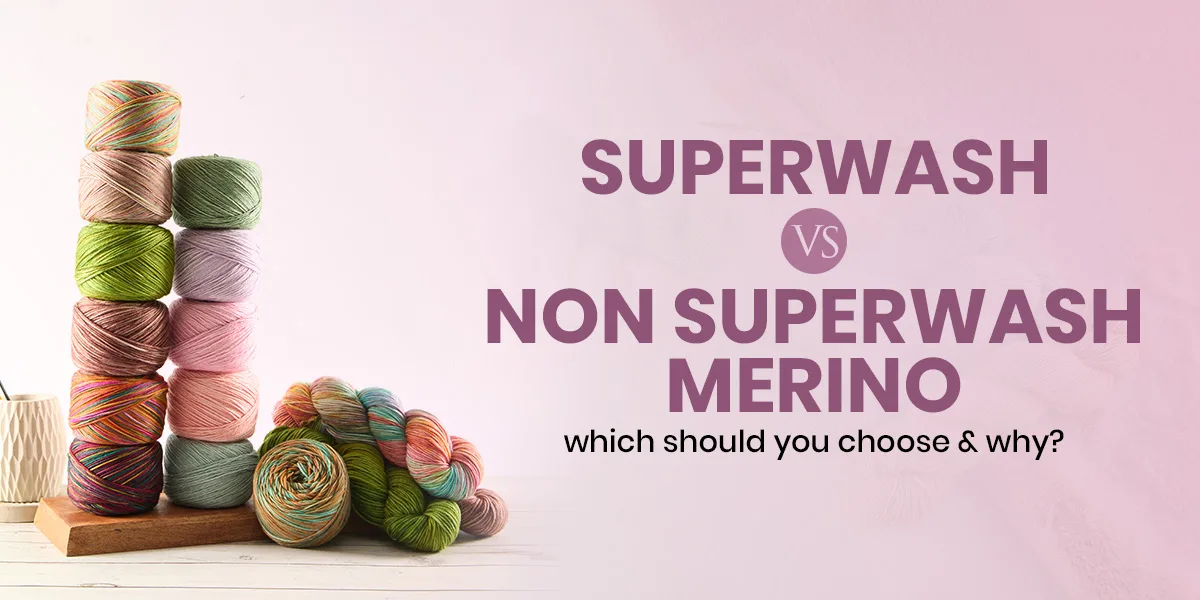
You pull a hand-knit sweater out of the wash, and it's the size of a doll's top. We've all been there or know someone who has. That single moment is why the superwash question matters. If you are new to knitting or crocheting, these terms do not matter. But if you've ever accidentally felted a beautiful hand-knit sweater in the wash, you'll know exactly why this distinction is crucial.
Let's break it down clearly and understand the terms.
Firstly, What is Merino Wool?
Merino is a breed of sheep known for producing some of the finest, softest wool in the world. Regular wool can feel scratchy against the skin; Merino fibres are much thinner, generally under 21.5 microns, making them feel smooth and comfortable even for people with sensitive skin, especially for babies.
However, when you see extrafine wool yarn on a label, it usually refers to Merino fibres measuring 18.5 microns or finer. This is the finest grade available, incredibly soft, with a drape that moves with the body rather than against it, and gentle enough to wear directly against the skin. Extrafine Merino is used in everything from luxury baby garments to next-to-skin base layers, and it's highly recommended by crafters.
But here's where it gets interesting — not all Merino is treated equally.
What Does "Superwash" Mean?
Wool fibers have tiny scales on their surface- a bit like scales on a fish, much smaller. When wool gets wet, those scales lock together and cause the fibres to shrink and mat. That's how you get a tiny, bobbly, ruined sweater.
Superwash Merino wool yarns are treated to remove or coat those scales so the fibres can't interlock. The result? A yarn that can go through a regular washing machine without felting or shrinking dramatically.
The treatment is done in two ways:
- Acid etching helps in stripping the scales from the fibre.
- Polymer coating covers the scales with a resin so they can't grip each other.
Let's analyse how both methods work:
AspectsAcid etching Polymer coating How it works Strips scales off entirely Coats scales so they can't grip FeelSlightly softer, more fluid Slight synthetic sheen Eco concern Lower chemical residue PFC resin remains on the fibre Common in Higher-end yarns Mass-market yarns
Sounds perfect, right? Not always — here's what you give up.
Superwash Merino Case
Here's why superwash Merino wool is the best-selling yarn in the market.
1. Easy Care
If you are knitting socks as a gift for a friend who doesn't have time to hand-wash their laundry, Superwash is the practical choice here. Baby items benefit from being machine washable.
2. Great for DK Weight Projects
DK is one of the most popular yarn weights. It's lighter than worsted, heavier than fingering- weight yarn. It knits up at roughly 21–24 stitches per 4 inches and works beautifully for garments, accessories, and home items. Superwash Merino in DK yarn weight is a go-to choice for sweaters, cardigans, hats, and shawls, because it's light enough for layering, and still has that wonderful Merino softness and elasticity.
3. Takes Dye Beautifully
This is where superwash really earns its reputation. Because of the superwash treatment, these yarns are extremely receptive to dye. That's why so many hand-dyed yarns on the market use superwash Merino as their base. Because the scales are removed or coated, dye molecules penetrate more uniformly across the fibre surface — whereas untreated wool can absorb dye unevenly, producing subtler, sometimes mottled tonal variation.
4. Slight Bloom and Sheen
Superwash-treated fibres tend to have a slight sheen and a soft bloom that many knitters love. The finished fabric feels almost silky in the hand.
Non-Superwash Merino Case
Non-superwash merino has real advantages too — and many experienced knitters actually prefer it.
1. More Natural
In superwash treatment, the polymer coating method involves the use of chemicals and leaves a thin synthetic coating on the fibre. The polymer coating process typically uses perfluorocarbon-based resins (PFCs), which are slow to break down and have raised concerns among environmental groups. Some certifications, like GOTS (Global Organic Textile Standard), prohibit superwash treatments entirely for this reason.
2. Better Stitch Definition
In colourwork especially, non-superwash Merino holds its stitch shape better because the fibres grip each other slightly. The difference is subtle in stocking stitch but becomes clearly visible in cables or stranded colorwork where stitch edges need to stay sharp.
3. Blooms Beautifully Over Time
With wear and gentle hand-washing, non-superwash Merino develops a soft halo that deepens over time, making the fabric feel broken-in rather than worn out.
4. It Felt- On Purpose
If you want to make felted bags, slippers, or home accessories, non-superwash wool is what you need. The felting property is a feature, not a bug.
What About Merino Blends
Once you've decided on superwash vs non-superwash, there's a third question worth asking: Should you blend?
- Merino + Silk: Merino silk yarn is a luxurious combination in the fibre world. Silk adds incredible sheen, drape, and strength to the natural softness of Merino. The result drapes beautifully, with a fluidity that pure Merino alone rarely achieves. Silk blend yarns more broadly — whether it's merino/silk, BFL/silk, or cashmere/silk — are popular for shawls, wraps, and fine garments.
- Merino + Nylon (polyamide): A very common blend in sock yarn — nylon adds durability where Merino on its own might wear through in high-friction areas. You'll often see this in 80/20 or 75/25 merino/nylon blends for DK yarn and fingering weight sock yarn.
Choosing Between Them: A Practical Guide
Here are some points that you can consider while choosing the ideal yarn:
Choose Superwash Merino Wool Yarns If:
- You are making an item for the baby or for those who won't hand-wash.
- You want to work with vibrant hand-dyed yarns and show off the colour.
- You're knitting with DK yarn or fingering weight for everyday wearables.
- You want a yarn that has some sheen and a smooth finish.
Choose Non-Superwash Merino If:
- You're an experienced knitter who hand-washes your projects.
- You value stitch definition for cables or colourwork.
- You want a more natural, eco-conscious fibre option.
- You're planning to felt the finished piece.
Choose a Silk Blend Yarn If:
- You want extraordinary drape and lustre.
- You're making a shawl, wrap, or lightweight garment.
- You love the feeling of something truly luxurious in your hands.
Summary
Neither is objectively better — the right choice depends on what you're making and who it's for.
What both have in common is that Merino wool — in all its forms — is one of the most rewarding fibres you can work with. Whether you're reaching for a soft extrafine wool yarn for a delicate baby gift, a luscious Merino silk yarn for a special shawl, or a practical superwash DK weight yarn for a sweater that can handle real life, you're working with something beautiful.
Still unsure? Here's the simplest rule: if you're giving it as a gift, go superwash. If you're making it for yourself and you'll hand-wash it, go non-superwash. Either way, you're working with one of the finest fibres in the world.
Ready to cast on? Browse Symfonie Yarn's Merino range →" or "Tell us in the comments — superwash or non-superwash loyalist?
FAQ:
Q1. What is Extrafine Wool Yarn?
Extrafine wool yarn refers to merino fibres measuring 18.5 microns or finer. It's the softest grade of merino — gentle enough for sensitive skin, babies, and next-to-skin garments.
Q 2: Is Superwash Merino Softer Than Regular Merino?
Both are soft, but superwash merino tends to feel slightly smoother and has a subtle sheen. Non-superwash merino can feel a touch more "woolly" but often softens beautifully with wear and gentle washing.
Q 3: Can I Felt Superwash Merino Wool Yarn?
No — superwash merino is specifically treated to prevent felting. If you want to make felted bags, slippers, or accessories, you'll need non-superwash (untreated) merino or regular wool.