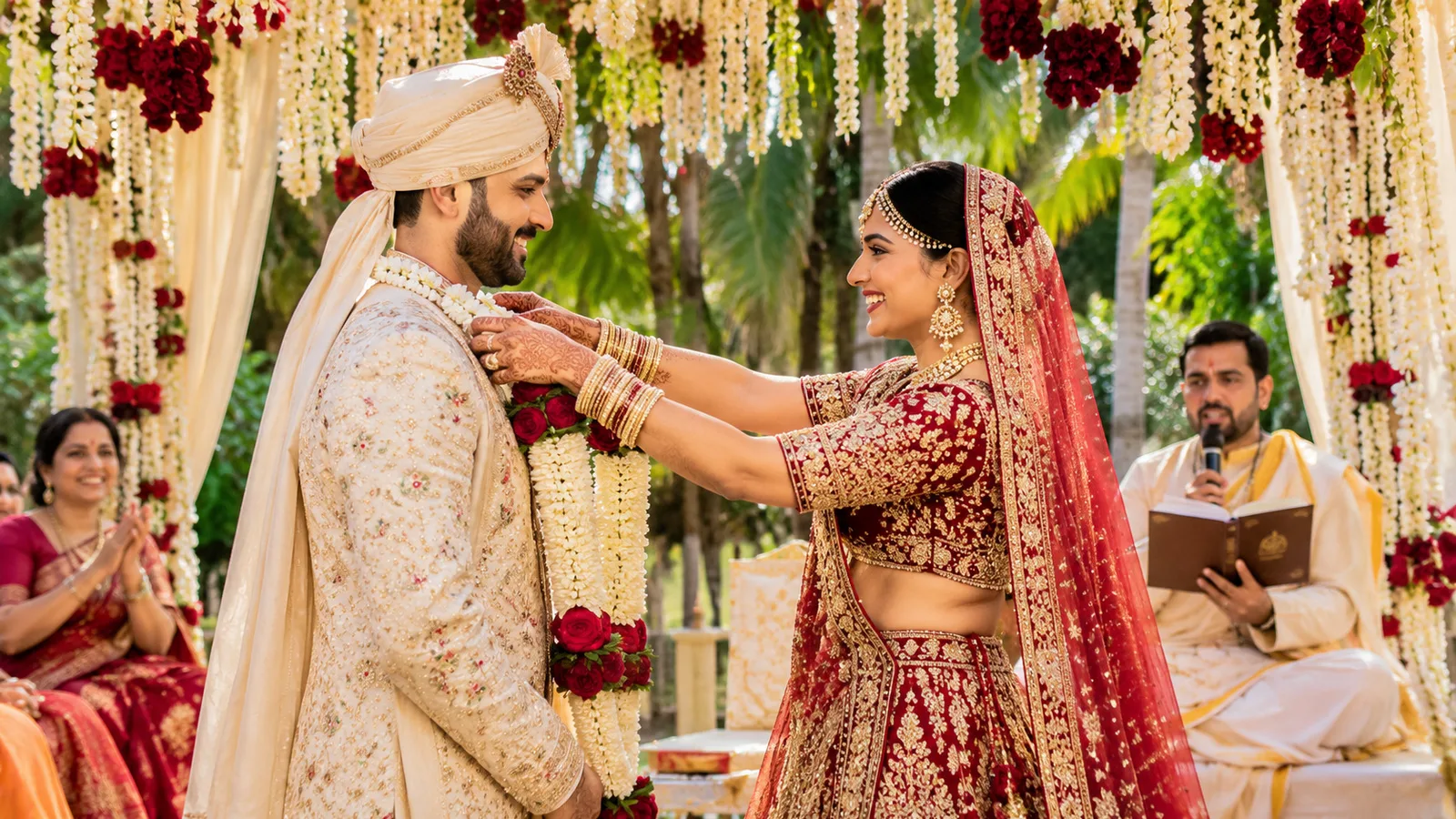
Wedding vows in two languages let both families hear the promise in words they understand, and our planners build the ceremony so neither side listens through a translation they cannot follow. The vows stay personal, while the meaning reaches everyone present.
Thailand Weddings: What Are Vows in Two Languages?
Wedding vows in two languages are the couple's own promises spoken in two languages during one ceremony. The Sanskrit mantras and the couple's personal vows are different things, and our planners keep them separate. The mantras belong to the priest and the ritual, while the personal vows belong to the couple and the life they are starting together.
The most common pattern is alternating languages. Readings, prayers or blessings alternate between languages, and vows are spoken in one language and then repeated or summarised in the other. That pattern works well when one family speaks Hindi and the other speaks English, because each side hears the full promise in its own language without waiting through a long repeat.
Thailand Weddings: Which Three Formats Work Best?
The three formats that work best are alternate, repeat or summarise, and each partner in the other's language. In the alternate format, readings, prayers or blessings alternate between languages, so each family hears part of the ceremony in its own words. In the repeat format, the vows are spoken in one language and then repeated or summarised in the other, so each side hears the full promise in its own language.
In the third format, each partner says the vows in the other's native language, and guides call this one of the most emotionally powerful moments in a bilingual wedding. Our planners help the couple choose one format and keep it through the whole ceremony, because mixing formats in one ceremony confuses guests, while one clear format lets both families follow every line.
Thailand Weddings: Who Explains the Mantras?
A bilingual officiant or priest carries the ceremony, and our planners arrange one whenever the families speak different languages. One guide recommends hiring a bilingual wedding officiant who can perform the ceremony fluently in both languages, so the ceremony stays seamless and inclusive for everyone present.
For a Hindu ceremony, the priest explains each mantra as it is spoken. One Hindu priest in Seattle offers bilingual English and Hindi explanations for modern, traditional and intercultural couples, and translates every Sanskrit shloka into clear English and Hindi. That translation ensures the bride, groom, parents and all multicultural guests understand the deep spiritual meaning of each vow. Our planners ask the pandit to pause after each mantra, so the explanation lands before the next line begins.
Thailand Weddings: How Do Printed Programs Help?
Printed programs let both families follow the ceremony without asking a neighbour what was just said. Our planners prepare a program with the order of the ceremony, the vows in both languages, and a short line explaining each mantra. Guests can read along in the language they know best, and they can keep the program as a record of the day.
The program should carry the couple's names, the date, the venue and the order of events, with the vows printed in full. Our coordinators check the spelling of every name and every Sanskrit word before printing, because a program with an error is handed to every guest. A short program works better than a long booklet, and our planners keep it to the ceremony itself, not the whole wedding week.
Thailand Weddings: Do We Need to Rehearse the Vows?
Our planners rehearse the vows the day before the wedding, with the couple, the priest and the sound team together. The rehearsal checks where each partner stands, where the microphone sits, and how long each language version takes. A vow spoken in two languages takes twice as long as a vow spoken in one, and the timeline must allow for that.
The sound check matters most. Mantras and vows must be heard clearly by elders seated at the back, and by guests who speak only one of the two languages. Our coordinators test the microphones at the mandap and place a second microphone where the couple stands.
The rehearsal also checks the printed program, so the couple, the priest and the sound team agree which language comes first and where the pauses fall.
Thailand Weddings: Frequently Asked Questions
Can wedding vows in two languages include Sanskrit mantras?
Yes, the priest speaks the Sanskrit mantras and explains each one in English and Hindi, while the couple's personal vows follow in the two languages the families speak.
Do wedding vows in two languages take longer than vows in one language?
Yes, a vow spoken in two languages takes about twice as long, so our planners add that time to the ceremony timeline and rehearse the full version the day before.
Should wedding vows in two languages be printed for guests?
Yes, a printed program with the vows in both languages lets each family follow every line, and our planners check every name and word before printing.
Talk to Thailand Weddings about vows in the two languages your families speak, and our planners will build the ceremony, the program and the rehearsal around them.