
Business communication has changed dramatically over the past decade. Customers no longer rely on a single channel to interact with businesses, and companies can no longer depend on just email or phone calls to keep customers informed. Today's consumers expect instant, convenient, and personalized communication through the channels they use every day.
Whether it's an OTP delivered via SMS, an order confirmation on WhatsApp, a voice reminder for an appointment, or automated notifications through APIs, businesses are adopting multiple communication channels to improve customer engagement. This shift has made unified business messaging platforms increasingly important for organizations of every size.
Why Multi-Channel Communication Matters
Every communication channel has its own strengths.
SMS remains one of the most reliable ways to deliver time-sensitive notifications such as OTPs, transaction alerts, and service updates. WhatsApp enables rich conversations with images, documents, interactive buttons, and customer support. Voice communication is valuable for appointment reminders, emergency notifications, and verification calls. APIs connect these communication channels directly with business applications, allowing messages to be sent automatically based on customer actions.
Instead of choosing one channel over another, businesses are increasingly combining them to create a better customer experience.
The Role of Communication APIs
Modern communication is powered by APIs.
Businesses integrate messaging APIs with their websites, mobile applications, CRM platforms, ERP systems, and customer support software. This allows automated communication without manual intervention.
For example:
- A customer places an order and instantly receives an SMS confirmation.
- Shipping updates are delivered through WhatsApp.
- If verification is required, a Voice OTP can be triggered automatically.
- Customer support conversations continue on WhatsApp without switching platforms.
This automation improves efficiency while reducing operational costs.
Benefits of a Unified Messaging Platform
Managing separate tools for SMS, WhatsApp, Voice, and notifications often creates unnecessary complexity.
A unified communication platform allows businesses to:
- Manage multiple messaging channels from one dashboard.
- Automate customer communication workflows.
- Monitor delivery reports and campaign performance.
- Integrate messaging with existing business systems.
- Scale communication as the business grows.
This approach helps organizations maintain consistent communication while simplifying day-to-day operations.
Business Applications Across Industries
Organizations across industries use business messaging differently.
E-commerce companies send order confirmations, shipping notifications, and promotional campaigns.
Banks and fintech companies use OTPs, transaction alerts, and fraud notifications.
Healthcare providers send appointment reminders and patient notifications.
Educational institutions communicate admissions, schedules, and examination updates.
Logistics companies provide delivery tracking and driver communication.
Although the use cases vary, the goal remains the same—delivering timely and reliable communication to customers.
Looking Ahead
Customer expectations will continue to evolve as digital communication becomes more integrated into everyday business operations. Automation, AI-powered conversations, rich messaging, and omnichannel engagement will play a larger role in how organizations connect with customers.
Businesses that adopt integrated communication platforms today will be better prepared to deliver seamless customer experiences while improving operational efficiency.
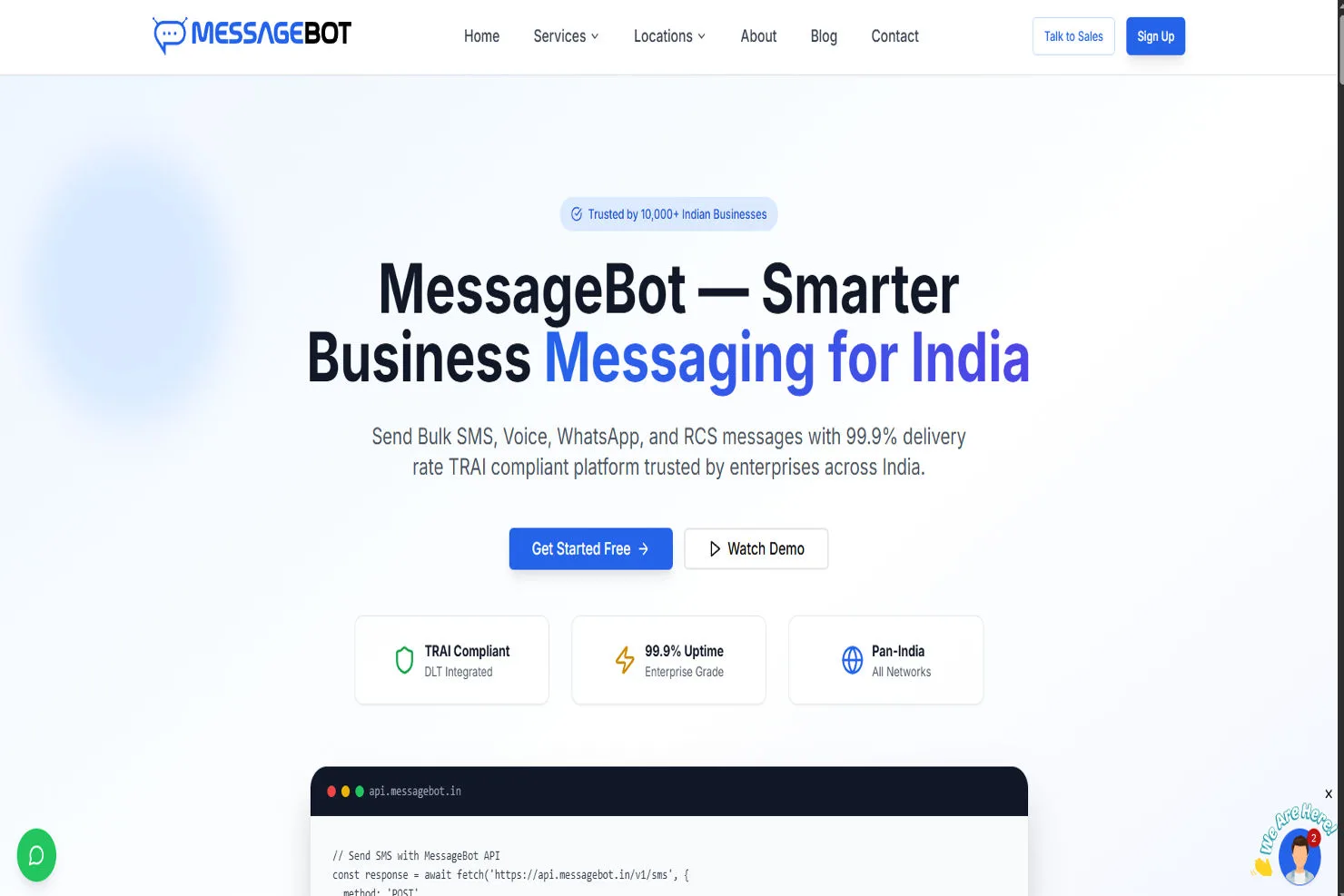
For organizations exploring modern business communication solutions, MessageBot offers a unified platform for Bulk SMS, WhatsApp Business API, Voice APIs, OTP services, and developer-friendly messaging APIs, helping businesses manage customer communication through a single platform.